
Designing modern offices for efficiency and comfort
Set up a new office or restructure an existing one and face the same dilemma: how do you create a space that supports both individual focus and spontaneous collaboration without your team feeling like they are sacrificing comfort for functionality? You're not alone in this situation. Modern offices put pressure on entrepreneurs and office managers, who need to balance company identity, diverse team needs and operational efficiency, all within a real budget. This guide covers the essential steps, from initial analysis to acoustics and furniture, for the end result to be a space that really works.
The main findings
|
Punct |
Detalii |
|---|---|
|
Start with needs analysis |
The success of the project depends on a deep understanding of the team and activities. |
|
Choose the right zoning |
Flexible models and dedicated spaces increase productivity and satisfaction. |
|
Invest in ergonomics |
The right furniture and light support employees' health and comfort. |
|
Do not neglect acoustics |
Integrated acoustic solutions are critical for effective focus and collaboration. |
|
Avoid Typical Mistakes |
Regular review and constant feedback optimize the space in the long run. |
Preliminary analysis: Understands team needs and key areas
The first instinct of many managers is to start directly with the choice of furniture or the layout on paper. It's a costly mistake. Before any visual or structural decision, you need to understand how people in your company work, not how you think they should work.
A modern office projectshould start from analyzing the needs of the team and workflows, then move to functional zoning. This means documenting daily activities: how many hours people spend on video calls, how many spontaneous meetings take place, who needs silence for concentration work, and who performs better in dynamic environments.
Un custom interior designit starts precisely from these data, not from the aesthetic preferences of the manager or from what someone has seen on the internet.
Recommended standard functional areas for modern offices:
|
Activitate |
Recommended area |
Essential features |
|---|---|---|
|
Concentration work |
Focus zone |
Quiet, visual isolation, good lighting |
|
Team discussions |
Open collaboration |
Flexible furniture, access to screens |
|
Formal meetings |
Conference room |
Acoustic insulation, AV equipment |
|
Breaks and socialization |
Relaxation area |
Comfort, warm lights, plants |
|
Quick Calls |
Phone booths / booths |
Soundproof, small size |
The most common mistake at this stage is precisely ignoring user feedback. Employees know, better than any external consultant, where the real bottlenecks of the existing space are. A simple questionnaire or a few short interviews can reveal needs you would never anticipate regarding architectural plans.
"We do not design for abstract people. We design for your concrete team with their specific habits, needs, and culture.”
Professional advice:Hold a team observation session for two or three days before making any layout decisions. Write down where people gather spontaneously, where they avoid staying, and what activities take place in inappropriate areas. This data is worth more than any design trend.
Space Design: Flexible Zoning and Modern Organization Models
Once you identify the key activities, you are going to choose and plan the right space structure for your organization's culture. There are several models of organization, and the wrong choice can affect the team's satisfaction in the long run.
Modelul Activity-Based Working (ABW)assumes that employees do not have a fixed office, but choose every day the right area for the work they do. It is effective for companies with mobile teams or a flexible work culture. Modelhibridcombines fixed areas with flexible areas, providing a balance between customization and adaptability.
Zoning and Flexible Patternsare recommended to match the type of space with the actual activity, according tomodern business principles. However, their implementation requires attention to detail.
|
Model |
Avantaje |
Dezavantaje |
|---|---|---|
|
Activity-Based Working |
Maximizes the use of space, encourages interaction |
May reduce sense of autonomy and privacy |
|
Fixed-flex hybrid |
Good balance, adaptable to mixed teams |
Requires careful occupancy planning |
|
Traditional open plan |
Low cost, high visibility |
Noise, distractions, lack of confidentiality |
|
Cellular (individual offices) |
Maximum privacy, focus |
Isolation, high costs, difficult collaboration |
Studies show thatactivity-based officesprovides benefits for physical activity and social contact between colleagues, but the effects on privacy and autonomy are uncertain and heavily dependent on implementation. In other words, ABW is not a universal solution.
Steps to correctly implement flexible zoning:
- Calculate actual office occupancy (how many people come daily on average)
- Defines the proportion of focus, collaboration and relaxation areas by type of dominant activities
- Test the layout with a prototype or simulation before ordering definitive furniture
- Provides clear boundaries between areas, visual or physical, to reduce noise and distractions
- Plans personal storage areas even in the no fixed office model
A valuable recommendation also comes fromcommercial interior design consultancy: Clear boundaries between zones are not optional. Without them, even the best-intentioned flexible space becomes chaotic.
Ergonomics and comfort: how to choose the right furniture and light
Once you have established the structure of the space, each piece of furniture and lighting should be chosen to support both the activity and the health of the users. Ergonomics is not a fad. It is a direct investment in productivity and in reducing absenteeism caused by postural problems or visual fatigue.
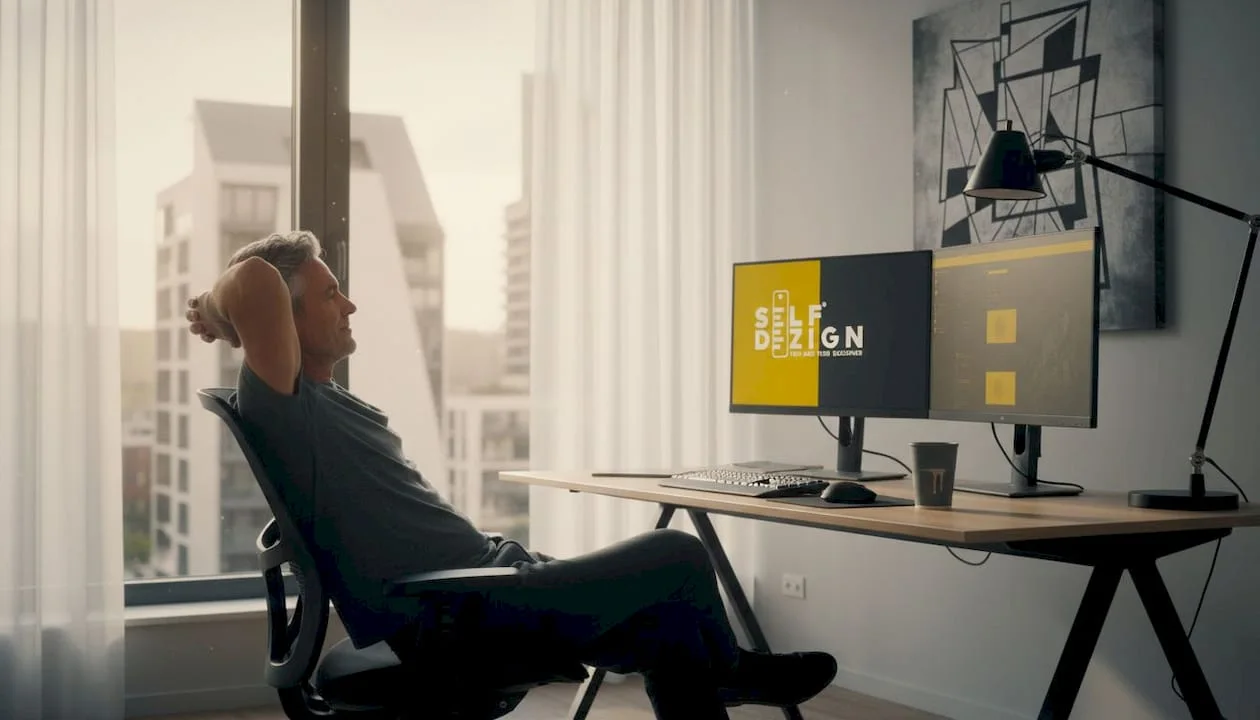
Ergonomics and comfort are essential elements in the design of the modern office: adjustable furniture, adequate light and attention to acoustics together form the basis of a functional space.
Key elements for an ergonomic and comfortable office:
- Adjustable chairswith lumbar support, adjustable height and armrests correctly positioned against the desk
- Height-adjustable desks(standing desks) that allow alternation between sitting and standing position
- Daylightingmaximized by strategically positioning desks relative to windows
- Artificial lighting on layers:general ambient light, task light on the work surface and accent lights for atmosphere
- Light Colour Temperature:4000K for concentration areas, 3000K for relaxation areas
- Materials and texturesthat reduce reflection and visual fatigue
The identity of the company can and must be integrated into the choice of furniture and visual details. The colors of the brand, the preferred materials and the elements ofoffice signage designcommunicates the company's values to both employees and visitors, without turning the space into a walking advertisement.
You can see how theory translates into practice inexamples of ergonomic desksmade in real projects, where ergonomics and aesthetics coexist in a balanced way.
Professional advice:Before ordering furniture in bulk, test at least two or three models of chairs and desks with real users for a week. Their feedback will eliminate unpleasant surprises after delivery.
Acoustics and focus spaces: essential rules and modern solutions
An ergonomic and flexible space has no value if it does not support focus and well-being. Acoustics thus become essential and is, paradoxically, the most often neglected element in office design.
Metodologia acoustics A-B-C(Absorb, Block, Cover) is the recommended standard for modern offices. No single strategy is enough.
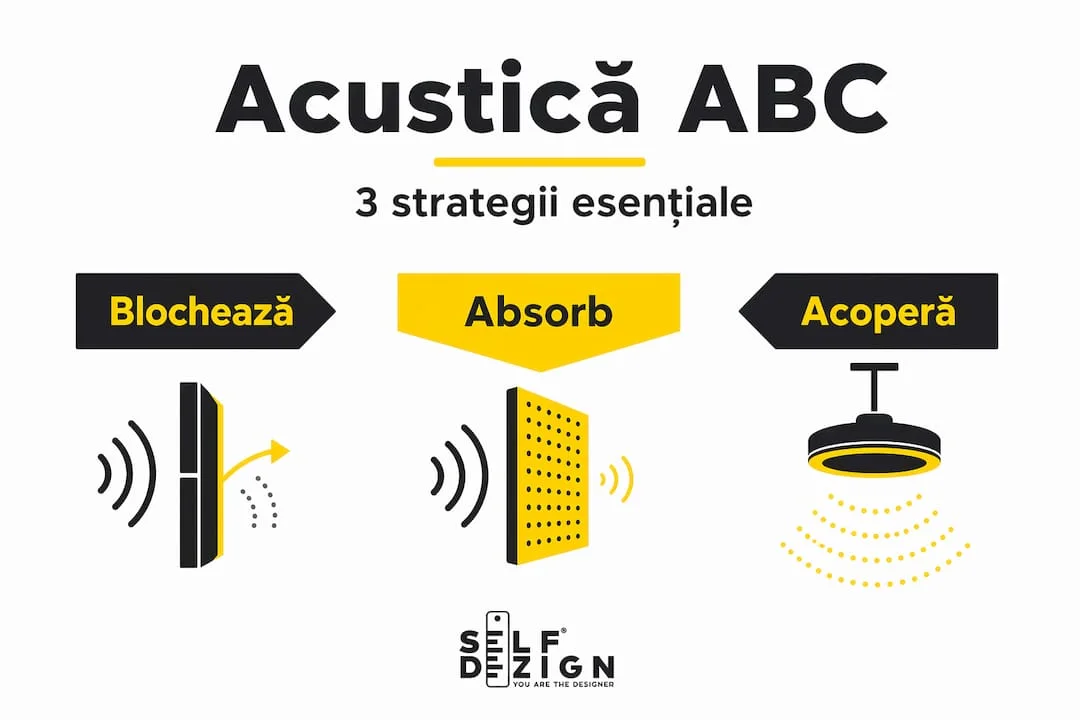
|
Strategie |
Metode |
Examples of materials/solutions |
|---|---|---|
|
Absorption |
Reduction of reverberation and echo |
Acoustic panels, carpets, acoustic ceilings, plants |
|
Block |
Physical isolation of areas |
Partitions, cabins, soundproof doors |
|
Cover |
Noise perception reduction |
Sound masking (white/pink noise distributed controlled) |
For cognitive workspaces, the background noise level should be below 35 dB, and enclosed cabs are effective for tasks that require deep concentration. This is an important threshold that many office designers completely ignore.
Practical solutions for focus spaces in open offices:
- Phone booths and individual cabinsfor calls and short-term focus work
- Focus Roomsfor intensive cognitive activities over two hours
- Movable acoustic panelsthat can reconfigure the space as needed
- Suspended acoustic ceilingsthat absorbs noise without affecting aesthetics
- Carpets & Carpetingin transition areas to reduce footstep noise
You can also exploreoffice acoustics coststo understand how the budget for these solutions is structured according to surface area and complexity.
"You can't see the acoustics of an office, but you can feel it every day. A noisy space costs the company more than any cheap furniture it has saved.”
The most common mistakes and how to avoid them
Even if you follow the best steps, some common mistakes can affect the end result. Anticipating them makes the difference between an office that works and one that generates constant frustration.
The first mistake isexcessive reduction of individual space. In the enthusiasm for collaboration and open plan, many managers almost completely eliminate personal workspaces. The result is the opposite of the desired one.Adoption of open spacesoften reduces actual interaction if there are no dedicated spaces for intentional collaboration, not just physical openness.
The most common mistakes in modern office design:
- Neglect of acoustic treatment in the design phase (difficult and expensive to repair later)
- Poor zoning, no clear boundaries between incompatible activities (focus and noisy collaboration)
- Failure to consult employees before and during the fit-out process
- Overestimating open plan benefits without compensating through sufficient private areas
- Purchase of furniture without prior testing with real users
- Ignoring personal storage needs in spaces without fixed offices
Ointerior design consultancyearly can prevent all these mistakes, precisely because a specialist sees from the outside what you, involved daily in the organization, no longer manage to notice.
Professional advice:Review the actual layout and operation of the space three to six months after the inauguration. Small adjustments after actual use cost incomparably less than a complete redesign after two years.
What no one tells you about modern offices: between myth and results
I've seen the steps and the traps. Now it's time to say some uncomfortable things about current trends in office design.
The most persistent myth is that open plan equals productivity. Large companies have adopted this model as a symbol of open, transparent and innovative culture. The measured reality is more nuanced. Open-plan is not automatically synonymous with productivity, and studies show negative changes in interaction patterns when spaces are not designed with attention to detail.
Another myth is that a "cool" desk with bean bags and ping pong boards attracts and retains talent. Maybe in the short term. But what holds people back is a space that supports their real work, not one that looks good in recruitment photos.
What is most often lacking in modern offices is not a spectacular design element, butcoherence between the space and the actual way of working of the team. A space designed without user behavior data is essentially an expensive assumption. And the assumptions are subsequently paid in low productivity, staff turnover and redevelopment costs.
In our experience, long-term office space models have a common denominator: they started from observing and understanding people, not from a trend on Pinterest. The design of your office should be the expression of the real organizational culture, not its unfulfilled aspiration.
The practical conclusion is simple: don't copy. Analyze, test, adjust. A good modern office does not look the same for all companies, precisely because each team is different.
Turn your concept into a high-performing office with SelfDezign
Designing a modern office that really works is not a simple process. It involves analysis, strategic decisions about zoning, ergonomics, acoustics and visual identity, all coherently integrated. If you want to avoid costly mistakes and reach a predictable result, working with a team of specialists makes a difference. At SelfDesign, we approach everyoffice interior design projectstarting from your company's real goals and team needs, not standard solutions. You can consult the interior design consulting guide to understand how the process works or see directlythe workflow of a projectfrom concept to implementation.