How design influences customer experience in HoReCa and retail

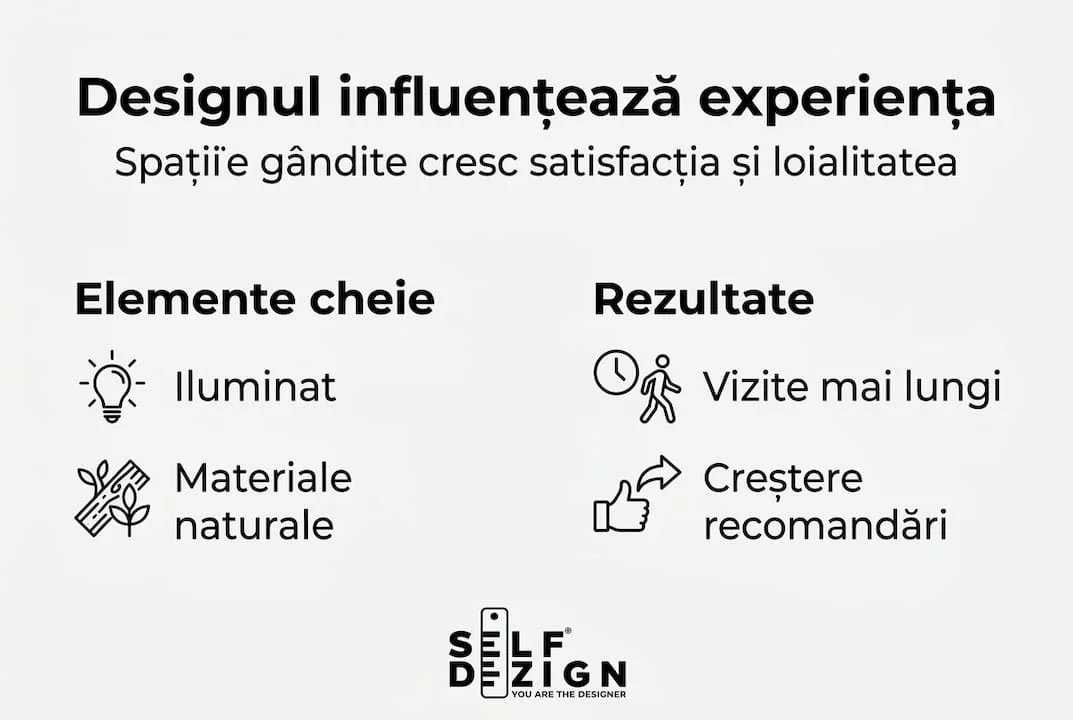
Did you know that a customer decides within the first few seconds whether they feel good in a space? Not after tasting the menu or testing the product, but as soon as they cross the threshold. And this instant decision is dictated almost exclusively by design.A positive customer experience increases retention by 80%, meaning your space is not just a setting, but an active sales tool. In this guide, you will discover how to use strategic interior design to create places that delight, build loyalty, and ultimately increase sales.
Why interior design matters for customer experience
Key Ideas
|
Topic |
Details |
|---|---|
|
Design influences decisions |
A well-thought-out space makes the customer return and recommend. |
|
Essential elements matter |
Lighting, circulation, and personalization have the greatest impact on experience. |
|
Experience boosts profit |
Smart design investments bring increased sales and loyalty. |
|
Apply concrete steps |
Plan carefully, consult specialists, and constantly monitor the results of changes. |
Why interior design matters for customer experience
Many business owners treat interior design as a decorative element, something you add at the end, after solving the "real" problems of the business. This is one of the most costly misconceptions in HoReCa and retail. Design is not ornament. It is the infrastructure of the customer experience.
Think of your space as an employee working non-stop. It communicates your brand values, guides the customer through the space, influences their mood, and ultimately shapes their decision to buy or return. A poorly trained employee costs money. A poorly designed space does the same.
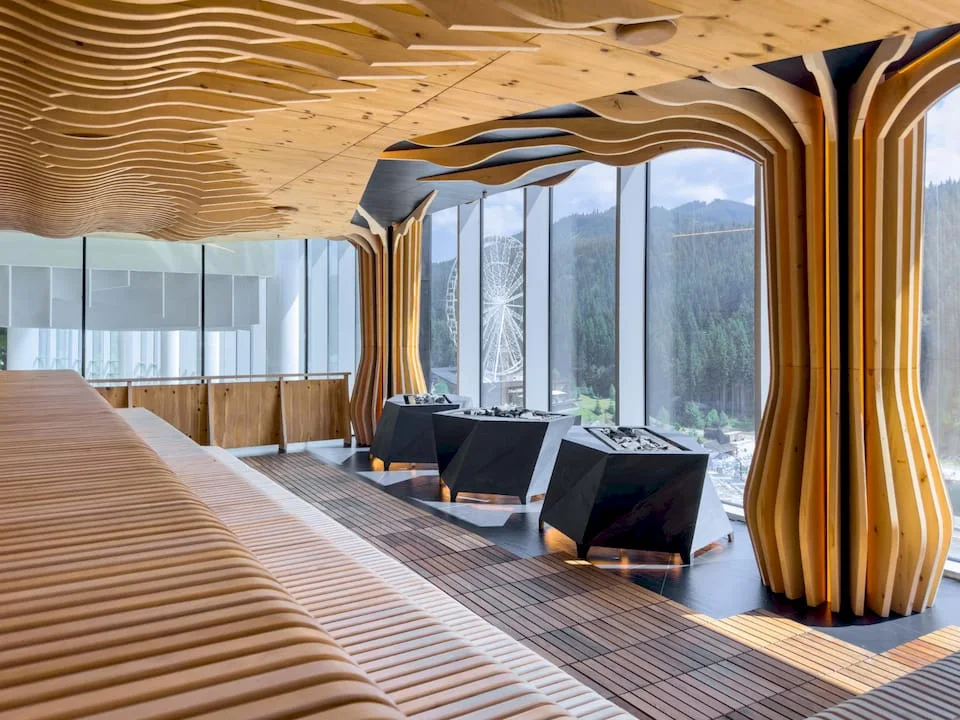
First impressions in retail are formed within the first 7 seconds of the customer entering, and these impressions are extremely hard to change later. If the entrance is cluttered, the lighting is flat, or the circulation is confusing, the customer will feel a vague discomfort they cannot name, but which will make them leave sooner or not return.
The elements that contribute most to this first impression are:
- Lighting: Warm or cool, diffuse or directional, lighting immediately sets the emotional tone of the space.
- Acoustics: A space that is too noisy tires and stresses. One that is too quiet creates social anxiety.
- Circulation: If the customer doesn't instinctively know where to go, they feel lost and uncomfortable.
- Visual coherence: Materials, colors, and furniture must speak the same language. If they don't, the space feels improvised.
- Physical comfort: Uncomfortable chairs, extreme temperatures, or unpleasant odors dramatically shorten the visit duration.
"A well-designed space is not felt. It is lived. The customer won't say they liked the design; they will say they felt good."
This difference is essential. The goal of strategic design is not to impress, but to create a sense of well-being that is unconsciously associated with your brand.The efficiency of design in well-executed projects demonstrates that functional and coherent spaces generate measurable results in customer satisfaction.
Key elements of impactful design in HoReCa and retail
Professional tip: Observe customer reactions to minor changes in layout or atmosphere. Move a shelf, change the light temperature, or add a zoning element and watch how behavior changes. These micro-experiments give you real data on what works in your specific space.The advantages of interior design consultancy include precisely this ability to read and interpret space with fresh eyes and a clear methodology.
Key elements of impactful design in HoReCa and retail
Understanding the overall impact of design, it is crucial to distinguish the key components that transform a space from a mere physical place into a memorable experience. Not all elements have the same impact in all types of businesses, and wrong prioritization can lead to investments that do not reflect in results.
|
Design Element |
Impact in HoReCa |
Impact in Retail |
|---|---|---|
|
Lighting |
Creates atmosphere and intimacy |
Highlights products and guides attention |
|
Acoustics |
Reduces stress, prolongs visit |
Creates comfort for purchase decisions |
|
Zoning |
Separates waiting, consumption, socializing areas |
Organizes categories and purchase flow |
|
Materials and textures |
Communicates quality and authenticity |
Conveys brand value and durability |
|
Colors |
Influences appetite and mood |
Stimulates purchase impulse |
|
Personalization |
Creates unique identity and memorability |
Differentiates the brand from competition |
Proper lighting increases the time customers spend in the space by 12%, which in HoReCa means additional consumption, and in retail means more products evaluated and purchased. This is not a negligible figure. If you have 200 customers per day and each stays 12% longer, the cumulative effect on sales is significant.
Here is a sequential process for evaluating and optimizing the ambiance of your space:
- Audit the existing space from the customer's perspective, not the owner's. Walk in as if for the first time. What do you see? What do you feel? What confuses you?
- Identify friction zones, i.e., places where customers hesitate, get stuck, or seem confused. These are priority intervention points.
- Evaluate visual coherence across all elements: signage, furniture, colors, materials. Are there contradictions or elements that "don't fit"?
- Test the lighting at different times of the day. Natural light changes dramatically, and artificial lighting must compensate and complement.
- Collect direct feedback from customers through simple questions and careful observation of their behavior in the space.
- Prioritize interventions based on impact and available budget, starting with elements that most affect basic comfort.
Professional tip: Use natural materials and local accents to create an authentic space. Wood, stone, local ceramics, or regional artisan elements create an emotional connection that no mass-produced solution can replicate.The importance of design personalization lies precisely in this ability to reflect the identity of the place and the community you serve.
For more ideas on how to build an authentic space, read our step-by-step guide to interior space identity.
A restaurant using locally produced ceramics, a hotel integrating textures and colors specific to the region, or a store presenting products in authentic use contexts—all these create a story that the customer feels and remembers.Practical steps for space personalization show you how to translate this vision into concrete design decisions.
Interior design and customer behavior: what really works
Having identified the elements that matter, we now evaluate how they translate into behavior and concrete results. There is a big difference between believing design matters and understanding exactly how it influences customer decisions.
Interior design and customer behavior: what really works
Research in the field shows that spaces with modern design increase the recommendation rate by 42%. This is a remarkable figure, especially considering that recommendations are one of the most valuable and cheapest marketing channels available. A customer who recommends your place costs nothing and brings customers with an already built level of trust.
Here is how design investments translate into measurable behaviors:
|
Indicator |
Spaces without design investment |
Spaces with strategic design |
|---|---|---|
|
Average visit duration |
Short, transaction-oriented |
Longer, with additional consumption |
|
Average ticket value |
Standard, no significant variations |
15-25% higher |
|
Return rate |
Below 30% in the first 3 months |
Over 55% in the first 3 months |
|
Recommendation rate |
Below 20% |
Over 40% |
|
Positive online feedback |
Rarely mentions the space |
Frequently mentions the atmosphere |
These figures are not accidental. They reflect a simple psychological mechanism: people return to places where they felt good and recommend places that exceeded their expectations. Strategic design creates exactly these conditions.
There are several behavior patterns that consistently appear in well-designed spaces:
- Active exploration: Customers who feel comfortable explore more of the space, which in retail means more products seen and in HoReCa means more interest in the menu.
- Extended socializing: Spaces with good acoustics and clearly defined comfort zones encourage longer conversations, which increases consumption in HoReCa.
- Photographing and sharing on social media: A visually attractive space becomes user-generated content, a form of organic marketing with enormous value.
- Increased price tolerance: Customers in a premium space perceive products and services as having higher value and are willing to pay more.
The impact of design consultancy on business is seen precisely in these behavioral changes. An experienced designer knows how to build spaces that activate these mechanisms intentionally, not accidentally. Also,sustainability in interior design adds an extra layer of perceived value, as today's customers are increasingly attentive to the materials and practices of the brands they frequent.
Find out how to evaluate the effectiveness of your design in the essential steps for evaluating interior design effectiveness.
How to apply customer-centered design in your business
With these results and best practices, it's time to see how you can directly implement your own customer-centered design strategy for your space. The process doesn't have to be overwhelming or extremely costly if approached methodically.
How to apply customer-centered design in your business
- Define clear objectives before any design decision. Do you want to increase visit duration? Improve the purchase flow? Create an Instagrammable space? Each objective leads to different solutions.
- Map the customer journey in your current space. Track how a customer moves from entrance to exit. Where do they stop? Where do they speed up? Where do they seem confused? These observations are more valuable than any theory.
- Prioritize basic comfort before aesthetics. Temperature, acoustics, lighting, and ergonomics are the foundations. Without them, no decorative element will compensate for discomfort.
- Consult a specialist in interior design with experience in your type of space. Professional consultancy ensures coherence and efficiency in projects, avoiding additional costs from wrong decisions or repeated changes of direction.
- Create a phased implementation plan. You don't have to change everything at once. Start with interventions that have the greatest impact and lowest cost, validate results, and continue.
- Measure results before and after each intervention. Visit duration, average ticket value, online feedback, and return rate are the key indicators you need to track.
Professional tip: Test changes on small groups of customers before full implementation. You can change the lighting in one area of the restaurant or reconfigure a section of the store and compare customer behavior in that area with the rest of the space. Real data is always more valuable than assumptions.
A simple checklist for monitoring results includes: average number of minutes spent in the space, average order value, number of positive reviews mentioning the atmosphere, 30-day return rate, and number of photos posted on social media with your location.The interior design consultancy guide for commercial spaces provides a detailed framework for this type of systematic evaluation.
Why simplicity and coherence make the difference in customer experience
There is a tendency in the industry to overestimate the value of spectacular elements. Business owners invest in impressive art installations, extravagant designer furniture, or elaborate thematic concepts, while ignoring fundamental issues: uncomfortable chairs, disastrous acoustics, tiring lighting, or inconsistent branding from one corner of the space to another.
Why simplicity and coherence make the difference in customer experience
The truth, which we see confirmed project after project, is that most successes in customer experience derive from the flawless execution of simple elements. Not from extravagant concepts. A space with warm light, well-managed acoustics, comfortable furniture, and a coherent visual identity will always perform better than one that is spectacular but uncomfortable.
Style coherence, maintained over time, creates a sense of familiarity and belonging. Customers return not only for the product or service, but because the space feels familiar and comfortable, like a place of their own. The efficiency of basic details is, in our opinion, the most underestimated factor in successful design for businesses. Consistent investment in these simple details influences customer satisfaction more than any spectacular element added later.
Discover how we help you differentiate your space through design
You've seen what you can apply yourself, but you can save time and avoid costly mistakes by collaborating with dedicated specialists. At SelfDezign, we work with business owners in HoReCa, retail, andoffice design solutions to create spaces that reflect brand identity and meet real customer needs. We don't apply standard formulas. Each project starts with understanding your specific context. If you want to turn your customer experience into a real competitive advantage, discover our approach through personalized interior design and request a preliminary discussion to set priorities and next steps.