Stone wool vs glass wool: what we choose and why
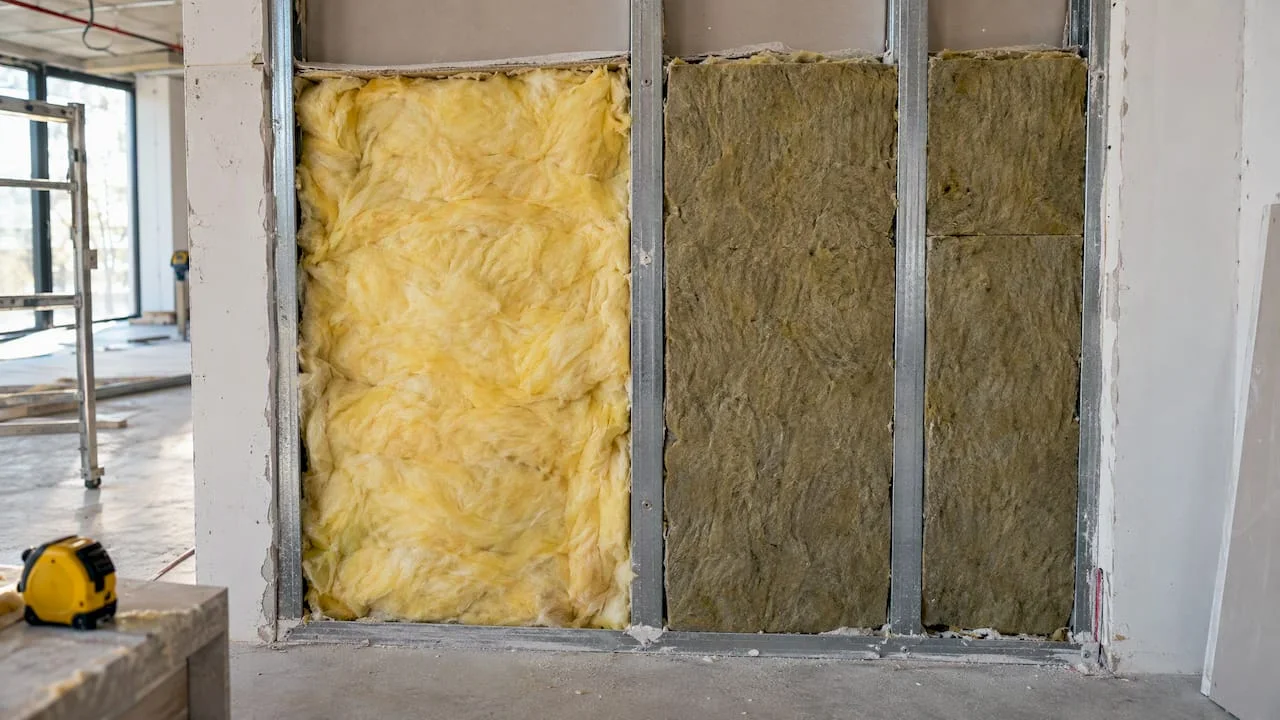
For mechanical strength, high density and high thermal exposures, we choose stone wool. For efficient, space-saving insulation, fast installation in varied geometries and lower costs, we choose glass wool. The practical rule remains simple: the right material depends on the function of the space and the actual operating conditions, not on general preferences or the reputation of a product.
In summary:
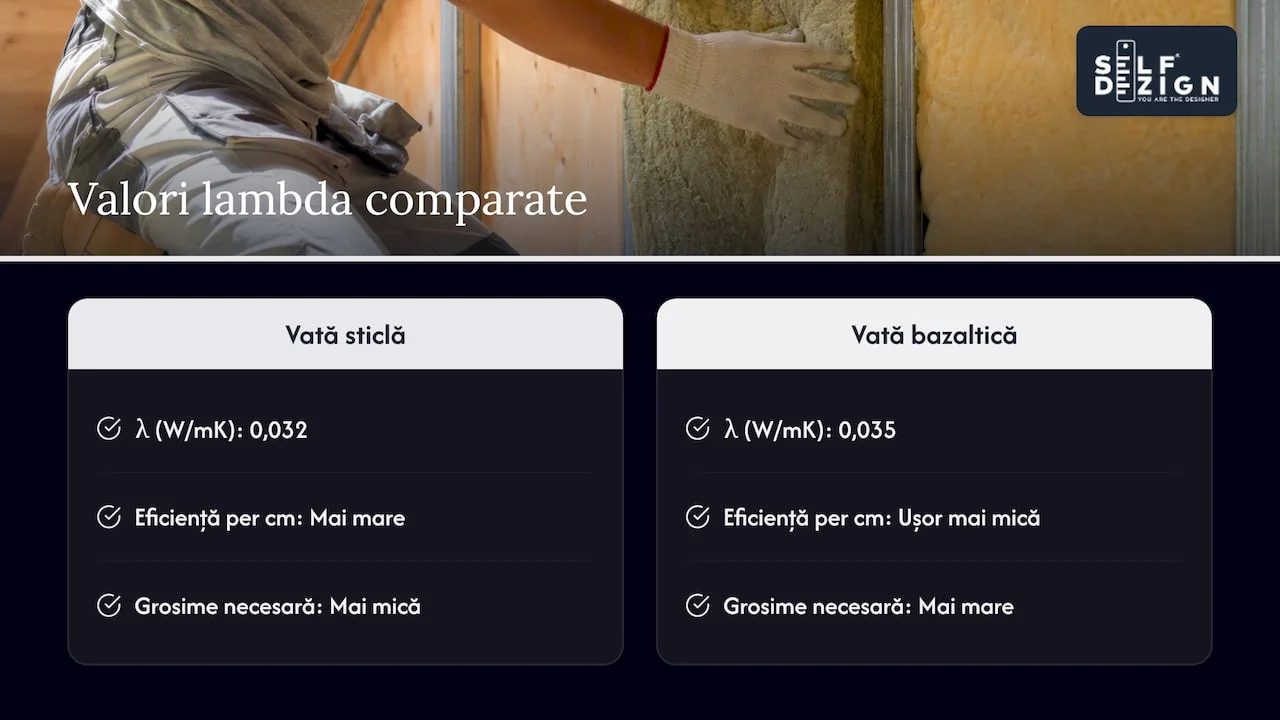
- Glass wool has thermal conductivity from 0.032 W/mK, compared to 0.035 W/mK for stone wool, a useful advantage when the available thickness is limited.
- Choose stone wool near chimneys, requested electrical installations and exposed facades, where resistance to high temperatures and non-combustibility matter.
- In rooms where noise and compaction matter, the higher density of stone wool supports noise attenuation and dimensional stability over time.
- Glass wool fits more easily on irregular geometries and usually costs less, but check the joints to avoid interruption of the insulating layer.
- Ask the supplier for the λ value, density, reaction to fire class and binder type, especially for poorly ventilated spaces.
SelfDezign
Choose materials that fit your space
SelfDezign designs interiors starting from the actual context and objectives of each project, without standard solutions.
Technical comparison by key dimensions: thermal, fire, acoustics, mounting, cost
The decision between the two materials is simplified when looking at each dimension separately, because technical differences become decisive only in certain scenarios. A residential attic with limited space requires a response other than a ventilated façade exposed to wind and large thermal variations.
- THERMAL PERFORMANCE the glass wool has, according to dedeman datasheet, a thermal conductivity from 0.032 W/mK, while stone wool starts from 0.035 W/mK.
- Fire resistance stone wool supports much higher working temperatures and is recommended for applications with high non-combustibility requirements, suitable knauf Insulation presentationement
- acoustical performance higher density of stone wool improves noise attenuation and dimensional stability, according to the same Technical data sheetsement
- Mounting: glass wool is flexible and adapts more easily to irregular spaces, whereas stone wool, being rigid, sometimes requires additional fixations, shows the Dedeman buying guideement
- Cost: glass wool tends to be more affordable to purchase, according to the same guide.
For exact project figures, manufacturers' datasheets remain the correct source of verification, not general estimates in marketing materials.
Thermal performance: what lambda values show in practice
The thermal conductivity, denoted λ, shows how well a material retains heat: the lower the value, the more efficiently it insulates at the same thickness. The difference between 0.032 W/mK at glass wool and 0.035 W/mK at stone wool, according to dedeman datasheet, seems small on paper, but translates into different thicknesses required for the same thermal resistance. In an attic with limited height or an interior wall where every centimeter counts, glass wool can offer the same performance at a smaller thickness. Similar technical explanations about the role of the insulating value also appear in resources dedicated to the thermal performance of building components, where the principle remains the same: lower value means lower heat loss.
Fire resistance and working temperatures: when stone wool becomes necessary
Stone wool supports much higher operating temperatures than glass wool and is generally classified as a non-combustible material with superior performance under extreme conditions, according to knauf Insulation presentationThis difference matters directly in ETICS systems, technical roofs or fire risk areas, where the reaction of the material to high temperatures is part of the safety solution, not just of the thermal insulation. In the constructive details, this means choosing stone wool for areas adjacent to chimneys, overloaded electrical installations or exposed facades, where the thermal safety margin cannot be compromised for a minor cost gain.
Acoustic performance and stability over time: the role of density
The higher density of stone wool improves sound attenuation and reduces the tendency of compaction in walls, according to the Dedeman datasheet. The difference becomes visible in projects where noise is a functional problem: meeting rooms, open space offices, medical clinics with adjacent consultation areas. For acoustic mounting details, the practical sound insulation solutions discussed in the wall acoustic insulation guides confirm the principle: a correct density, combined with good perimeter sealing, makes the real difference, not just the type of material used.
Mounting and adaptability to geometry: what it means for time and cost
Glass wool, being flexible, cuts and molds quickly on irregular spaces, which reduces labor time in renovations with complicated geometries. Rock wool, stiffer and denser, sometimes requires additional mechanical fixings or more careful sealing details, as shown by the Dedeman buying guide. To avoid performance losses, thermohydraulic continuity must be checked at each joint, regardless of the material: an insulating layer interrupted by thermal bridges partially cancels the advantage of the lambda value initially chosen.
Cost and cost/performance ratio
Glass wool typically costs less per square meter than stone wool, according to market observations in the Dedeman buying guide. However, the initial price difference can be compensated by long-term hidden costs: settlement, loss of acoustic performance or repairs in areas with high mechanical stress. Investing in a more expensive stone wool is justified where dimensional stability and fire resistance are project requirements, not just an aesthetic plus.
Indoor air quality and modern mineral wool binder
The binder used in the manufacture of mineral wool directly influences the mounting experience and the air quality of the finished space. Biologically based binder technologies, such as those without formaldehyde, reduce contact irritation and the specific odor associated with these products in the past, making assembly more comfortable in sensitive spaces such as medical clinics or homes with children. When contracting, it is worth asking the supplier for clear specifications about the type of binder used, especially when the insulation is mounted in areas with low ventilation or near permanently occupied spaces.
Quick Choice Guide: Questions to ask the supplier
Before confirming an order or a performance offer, it is worth checking some technical issues directly with the supplier or contractor:
- What is the exact λ value of the product offered, not just the general mineral wool category.
- How dense the product is and how this influences the acoustic performance for our application.
- Which reaction to fire class it belongs to and whether it suits the requirements of the respective area.
- What type of binder the manufacturer uses and whether there are certifications on indoor air quality.
- What warranty does the manufacturer offer for settlement and dimensional stability over time.
- What we explicitly recommend for our application: attic, interior wall, ETICS or terrace.
Reliability signs of a serious supplier include complete data sheets, certificates of conformity and, ideally, references from projects similar to the one we are planning.
Professional advice: Ask for a physical sample of the material before confirming the final quantity, to check the rigidity, actual density and cutting behaviour under the specific site conditions.
SelfDesign perspective: when we recommend each material in our projects
In the design of the spaces we coordinate, the selection of insulation materials follows the actual function of the space, not a standard template. For spaces with specific requirements for acoustic comfort and fire safety, we recommend solutions with high density and thermal resistance. For space-constrained residential projects, we prioritize thermal efficiency at reduced thickness. Technical details are always discussed during the detailed design phase, before coordinating the execution on site.
The right choice depends on the objective of the project, not on a universal winner
The function of the space remains the deciding criterion, not a generally valid verdict for all projects. When requirements are mixed, thermal, acoustic and safety, the involvement of a specialist designer or engineer avoids costly trade-offs.
Toni
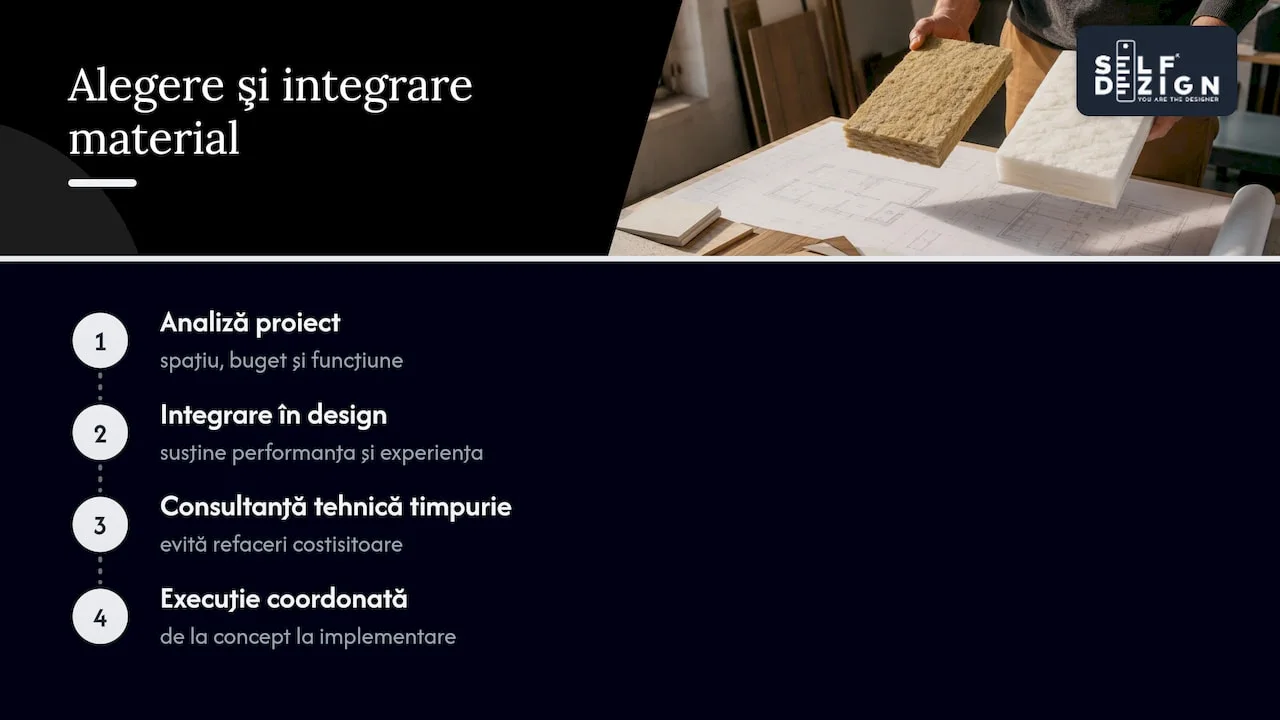
How we help you choose and integrate the right material
Choosing the correct insulation material for a concrete project, with its real space, budget and function constraints, rarely boils down to a generic comparison between two products. In the projects we coordinate, from commercial spaces to medical clinics, we integrate technical decisions about insulation into the overall design concept, so that the chosen solution supports both performance and experience in the space. For complex projects with mixed acoustics and safety requirements, early technical advice saves time and avoids costly rebuilds. You can review our interior design services to see how we structure a project from concept to execution.
Frequently Asked Questions
What is the main difference between stone wool and glass wool?
Stone wool has higher density and mechanical strength, being suitable for high temperatures and acoustic insulation, while glass wool offers better thermal conductivity at reduced thicknesses, according to the Dedeman data sheet. The right choice depends on the function of the space and the specific project requirements.
Which material is better for insulating an attic?
For attics with limited space, glass wool is frequently preferred due to better thermal conductivity at lower thicknesses, according to the Dedeman buying guide. When the attic also has high fire resistance requirements, stone wool remains a valid alternative.
Why is stone wool more expensive than glass wool?
Stone wool has higher density and different manufacturing technology, which gives it superior mechanical and high temperature resistance, reflected in the higher purchase price, as noted in the Dedeman buying guide. The additional cost is justified in applications where stability and fire safety are essential requirements.
How does the binder influence indoor air quality?
Biologically based, formaldehyde-free binder reduces mounting irritation and the specific odor of mineral wool products, making the material more suitable for sensitive spaces such as medical clinics or homes. It is worth checking the supplier's specifications on the type of binder used, especially in spaces with low ventilation.
Can we combine stone wool and glass wool in the same project?
Yes, many projects use stone wool in areas with high fire or acoustic requirements and glass wool in the rest of the space for balance between performance and cost. The right decision for each area requires verification of the data sheets and, ideally, technical advice dedicated to the project.