
Guide to collaborating with an interior designer: business and investments

Most interior design projects don't fail because of a weak designer or an insufficient budget. They fail because of a lack of communication. 70% of partnerships fall apart for this reason, and the consequences are visible: cost overruns, missed deadlines, and spaces that don't reflect the real objectives of the business. The good news is that a well-structured partnership with an interior designer can significantly increase the value of your investment, whether we're talking about a hotel, an office, or a commercial space. This guide gives you the concrete steps for a collaboration that works.
Key Ideas
|
Point |
Details |
|---|---|
|
Strategic role of the designer |
Professional design increases the ROI and efficiency of investment spaces. |
|
Preparation completes the collaboration |
A clear brief and a transparent budget prevent 70% of common problems. |
|
Processes and communication |
Following the stages and communicating consistently are the key to a successful project. |
|
Maximizing results |
Implementing trends and green certifications can increase the value of the investment. |
When and why you need an interior designer in business or investment projects
Not every project requires an interior designer, but there are clear categories where the absence of one costs more than their presence. Commercial spaces, offices, hospitality venues, homes prepared for resale, and medical clinics are exactly the types of projects where design directly influences profitability.
How does design concretely influence financial results? Here are a few examples:
- Hotel and hospitality spaces: Well-thought-out design increases occupancy rates and improves guest reviews, according to industry data.
- Offices: Ergonomics and spatial flow influence team productivity and attractiveness to tenants.
- Flip properties: Designers can increase resale value by significant amounts through staging and the right material choices.
- Commercial spaces: The visual identity of the space communicates directly with the customer and influences the purchasing decision.
For European investors, there is an additional factor: sustainability requirements. WELL and BREEAM certifications are becoming increasingly relevant in financing and leasing decisions, and a designer with experience in this field can guide the compliance process.
“Involving the designer from the concept phase, not after structural decisions have already been made, is the difference between an efficient project and one that requires costly compromises.”
Professional tip: The earlier you involve the designer in the project, the fewer costly changes you'll make later. Decisions made in the concept phase are ten times cheaper than those made in the execution phase. If you're just starting out with a residential project, explore the options for efficient residential design to understand what a proper approach involves.
Preparing for collaboration: what you need to know and establish in advance
A successful collaboration begins before the first meeting with the designer. If you arrive at that discussion without a clear brief, without documents, and without an approximate vision, you'll waste time and money on unnecessary rounds of clarification.
Here's what you need to prepare:
- Plans of the space (if available, including permits or restrictions)
- Clear project objectives (resale, rental, personal use, branding)
- A realistic budget including a safety margin
- Visual references (photos, examples of projects you like)
- Deadlines and any operational constraints
- Permit status and any specific legal requirements
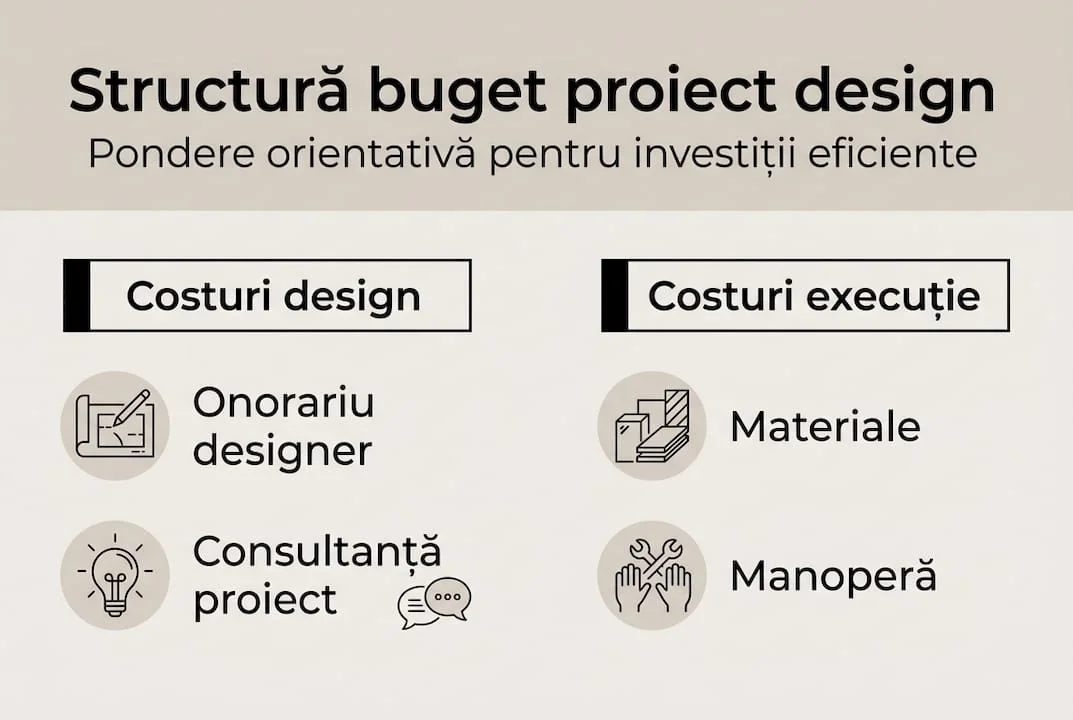
The budget deserves special attention. A properly staged budget includes the design fee, materials, labor, logistics, and a reserve of 10 to 15% for unforeseen situations. Here is an indicative structure:
|
Component |
Indicative share of budget |
|---|---|
|
Design fee |
8 to 15% |
|
Materials and finishes |
40 to 50% |
|
Execution labor |
25 to 35% |
|
Logistics and transport |
3 to 5% |
|
Contingency reserve |
10 to 15% |
For a clearer picture of the real costs, consult the guide on accurate cost estimation or explore the articles on interior design project costs for different types of spaces.
Professional tip: Designers with strong industry relationships can negotiate trade discounts with suppliers, reducing material costs by 10 to 20%. Ask explicitly about this possibility before signing the contract. You can learn more about what you pay an interior designer to understand exactly what the fee includes.
The collaboration process with an interior designer: main steps from brief to execution
Now that you've established the foundation of the collaboration, let's walk through each stage of the process together. The standard collaboration process with an interior designer follows a logical structure, and understanding it helps you know what to expect and when to step in.
The main stages are:
- Needs analysis and the brief - The designer understands your objectives, constraints, and vision.
- Concept development - The aesthetic and functional direction of the space is established.
- Technical plans - The documentation needed for execution: plans, elevations, specifications.
- Supplier coordination - Selecting and managing relationships with manufacturers and suppliers.
- Execution supervision and final adjustments - Monitoring the site and resolving unforeseen situations.
This standard process can take from a few weeks to a few months, depending on the scope of the project. Here's what the responsibilities look like at each stage:
|
Stage |
Your role as investor |
The designer's role |
|---|---|---|
|
Brief |
You provide information and objectives |
Listens, clarifies, documents |
|
Concept |
You validate the direction |
Proposes creative solutions |
|
Technical design |
You approve the documentation |
Develops the plans |
|
Execution |
You make quick decisions when needed |
Coordinates the teams |
|
Completion |
You inspect and approve |
Supervises and adjusts |
To better understand what the concept phase involves, read about the interior design concept and about the interior design concept in different types of spaces.
Professional tip: Micromanagement is the most common sabotage an investor can inflict on their own project. The designer needs creative freedom and quick decisions from you, not approval for every detail. Establish a meeting rhythm from the start and stick to it.
Communication and managing challenges in collaboration with the interior designer
Once the process has begun, communication becomes the key element for success. Even the best-planned projects face unforeseen situations: a supplier is late, a material is no longer available, the budget requires adjustments.
The most common challenges and how to manage them:
- Supplier delays: Anticipate them with buffer deadlines and prepared alternatives.
- Budget changes: Any change must be documented and approved in writing before implementation.
- Lack of synchronization: Establish a single communication channel (email or a project platform) and stick to it.
- Vision conflicts: Resolve them in the concept phase, not in the execution phase.
“The most effective tool in a collaboration is not the mood board or the technical plan. It's the clear contract and the single communication channel.”
According to experience gained in similar projects, solutions for difficult situations always include a detailed contract, a single point of contact, and the ability to make quick decisions when the situation calls for it. Delaying decisions costs real money.
Professional tip: When budget or timeline changes arise, ask the designer for a written impact analysis before approving any change. This way you avoid surprises and maintain control over the investment. If you're in the phase of selecting the right partner, the guide on choosing the right designer gives you clear criteria.
Maximizing results: ROI, sustainability, and current trends in interior design
After efficiently managing the process and challenges, it's time to evaluate and maximize the results of the collaboration. An interior design project doesn't end when the keys are handed over. Its real value is measured over time, through concrete indicators.
KPIs to track after completion:
- ROI per project: The difference between the investment cost and the market value or income generated.
- Occupancy rate: Relevant for hotels, offices, and commercial spaces.
- Customer reviews: An indirect indicator of the quality of the experience in the space.
- Energy savings: Relevant especially if sustainable solutions have been implemented.
The figure that matters most to real estate investors: designers can increase the ROI of a flip project by more than €20,000 through professional staging and the right material and trend choices. It's not a luxury, it's a financial decision.
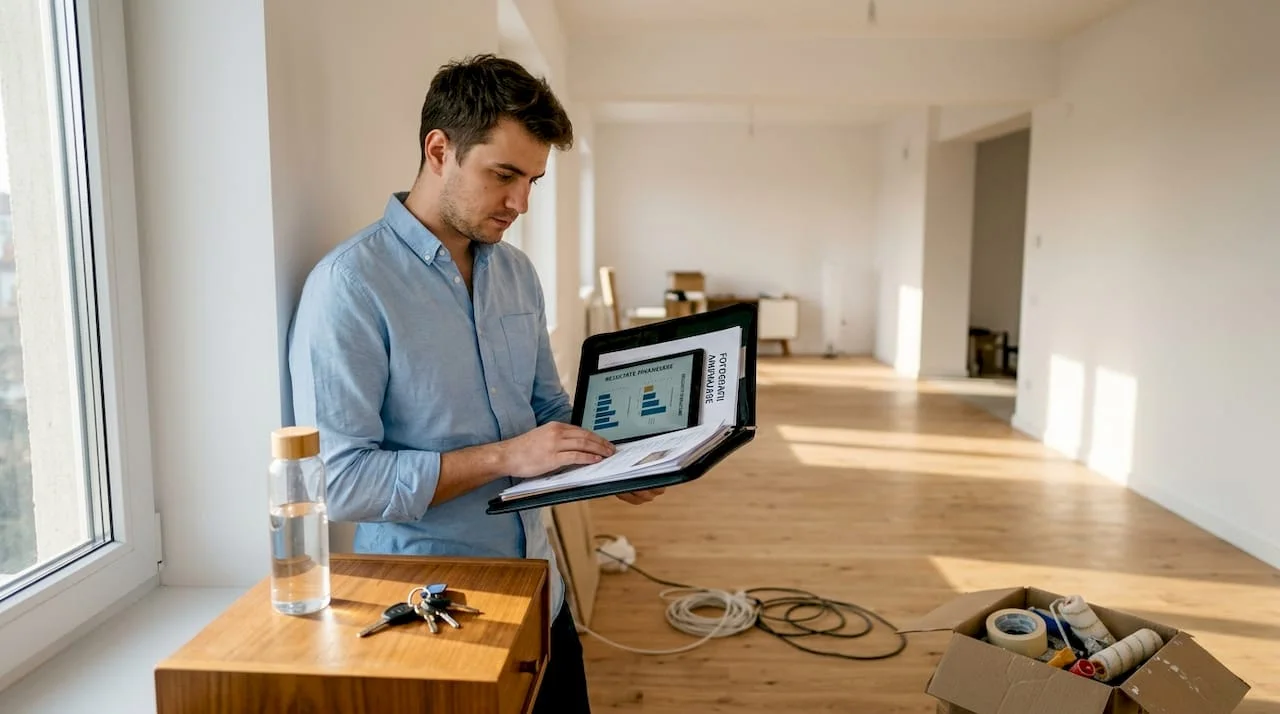
For European investors, sustainability through WELL and BREEAM certifications is becoming a selection criterion in financing and partnerships. A designer familiar with these standards adds value beyond aesthetics.
The trends that matter in 2026 and can be implemented quickly:
- Natural materials and organic textures for residential and hotel spaces.
- Spatial flexibility for hybrid offices.
- Biodynamic lighting for clinics and workspaces.
- Neutral color palette with bold accents for commercial spaces.
For a complete picture of current directions, explore interior design trends 2026 and the other trend guides available.
Professional interior design solutions for your business
If you're ready to begin collaborating with specialists, here's the next step. At SelfDezign, we work with business owners and real estate investors in Romania and Europe on projects that require more than beautiful design: they require a clear strategy, a structured process, and measurable results.
Whether you need office design solutions that reflect your company culture, hotel interior design that increases occupancy rates, or residential projects prepared for resale or rental, the SelfDezign team offers you a partnership based on understanding your real objectives. We don't work with standard formulas. We work with your specific context. Contact us for a preliminary discussion and we'll establish priorities and next steps together.
2026 trends in collaborating with interior designers
The relationship between client and interior designer is becoming digitalized and more transparent. The developments of 2025-2026 are changing the way successful projects unfold:
- Interactive digital brief — onboarding questionnaires with mood boards and visual examples replace long initial discussions, reducing alignment times to a few hours.
- Fixed-price contracts per deliverable — the practice of fixed fees per clear stages replaces opaque hourly billing and reduces budget-related conflicts.
- 3D renderings and virtual tours in VR — the client digitally approves every major decision before any purchase, eliminating surprises at handover.
- Collaborative material selection platforms — shared digital catalogs allow the client to approve or reject proposals in real time, from anywhere.