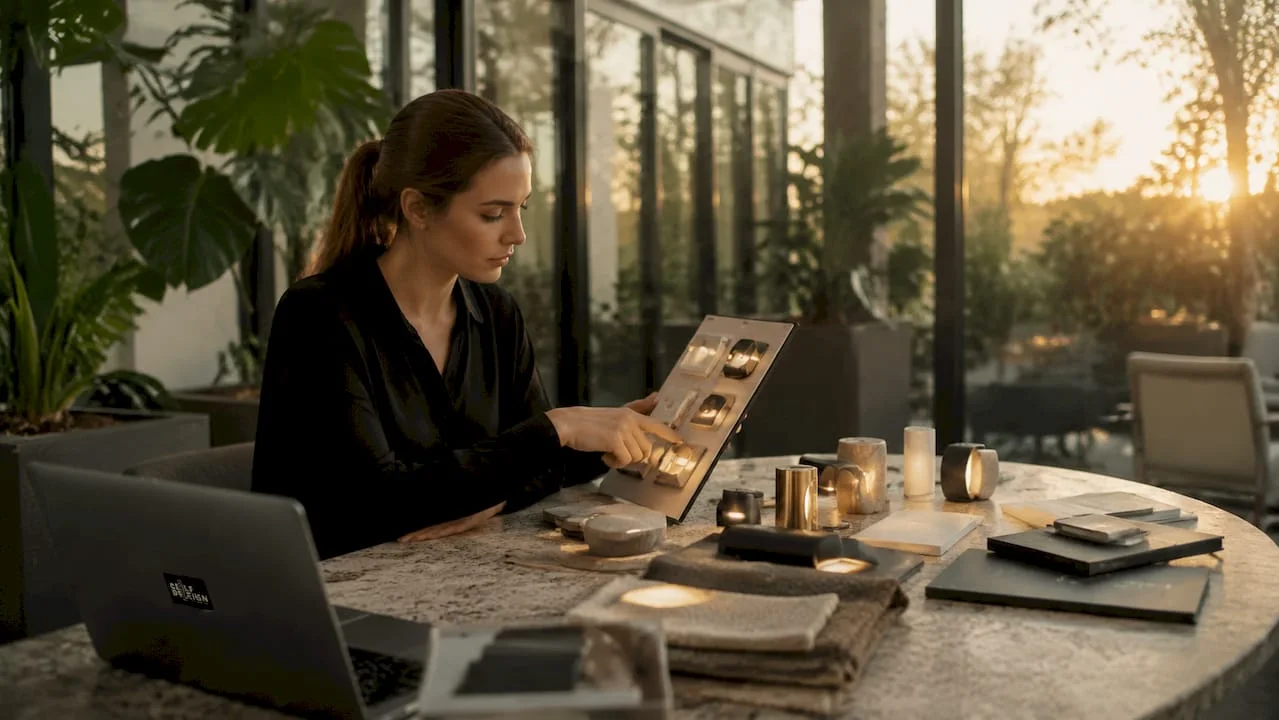
The role of lighting in landscaping: complete guide 2026
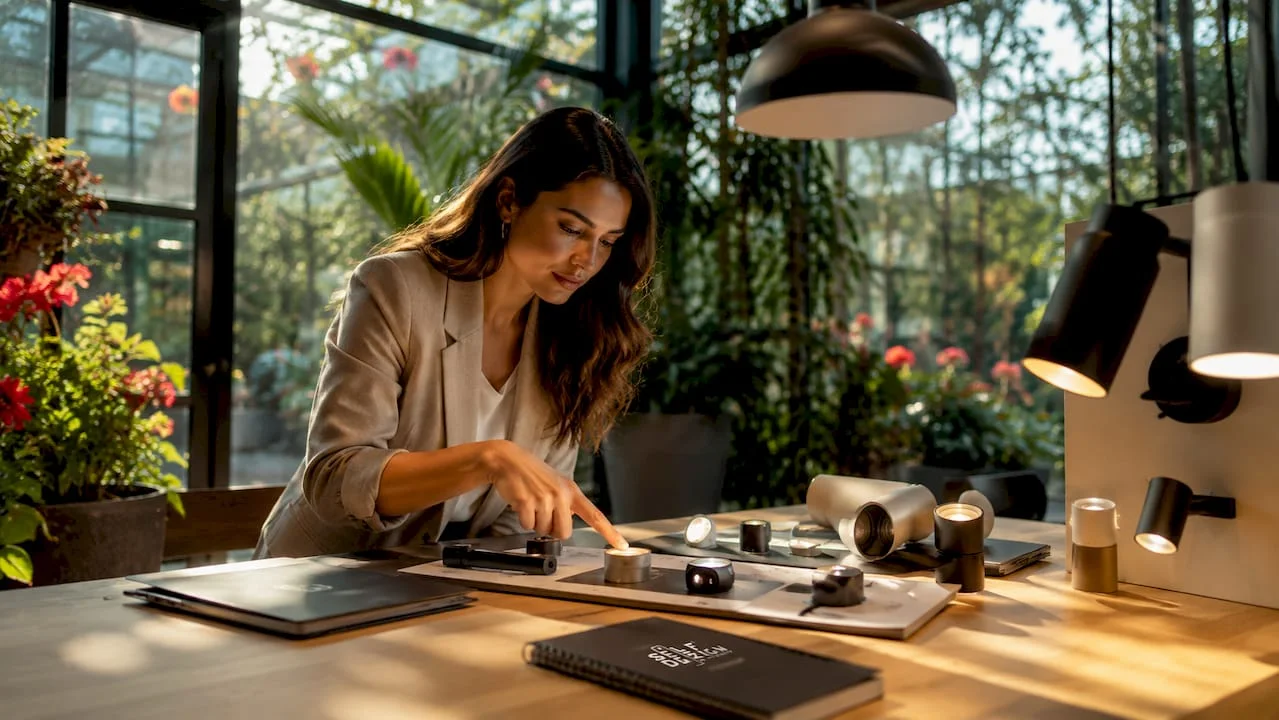
The role of lighting in design is to simultaneously shape the functionality and atmosphere of an interior space, by combining three distinct layers: functional, ambient and accent lighting. Each of these layers responds to a specific purpose, and together they define how you live and perceive a space. Lighting planning is not a project end detail. It is an architectural decision, just as important as the positioning of walls or the choice of finishes. Modern led systems, color temperature and light intensity control are the tools through which a space becomes truly functional and coherent.
What are the three main roles of lighting in interior design?
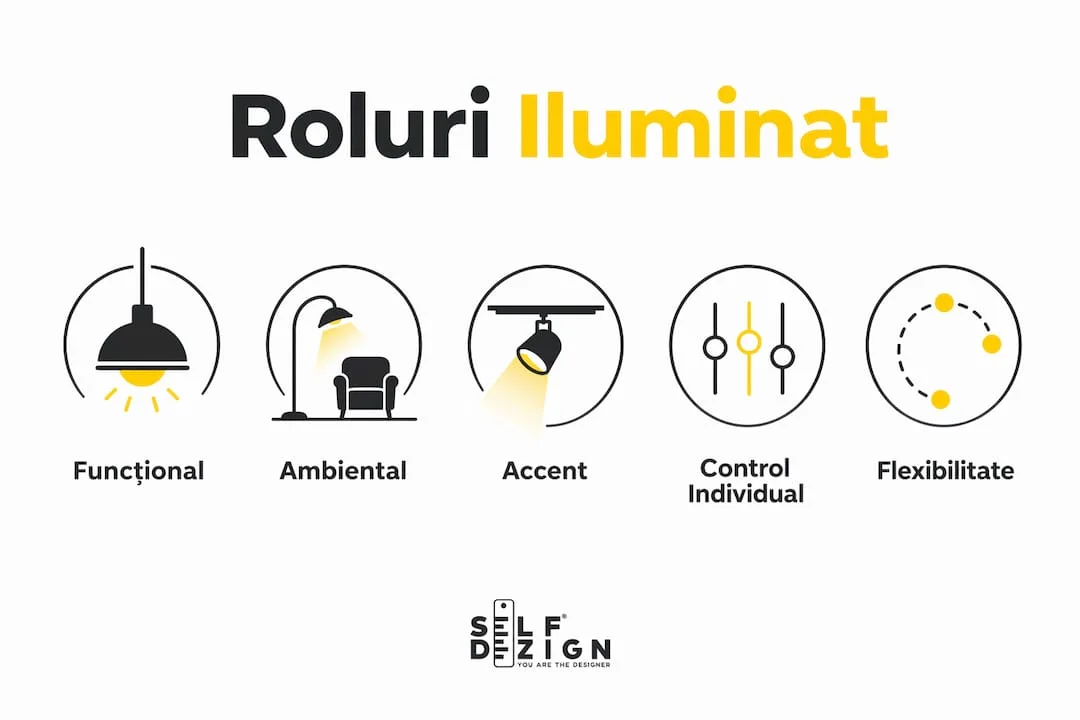
Lighting fulfills three distinct roles: functional, ambient and accent. These three categories are not interchangeable and cannot substitute for each other. Each responds to a different need and, when properly integrated, creates a coherent and comfortable lighting scheme.
Functional lighting
Functional lighting provides the visibility needed for precise activities: reading, cooking, office work, makeup. The light source should be positioned so as to eliminate shadows on the work surface and reduce visual effort. Common fixtures for this role include adjustable desk lamps, track-mounted adjustable spotlights, and lights under the cabinet in the kitchen. Intensity and direction matter more than the aesthetics of the luminaire.

Ambient lighting
Ambient lighting sets the general atmosphere of the room. Indirect light reflected on the ceiling or walls reduces harsh contrasts and unpleasant shadows, ensuring comfortable movement and visual safety. A single central ceiling light does not constitute correct ambient lighting. Efficient solutions include led strips mounted in cornices, diffuse panels or wall lamps that distribute light evenly.
Accent lighting
Accent lighting highlights aesthetic details: a work of art, a wall texture, an architectural element, or a niche. Narrow angle steerable spotlights (15–30 degrees) are the standard tool for this role. The contrast between the accentuated area and the darker background creates visual depth and gives the space personality.
Professional advice: Plans each layer on a separate circuit, with the possibility of individual adjustment. Independent control of the three types of light allows you to create different scenarios for the same space, from the working light to the evening light.
Three Layer Strategyis recommended precisely because it allows real flexibility. A living room can function as a workspace in the morning and as a relaxation space in the evening, if the lighting is designed with separate control for each layer.
How does color temperature influence the perception of space?
The color temperature, measured in Kelvin (K), determines whether the light in a space appears warm, neutral, or cold.Warm light (2700–3000K)supports relaxation and privacy, being suitable for bedrooms, living rooms and restaurants. Neutral to cold light (4000–5000K) stimulates visual alertness and clarity, recommended for offices, kitchens and medical spaces. Choosing the wrong color temperature can make a bedroom look like a doctor's office or desk to induce drowsiness.
Recommended lighting levels by type of premises
IES recommendationsfor lighting levels provides a concrete reference point for sizing the light scheme in homes.
|
Space |
Recommended level (foot-candles) |
Notes |
|---|---|---|
|
Living |
10 20 |
General ambient lighting |
|
Dormitor |
20 - 50 |
Variable by activity |
|
Kitchen (general) |
20 - 50 |
Backlighting |
|
Kitchen (Cooking) |
50-100 |
Functional lighting on the working plane |
|
Hol |
5 10 |
Orientation and safety |
These values guide the sizing of the lighting according to the actual use of space, not according to the aesthetic preference of the luminaire.
Visual comfort dependsmore by the level of illumination, uniformity and control of reflections than by the appearance of the chosen luminaire. Overlighting is as serious a problem as insufficient lighting. A space that is too bright tires the eyes and eliminates any atmosphere.
Professional advice: Test the bulbs in real space before installing them permanently. The color temperature displayed on the packaging may seem different depending on the finishes and colors of the walls in the room.
What are the best practices for integrating lighting into the project?
Lighting is not a decorative object added at the end of a project. It is an invisible building material that defines the shape and function of space. This perspective fundamentally changes the moment when lighting comes into question: not after furniture and finishes have been chosen, but before.
Here are the seven essential practices for correct integration:
- Plan the lighting from the design phase. Lighting Integrationmust start before positioning the furniture. The electrical routes, doses and supply points are established in the technical project, not by finishes.
- Distribute sources according to activity, not symmetry.A visually balanced space does not mean luminaires placed at equal distances. It means light where needed, with the right intensity for each area.
- Separate circuits by type of lighting.Ambient, functional and accent lighting must be on independent circuits. This separation allows different light scenarios without compromise.
- Integrates dimming and color temperature adjustment.Modern led systems allow CCT and intensity adjustment from the application or control panel. This flexibility turns a fixed space into an adaptable one.
- Avoid choosing lighting exclusively by aesthetics.A beautiful body with wrong light distribution creates discomfort. Checks emission angle, color rendering index (CRI) and luminous flux before decision.
- Adapts the lighting scheme to the existing natural light.A space with large windows facing south needs a different layout than one facing north. Natural and artificial light must complement each other, not contradict each other.
- Test the effects in real context.Proper integration of lighting involves checking the effects of light in the finished space, not just on the board or bulb packaging.
Common errors occur when lighting is treated as a style accessory. The result is a space with a single, unadjustable central light source with uncomfortable shadows and a uniform atmosphere regardless of the time of day or activity.
How does lighting transform the perception of an interior space?
Lighting is the only design element that can alter the perception of a space's dimensions, materials, and atmosphere without changing anything physical. An indirectly illuminated ceiling looks higher. A wall with texture accentuated by a shiny spotlight acquires depth and character. A narrow corridor with side lights becomes more welcoming than the same corridor with a single central source.
“Lighting is not a decorative object added at the end, but an invisible building material that defines the shape and function of the interior space.”Light Architecture, Rotter
The psychological effects of lighting are documented and predictable. Warm, diffused light reduces tension and invites relaxation. Cold and direct light increases concentration and alertness. Intensity variations throughout the day, synchronized with the circadian rhythm, support long-term well-being. Tunable led systems, which allow CCT adjustment from 2700K in the morning to 4000K during the working day, meet exactly this need.
Layered lighting also contributes to safety and orientation. A hallway with backlighting at 5–10 foot-candles, complemented by wall lights or floor lights, guides the movement without disturbing. The same principle applies in commercial spaces, where accent lighting guides the gaze towards products or areas of interest, and the ambient one maintains the general comfort.
Small spaces benefit most from a thought-out lighting scheme. A 45-square-meter apartment with layered lighting and adjustable CCT may seem more generous and comfortable than an 80-square-meter apartment with only one light source per room. The difference is not in the surface but in the way light defines volumes and functional areas.
Types of indoor lightingand how they combine ultimately determines whether a space works or just looks good in photos.
What I learned from years of poorly planned lighting projects
The most common compromise I see in landscaping projects is lighting being treated as the last item on the list. The fixtures are chosen after the finishes have been completed, they are mounted where there are already electric boxes and light bulbs are bought by price. The result is almost always the same: a space that looks decent in day shots and becomes uncomfortable in the evening.
Lighting is not a decoration. It's infrastructure. Just as you don't move a load-bearing wall after the house is ready, you can't correct a wrong lighting scheme without major interventions in the finishes. This reality makes project planning not a luxury but a necessity.
We noticed that the spaces that work best in the long run are those where lighting was discussed before the choice of furniture. Not because order matters in itself, but because this approach forces a conversation about how the space will really be used: at what times, for what activities, by whom. Answers to these questions define the lighting scheme more accurately than any fixture catalogue.
Another thing I understood over time:choosing the right lightit's not about trends. It's about context. A fixture that looks impressive in a showroom can be completely inappropriate in your space because of the height of the ceiling, the color of the walls, or the orientation of the window. Testing in real context is not optional. It's part of the process.
My advice to anyone planning a layout: allocate budget and time for lighting just like you allocate for flooring or furniture. A space with medium finishes and well thought out lighting will always be more comfortable than one with premium materials and the wrong light.
— expertise provided by Toni Bunaiasu
SelfDezign and lighting planning in interior design projects
SelfDezign integrates lighting planning into the concept phase, not as a later addition. Every project, be it a residential space, an office or a medical clinic, includes a lighting scheme adapted to the actual functionality and identity of the customer. The SelfDezign team reviews the orientation of the space, daily activities and technical requirements before proposing any solution. If you're working on setting up an office and you want aoffice interior designto support productivity and visual comfort, SelfDezign can build the lighting scheme as an integral part of the project, not as a decision separate from the end.