Types of indoor lighting: complete guide 2026
The interior lighting is structured on three fundamental levels: general, functional and accent. Each of these types of indoor lighting serves a distinct purpose and together create the atmosphere and utility of a space. Without a conscious layering of light sources, any arrangement risks looking incomplete, no matter how carefully the furniture or colors have been chosen. This guide explains each level, how lighting works in practice and what solutions suit each room.
1. How general, functional and accent lighting work together
Layered lightingcombines three levels with precise roles, and understanding each one is the first step towards a coherent layout.
General lightingprovides the basic light of the room. Its source is usually a central ceiling light, recessed spotlight system or polish. The aim is not to create atmosphere, but to allow the orientation and conduct of everyday activities without visual effort. Without it, the other levels have no foundation.
Functional lighting(also called work or directional lighting) serves specific activities: reading, cooking, makeup, office work. The fixtures used are table lamps, orientable spotlights, LED strips under kitchen cabinets or mirror side lights. The light is concentrated and more intense than the general one.
Accent lightinghas a decorative and emotional role. Highlight a painting, niche, wall texture, or piece of furniture. Directional spotlights, led strips buried in shelves or art projectors are the typical fixtures for this level.
The three types are not excluded.A well-lit roomhas at least three independent sources, controlled separately, to allow different configurations depending on the moment. Correct light stratification can increase productivity by up to 20%. That means that lighting is not a finishing detail, but a design decision with real impact.
Professional advice: Plan your lighting before finishes, not after. The positions of sockets, switches and electrical circuits must be established at the design stage, not improvised at the end.
2. Types of luminaires: practical classification
The lighting fixtures are chosen according to the level they serve, the height of the ceiling and the style of the space. The classification below covers the main categories you will encounter in any residential or commercial project.
|
Body type |
Illuminated level |
Typical location |
Frequent material |
|---|---|---|---|
|
Plafoniere |
General |
Central ceiling |
Metal, glass, textile |
|
Hanging lamps (pendants) |
General / Accent |
Above the table, island |
Crystal, metal, rice paper |
|
Recessed spotlights |
General / Functional |
Ceiling, rails |
Metal, Aluminium |
|
Aplice |
Functional / Accent |
Walls, mirrors side |
Metal, textile, ceramics |
|
Veioze |
FUNCTIONAL |
Bedside tables, offices |
Textile, ceramics, glass |
|
Lampadare |
Ambient / Accent |
Corners, near armchairs |
Metal, wood, textile |
|
Led strips |
Ambient / Functional |
False ceilings, furniture |
Aluminium, silicone |
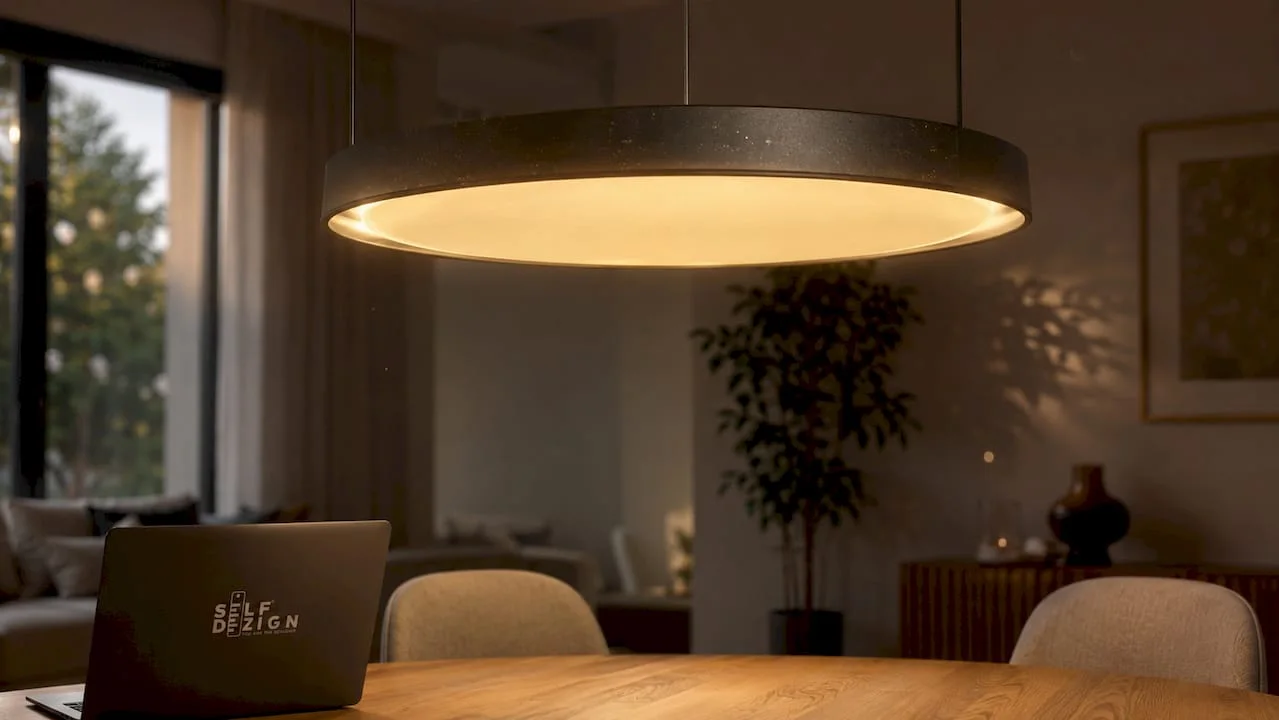
Suspended lampsare among the most visible pieces in a space. A hanging lamp above the dining table not only illuminates the table, but defines the area and communicates the style to the entire room. The optimal mounting height is 70-80 cm from the table surface.
Integrated LED stripsin false ceilings, niches or furniture are the preferred solution in premium projects for ambient lighting. They are discreet, consume little and create visual depth without dominating the space. This approach is commonly used inintegrated ambient lightingin architectural elements.
Body material influences the quality of diffused light. Shades made of textile or rice paper produce a warm and diffused light, ideal for the bedroom or living room. Clear metal or glass fixtures direct light more precisely, suitable for functional lighting.
- Crystalreflects and scatters light, strong decorative effect, suitable for formal spaces
- Wood:warm texture, integrates into Nordic, rustic or wabi-sabi styles
- Textile:diffuses soft light, reduces harsh contrasts, ideal for the bedroom
- rice paper;warm ambient light, minimalist aesthetic or Japanese
3. Color temperature and its impact on the atmosphere
The color temperature is measured in Kelvin (K) and determines whether the light appears warm, neutral, or cold. It is one of the decisions with the greatest visual and emotional impact in a space, but it is often ignored or chosen at random.
The recommendations for color temperature by type of spaces are clear:
- 2700K–3000K (warm light):living room, bedroom, hallway. Create a relaxing atmosphere, similar to evening light. It reduces visual stimulation and prepares the body for rest.
- 3500K–4000K (neutral light):kitchen, bathroom, office. Supports focus and visual accuracy without being aggressive. It is the ideal temperature for activities that require attention.
- 5000K and above (cold light):technical spaces, workshops, warehouses. It is not recommended in residential or prolonged work spaces, as it quickly tires the eyes.
Color temperature also influences the perception of the room size. Warm light makes spaces feel more intimate and smaller. Neutral or cold light makes them look bigger and cleaner. This is a design tool, not just a personal preference.
INFORMATION: Do not mix different color temperatures in the same room. A 2700K body next to a 4000K creates an unpleasant visual contrast, even if each source seems correct.
Dimmable systems add another level of control.Adjustable intensityallows switching from working light to evening atmosphere without changing bodies. A living room with spotlights at 100% intensity looks different from the same space with spotlights at 30% and the floor lamp lit. Both configurations are correct but serve different times.
The role of colors in space directly interacts with the temperature of light. You can deepen this relationship in the SelfDezign article oninfluence of colors on atmosphereThe
4. Living room lighting: layering for comfort and aesthetics
The living room is the room with the most usage scenarios: relaxation, conversation, watching movies, welcoming guests. That's why it needs the most complex lighting system in the home.
Recommended structure for living room lighting:
- general lightingrecessed spotlights on the ceiling or a central ceiling lamp, controlled on a separate circuit
- Accent lighting:directional spotlights to paintings or niches, LED strips behind the TV or in shelves
- <g id="287177674"><x id="287177673"/><g id="287177675"><g id="287177676">Ambient lighting</g></g></g>floor lamp next to the armchair or sofa, table lamps on the console or shelf
- Decorative lighting:a hanging statement lamp above the coffee table or integrated dining area
Premium ambient lightingmust not be dominant. The led profile integrated into the false ceiling or behind a floating shelf creates depth without drawing attention to the source. The effect is that the space looks richer and more layered, not that it “has many bulbs”.
5. Lighting in the bedroom: rest and functionality
The bedroom demands a different approach to the living room. The priority is visual comfort and supporting the transition to sleep, not versatility.
The recommended temperature is 2700K–3000K for all sources. Avoid recessed spotlights directly above the bed, as direct light in the eyes is uncomfortable when lying down. Place them sideways or use a diffuser ceiling light.
The functional structure of the bedroom includes:
- Table lamps on bedside tables, individually controlled, for reading without disturbing the partner
- Diffuse general lightingon the ceiling, with dimmer, for orientation and dressing
- Lighting in cabinetsor in the dressing area, with neutral light (3500K) to see the colors of the clothes correctly
- Led strips under the bedor behind the headboard as a decorative element and night light
A detail frequently ignored: the light in the dressing room or cabinets should be neutral, even if the rest of the bedroom is warm. Warm light distorts the colors of clothes and makes it difficult to match outfits.
6. Lighting in the kitchen: precision and safety
The kitchen is the space with the strictest functional requirements in the house. The light must be sufficient, well directed and not create shadows on the work plane.
The recommended temperature is 3500K–4000K. This range supports the visual accuracy required for cooking and allows the correct evaluation of food colors.
Kitchen essentials:
- Recessed spotlightsabove the work plane, positioned in front of the upper cabinets, not behind them
- Led strips under the upper cabinets, for direct illumination of the countertop
- PENDANT LIGHTabove the island or kitchen table as a decorative element and focused light source
- Interior lighting in cabinets, practical and aesthetically useful at the same time
Spot placement is critical. If the spot is placed behind you versus the work plan, you will work in your own shadow. Simple rule: the light source must be between you and the work surface.
7. Bathroom lighting: functional and safe
The bathroom combines precise functional requirements with the need for visual comfort. The most common mistake is a single light source placed centrally on the ceiling, which creates shadows on the face.
Mirror lightingshould be positioned sideways or perimeterwise, not just above. Light placed exclusively above the mirror creates shadows under the eyes, nose, and chin, making makeup or shaving activities difficult. The correct solution is side wall lights at face height or a perimeter body around the mirror.
The recommended temperature for the bathroom is 3500K–4000K. This range faithfully renders colours and supports care activities. You can add a separate circuit with warm light (2700K) for relaxing moments in the bathtub, independently controlled.
8. Lighting in the office: concentration without visual fatigue
The home office or workspace in an apartment has a specific requirement: the light must support concentration without tiring the eyes for several hours.
Backlightingreduces visual fatigue by decreasing the contrast between the monitor screen and the camera background. The light source should be positioned sideways from the screen, not behind it and not directly in front, to prevent reflections. An LED strip behind the monitor or a side wall light solves this problem simply and efficiently.
The recommended temperature is 3500K–4000K. Avoid the warm 2700K light in the office: it creates a state of relaxation that works against concentration. If the office is in the bedroom, use a separate body for the work area, with neutral temperature, controlled independently of the general lighting of the room.
9. Hallway lighting: first impression and orientation
The lobby is the first space you see when you enter a home. Its lighting communicates the tone of the entire layout, even before the guest sees the living room or kitchen.
Practical solutions for the hallway:
- PENDANT LIGHTor a ceiling lamp with character, as a visual accent piece
- Recessed spotlightsfor uniform general lighting
- Wall lightsto create depth and eliminate the feeling of a narrow corridor
- Floor level lightingor under the console, as a discreet decorative element
Narrow hallways benefit from light placed on the walls, not the ceiling. Wall lights that send light up and down visually expand the height and width of the space. It's a simple trick, but with immediate effect.
10. Industrial and decorative lighting: when the body becomes a design piece
Industrial lighting and decorative lighting are two aesthetic directions with different logics, but they both work on the same principle: the luminaire becomes a design element, not just a light source.
Industrial lightinguses exposed metal fixtures, visible filaments, glass tubes, and rough finishes. It is associated with loft spaces, restaurants, creative offices and homes with apparent concrete elements. Edison fixtures, matte black spot rails, and oxidized metal pendants are typical examples.
Decorative lightingprioritizes body shape and material. A Murano crystal lamp, a rattan pendant or a carved wall lamp are statement pieces that contribute to the visual identity of the space.Successful lighting projectmaintains a coherent style and strategically invests in such pieces to reflect the identity of the space.
The two styles can coexist, but they need a common thread: the material, the color of the finish, or the proportions of the bodies. Without consistency, the result is a space that looks cluttered, not eclectic.
11. How to choose the right lighting solution for your space
Choosing the lighting solution does not start with the fixtures, but with understanding the space and how it is used. Some questions that guide the decision:
- What activities take place in the room?Precise activities (cooking, reading, makeup) require dedicated functional lighting. Relaxation and conversation ambient lighting sky.
- What is the ceiling height?Low ceilings (below 2.6m) do not support bulky hanging lamps. Recessed spotlights or flat ceiling lights are more suitable.
- What is the overall style of the layout?Luminaires must speak the same visual language as furniture and finishes.
- Is it possible to install dimmers?If not, plan several independent circuits to compensate for the lack of intensity control.
SelfDesign Guide tochoosing the perfect lightand the article onstrategy and technique in lightingdeepen these decisions with examples from real projects.
Wall lamps, table lamps, floor lamps, pendants and lighting under cabinetsare used in combination for multidimensional effects. No single source can do all that a well-thought-out layering does.
The lighting I see most often wrong in projects
I work with very different spaces, from residential apartments to restaurants and offices. And if there is one mistake that I constantly see, regardless of budget or project type, it is this: lighting is treated as a final decision, not as a design decision.
The customer chooses furniture, finishes, colors, and only at the end thinks about the lighting. The result is that the electrical positions are not where they should be, there are no separate circuits for different levels of light, and everything ends up being connected to a single switch. The room looks good during the day, but in the evening it becomes either too dark or too uniform and flat.
The second thing I see frequently: big investment in a statement body and zero attention to the rest of the sources. A spectacular hanging lamp above the dining table does not save a room where the general lighting is a 6W spotlight on the ceiling. Statement pieces work when they have context. Without stratification, they appear isolated.
What I constantly recommend: plan the lighting in the technical design phase, not after. Determine circuits, positions, and body types before pouring the screed or pulling the plasterboard. The cost of correcting after is several times higher than the cost of planning correctly from the start.
And one last thing: don't be afraid to mix body styles, as long as you maintain consistency through finish or color temperature. An industrial floor lamp next to a modern sofa works if both have the same metal tone. Consistency does not mean uniformity, but visual logic.
— Irina Stoica
How SelfDezign can help light up your space
Well thought-out lighting is not improvised or copied from magazines. It projects itself according to the space, usage, and identity you want to communicate. At SelfDezign, lighting is part of the interior concept from the first sketch, not from a final purchase list. Whether you're working on aresidential projector aoffice space, the team integrates lighting solutions into the logic of the entire project: electrical positions, circuits, body types and color temperatures adapted to each area. The result is not a “well-lit” space in the technical sense, but a space that works and looks exactly the right way, at any time of the day.