Natural light in design: role, benefits and integration
Natural light in landscaping is the primary source of lighting that defines how we perceive an interior space, influencing the aesthetics, functionality and well-being of those who live in it. Unlike artificial lighting, sunlight brings with it a quality that no bulb can completely replicate: authenticity. It reveals the actual texture of the materials, renders the colors faithfully and regulates the biological rhythm of the users. Understanding the role of daylight in interior design is not a technical detail reserved for architects. It is a fundamental decision that affects the quality of life every day.
What is natural light in furnishings and why does it matter?
Natural light in landscaping is sunlight that enters the interior space through windows, skylights or other architectural openings, without being artificially generated. In interior design, the technical term used isdaylighting sau daylight design, and its conscious integration into the project is one of the decisions with the greatest long-term impact.
The role of light in design goes beyond mere visibility. Natural light shapes the perceived volume of a room, makes surfaces “breathe”, and creates a psychological connection between the interior and the exterior. A well-lit natural space looks larger, cleaner and more alive than one dependent on artificial sources, even if the physical dimensions are identical.
The modern lifestyle has resulted in a"hunger for light"which causes chronic fatigue and anxiety. Interior design must meet this fundamental need, not ignore it in favor of surface aesthetics. This is the perspective from which SelfDezign starts in each project.
What are the main types of natural light inside?
Natural light is not uniform. It varies depending on the direct source, how it is filtered, and the surfaces it encounters before reaching the room.
Direct, diffused and reflected light
Direct lightis the one that penetrates unobstructed through the window and creates clear shadows, strong contrasts and areas of intense brightness. It's energizing, but can be uncomfortable if unmanaged, especially in workspaces or bedrooms.
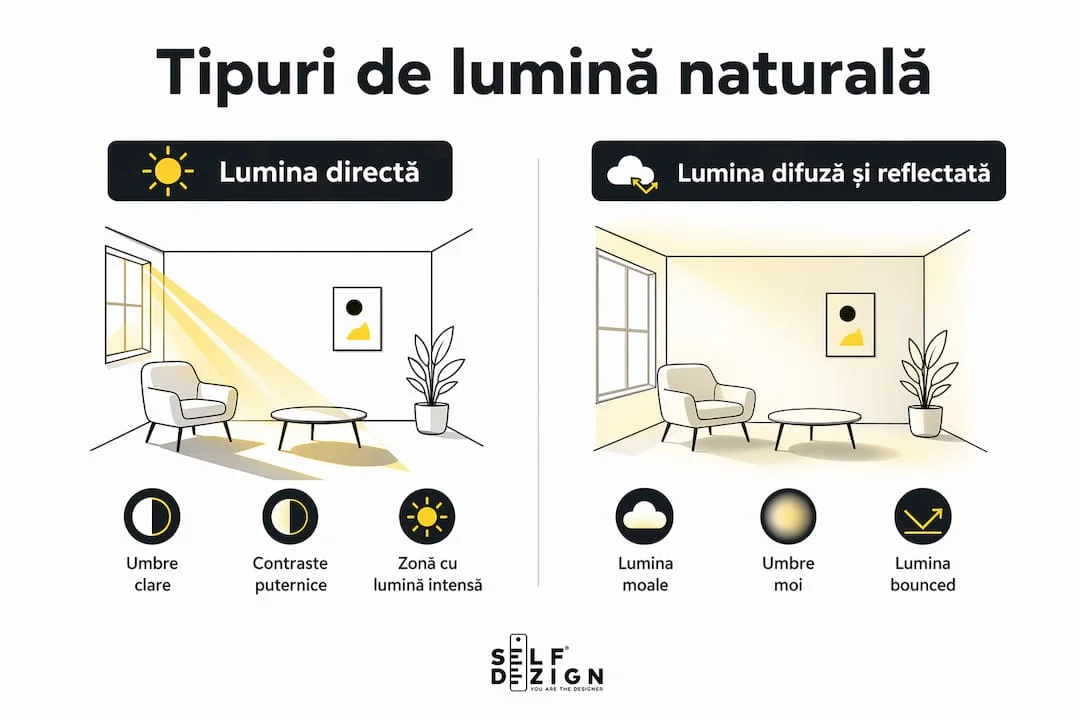
General Diffuseoccurs on cloudy days or when sunlight is filtered through fine curtains, blinds, or frosted glass. It distributes light evenly, without harsh shadows, and is ideal for spaces where visual comfort is a priority, such as offices or living rooms.
Reflected lightis the one that gets inside after being bounced by external surfaces: white walls of neighboring buildings, light-colored pavements or vegetation.Cardinal orientation and external reflectionssignificantly influences the quantity and quality of natural light inside.
Color temperature and daily variations
Natural light has aneutral-cold color temperaturebetween 4,000K and 5,600K. At noon, in clear sky conditions, the temperature reaches 5,000-5,600K, which means a precise white light that renders colors without distortion.
Early morning and evening, sunlight goes down to 2. 700–3. 500K, becoming warm and golden. This is the light that makes a living room look inviting at sunset, but that can make a pure white on the wall look creamy or yellow. The colors of the walls seem different throughout the day precisely because of these temperature variations. A designer who ignores this phenomenon will deliver a space with unpleasant surprises after completion.
The cardinal orientation of the camera determines the dominant type of daylight:nordulprovides dim, stable and cool light throughout the day, ideal for painting workshops or offices.Sudulbrings intense and warm light that needs to be filtered for thermal and visual comfort.
INFORMATION: Test wall colors under natural light at three different times: morning, noon, and evening. The color you choose must work in all three contexts, not just in the showroom.
What benefits does natural light bring to interior design?
The advantages of natural light operate simultaneously on three levels: biological, aesthetic and economic. Ignoring any of them means an incomplete project.
Health & Biological Rhythm
Natural light supportsserotonin production, the essential neurotransmitter for emotional balance and well-being. The effect is direct and measurable: spaces with generous access to sunlight reduce anxiety and improve user mood.
Exposure to natural light for 10–15 minutes in the morning stimulates the hypothalamus and regulates the internal biological clock, with positive effects on concentration and sleep quality. This means that an east-facing bedroom with windows that allow morning light is not an aesthetic detail. It's a health decision. Visual access to the outside reduces stress and anxiety, and interior design must prioritize this connection.
Authenticity of materials and aesthetics of space
Natural light is the only type of lighting that reveals the authentic texture of materials. Solid wood, natural stone, apparent concrete or decorative plaster look completely different under sunlight from any artificial source. Fine shadows created by direct light on a textured surface add depth and character that no lamp can faithfully reproduce.
“Natural light doesn't decorate a space. She authenticates it.”This is the difference between a space that looks good in photos and one that feels good in real life.
The aesthetic and functional benefits of daylight include:
- Volume perception: naturally lit rooms look bigger and taller
- Accurate color rendering: materials and finishes show exactly how they were chosen
- Visual dynamism: the light changes throughout the day, giving life to the space
- Visual comfort: reduction of eye fatigue versus exclusive artificial lighting
Energy efficient
Maximizing daylightcan reduce energy consumption for artificial lighting by 30-50%. This is a significant long-term saving, especially in commercial or office spaces where lighting works 8–10 hours a day. Natural light for energy efficiency is not a concept reserved for certified green buildings. It is a common sense decision applicable to any fit-out project.
Daylight vs. artificial light: how do you balance them?
Natural light and artificial light are not adversarial. They are partners with different roles, and quality interior design uses both consciously.
|
Criteriu |
Daylight |
Artificial lighting |
|---|---|---|
|
CT Color Temperature |
2,700K-5,600K (variable) |
Fixed, chosen at installation |
|
Color Rendering (CRI) |
100 (absolute reference) |
80–98, depending on the source |
|
Control |
Partial (orientation, filtering) |
Total (intensity, direction) |
|
Operational cost |
Zero |
Recurent |
|
Biological impact |
Regulates circadian rhythm |
May disrupt sleep in the evening |
|
Disponibilitate |
Dependent on time and season |
Constant |
2. Warm artificial light. The 700K can distort color perception, making finishes look yellow. This is a common problem in projects where the selection of materials was done under natural light, but the final installation looks different in the evening. The solution is not to give up the warm light, but to understand when and where you use it.
5,000-6,500K cold lightsuppresses melatonin production and increases alertness. This makes it suitable for offices and workspaces during the day, but harmful if used in the evening in bedrooms or seating areas.
INFORMATION: Design artificial lighting as a backup and accent system, not as a replacement for daylight. Layering sources: Ambient, functional and accent light. See a indoor lighting guide before fixing the luminaire positions.
How do you integrate and maximize natural light in your space?
Natural light optimization does not always require major structural interventions. Many of the most effective methods are fitting and finishing decisions.
Practical steps for more daylight
- Clear the windows. Furniture placed near windowscan block up to 15% of available daylight. Move tall shelves, bulky plants, and decorations away from the opening area.
- Choose light colors for walls and ceilings.White or pale-tone surfaces reflect light into the depth of the room. A white ceiling can significantly increase perceived brightness relative to a colored or dark ceiling.
- Use mirrors strategically.A mirror placed on the wall opposite the window visually doubles the amount of light in the room. It's not a cheap decorating trick. It is a technique used in luxury design projects to compensate for unfavorable orientations.
- Opt for fine curtains or transparent blinds.Heavy drapes block the light even when pulled sideways. Transparent or semi-transparent materials filter the light without removing it, maintaining privacy and visual comfort.
- Invest in structural solutions where possible.Rooflights and solar tunnels can triple the amount of daylight compared to a similarly sized vertical window. They are solutions with a major impact in indoor bathrooms, hallways or kitchens without direct access to the outside.
- Choose glossy surfaces in moderation.Marble, glazed ceramic or polished parquet floors reflect the light upwards, enhancing the overall brightness. Excess matt surfaces absorb light and make the space appear darker than it is.
Reference table: daylight maximization solutions
|
Method |
Complexitate |
Impact |
Estimated cost |
|---|---|---|---|
|
Window clearance |
Low |
Mediu |
Zero |
|
Light colors on the walls |
Low |
Ridicat |
Redus |
|
Strategic mirrors |
Low |
Ridicat |
Low/medium |
|
Fine/Transparent Curtains |
Low |
Mediu |
Redus |
|
Glossy surfaces |
Medie |
Mediu |
Mediu |
|
Roof skylights |
High |
Very high |
Ridicat |
|
Solar tunnels |
High |
Ridicat |
Medium/High |
The orientation of the camera remains the factor that you cannot change after construction. Therefore, in new projects or major renovations,choosing the perfect lightfor each room should start with the analysis of the cardinal orientation, not with the selection of the luminaires.quality residentialalways start from this analysis.
Why natural light is the heart of a space, not a detail
I worked in projects where the client came up with a clear wish list: quality furniture, premium finishes, a well-defined color palette. Natural light did not appear on any list. It was treated as a given, not a resource to be designed.
This mistake costs. Not in money, but in the daily experience of the space. A living room with great furniture, but with a small north-facing window and heavy curtains, will always seem oppressive. No design lamp compensates for the absence of sunlight.
What we have seen in SelfDezign projects is that the spaces that work best in the long run are those where natural light has been treated as a design element, not as an architectural accident. That means analyzing orientation before choosing colors, planning mirror positions before ordering furniture, and understanding how light changes in that specific space over an entire year, not just on the day of your site visit.
There is also a dimension that we constantly underestimate: natural light is a health factor, not an optional comfort factor. An office space without access to sunlight is not only less pleasant. It is a space that affects the productivity, concentration and emotional state of the people who work there every day. The same principle applies to medical clinics, Horeca spaces and homes.
Natural light is the heart of the setting. The rest are organs that function around it.
Toni
How SelfDezign helps you harness natural light in your project
SelfDezign designs spaces where natural light is treated as a strategic resource, not as a secondary decorative element. Whether we're talking about aoffice spacewhere productivity depends on visual comfort, either about a home where quality of life is built every day, the SelfDezign team analyzes orientation, light flow and interaction with finishes before any other design decision. The result is not a space that looks good in photos. It's a space that actually works well for the people who use it. If you want to understand how natural light can be thought of in your specific project,interior design consultancyis the first concrete step.