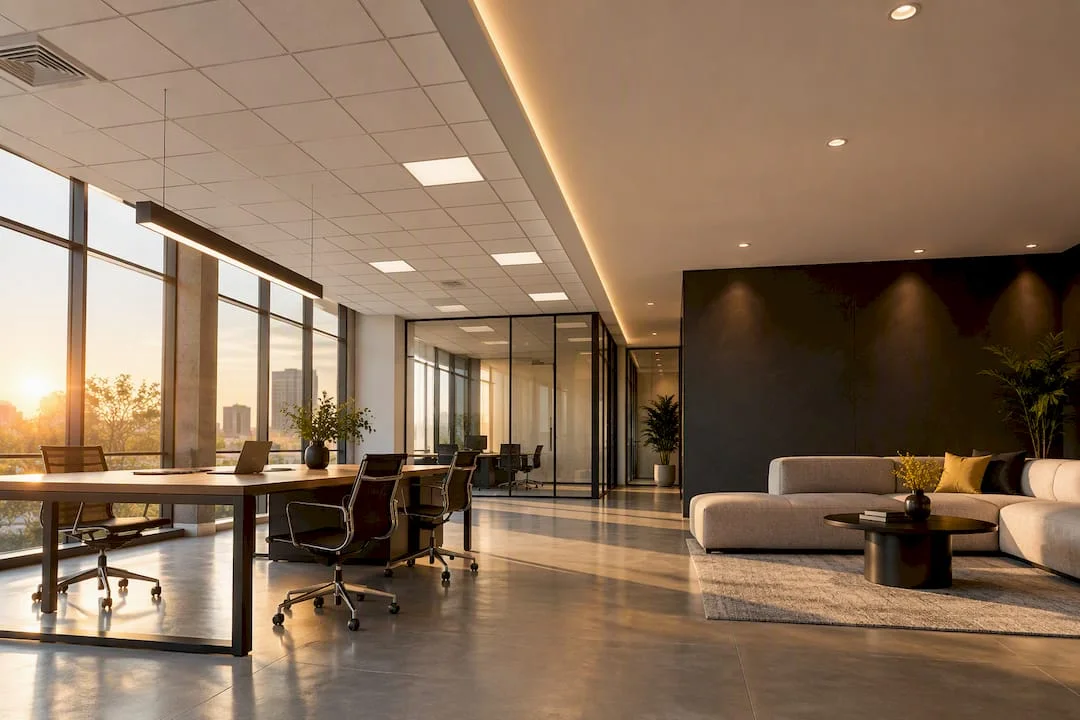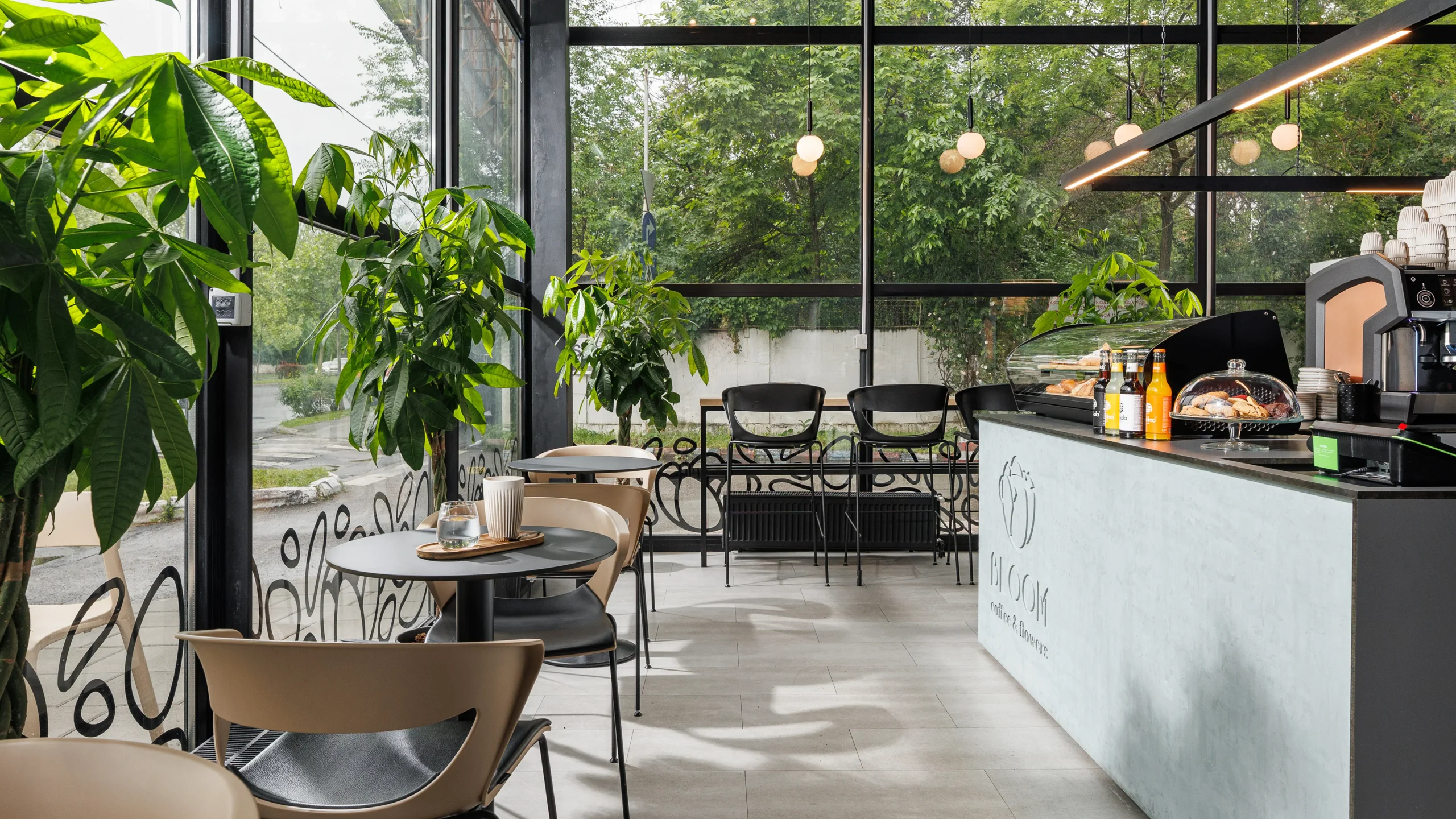
What is storytelling in design: complete guide 2026

Storytelling in design is the technique by which visual, spatial, and sensory elements are organized to convey a coherent story and create anemotional connection with the user. It is not about beautiful decor or passing trends. It is about a space that communicates something specific, has a recognizable narrative thread, and leaves a lasting impression. If you have ever walked into a restaurant and felt that the place "grabs you" without knowing why, or if you have visited an office and immediately understood the company's values just from the atmosphere, you have experienced storytelling in design.
What is storytelling in design and why it matters
Storytelling in design is defined as the process of building a visual and spatial narrative that guides the user through a meaningful experience. The term comes from visual communication and UX design, where the universal narrative structure includes protagonist, conflict, resolution, and ending. Applied to interior design, this structure becomes: who lives or works in the space, what needs and values they have, and how the space responds to all these through a coherent visual language.
The importance of storytelling in design is not aesthetic, but functional and emotional. A space with a well-crafted story reduces friction, increases the sense of belonging, and communicates identity without a single word. Think of a medical office furnished with warm materials, diffused lighting, and soothing graphics: the story told is "you are safe, you are cared for." The contrast with a cold, white, impersonal office is immediately perceptible, even if the patient cannot articulate it verbally.

The elements through which this story is built include color, texture, materials, lighting, proportions, the order of objects, and personal details. Every visual choice is a sentence in the space's narrative. When these choices are coherent and intentional, the space acquires its own voice.
How storytelling in design works: mechanisms and elements
The classic structure of a story in design follows the same narrative arc we recognize in literature or film: problem, solution, success. Applied to a residential space, this arc might look like this: a family with three children needs a living room that is simultaneously a play area, a relaxation space, and a reception area for guests. The solution is a design with clearly delimited visual zones, durable materials, and personal details reflecting each family member's personality. Success is a space where everyone feels at home, not a showroom.
The visual and spatial elements that support the narrative are:
- Color sets the emotional tone of the story. Terracotta shades communicate warmth and authenticity; deep blue suggests focus and depth.
- Texture and materials add narrative layering. Raw wood tells a different story than lacquered wood, even if the object's shape is identical.
- Lighting controls the story's rhythm. Direct light accelerates, diffused light slows down and invites contemplation.
- Objects with emotional value are the climax points of the narrative. A family photo, an object brought from a trip, or a book displayed on a shelf says more about the occupant than any presentation material.
- Layout and circulation define how the story unfolds over time. The way you move through a space is, in fact, the way you read the narrative.
Personalization is the backbone of successful storytelling in design. A space that could belong to anyone belongs to no one. The story becomes authentic when it accurately reflects the identity of the person who lives or uses it.
Our advice: Before choosing any visual element, define three words that describe the essence of the space and its user. Every design decision must be justifiable by at least one of those words.
Interior design vs. visual communication: how narratives differ
Storytelling in interior design and visual storytelling in graphic or digital communication start from the same narrative principle but operate in different environments and with different tools. Understanding these differences helps you apply the right techniques in the right context.
|
Criterion |
Storytelling in interior design |
Visual storytelling in communication |
|---|---|---|
|
Environment |
Three-dimensional physical space |
Screen, print, digital medium |
|
Tools |
Materials, furniture, light, texture |
Images, typography, color, video |
|
Experience duration |
Hours, days, years |
Seconds, minutes |
|
Interaction |
Physical, sensory, immersive |
Visual, sometimes auditory |
|
Main objective |
Identity, functionality, emotion |
Message, conversion, recognition |
|
Audience |
Direct user of the space |
General or segmented public |
Storytelling in UX design occupies an intermediate place:builds empathy and human connection, transforming functional interactions into memorable experiences. This means that a well-designed website or app uses the same narrative principles as a well-thought-out interior space: it guides the user, anticipates their needs, and creates a sense of coherence and safety.
The impact on user behavior is measurable in both fields. A commercial space with a clear visual narrative, also supported byinterior signage, communicates brand values from the first contact and reduces the time needed for a client to feel comfortable. The same principle works in an office: a space that tells a story about company culture attracts and retains talent more effectively than an anonymous open space.
Examples of storytelling applied in interior design
The most compelling examples of storytelling in interior design are those where the story is not seen but felt. Here are a few concrete scenarios illustrating how it works in practice.
Residential spaces with authentic stories
An apartment designed for a family with roots in Transylvania can integrate elements of traditional ceramics, solid wood, and colors inspired by the mountain landscape, without falling into folklorism. The story is not "we like traditional," but "we know where we come from, and that gives us stability." The difference is subtle but visibly important in the final result.
Successful personalized residential designs always include objects with emotional value integrated into the visual structure of the space, not randomly placed on shelves. A color-organized book collection becomes a design element. An inherited painting becomes the focal point of a wall. The story is built from these layers.
Commercial and office spaces with storytelling for branding
An office for an advertising agency in Bucharest can use a wall with sketches and work-in-progress concepts, industrial materials, and adjustable lighting to communicate: "We are a creative team, in constant motion, with transparent processes." The same message conveyed through a classic office with catalog furniture would be a visual contradiction to the brand's identity.
|
Type of space |
Story communicated |
Key elements |
|---|---|---|
|
Restaurant with local cuisine |
Authenticity, reinterpreted tradition |
Natural materials, artisanal objects, warm lighting |
|
Private medical clinic |
Safety, professionalism, care |
Neutral colors, clean lines, human details |
|
Tech startup office |
Energy, collaboration, innovation |
Flexible spaces, bold graphics, informal areas |
|
Family home |
Warmth, functionality, identity |
Personal objects, varied textures, dedicated zones |
Spaces with a coherent visual narrative are easier to photograph, easier to present, and most importantly, easier to live or work in. A well-told story makes the space easier to understand for everyone who uses it.
How to apply storytelling in design: techniques and practical steps
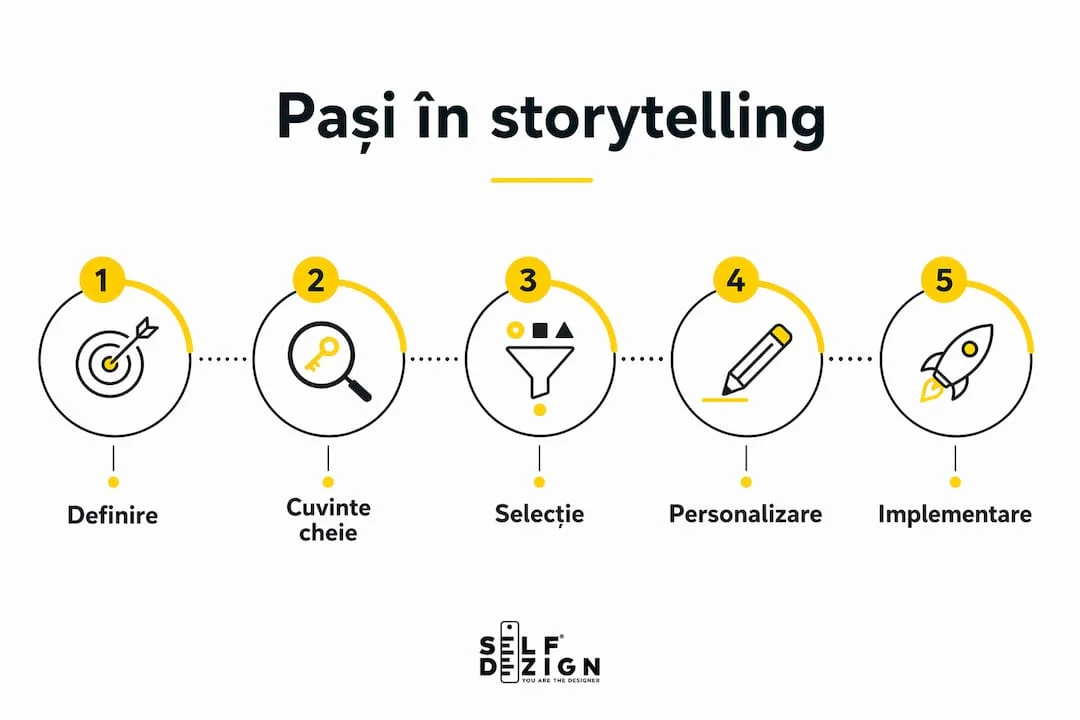
Implementing effective storytelling in design is not an intuitive process. It follows a clear method, starting with listening and ending with visual coherence.
- Define the protagonist. Who uses the space? What values, routines, and aspirations do they have? A space for a solo entrepreneur working from home has a completely different story than a space for a family with young children. Without a clear protagonist, the narrative remains vague.
- Identify the conflict. What problem does the space solve? Lack of natural light, need for privacy in an open space, desire to integrate an art collection without visual overload. A precisely defined conflict generates meaningful solutions.
- Build the visual narrative thread. Choose a palette of colors, materials, and shapes that coherently communicate the protagonist's story.The visual identity of a space works exactly like a brand's visual identity: it must be recognizable and consistent.
- Integrate personal elements gradually. A space with a story is not achieved through massive shopping, but throughgradual integration of objects with emotional value. Visual overload destroys the narrative as effectively as its absence.
- Test coherence. Look at the finished space and ask yourself: if someone who doesn't know you walked into this space, what would they understand about you? If the answer is vague or contradictory, the narrative needs adjustments.
Common mistakes in design storytelling include following trends at the expense of authenticity, adding decorative objects unrelated to the story, and confusing an "Instagrammable" space with a space that has a story. The two are not the same. A space can be photographically attractive and completely devoid of narrative.
Our advice: Collaboration with the client does not stop at the briefing. The best design story emerges from an ongoing conversation, where the designer listens not only to what the client says but also to what they don't say, what objects they keep, what spaces make them feel good.
Why authenticity beats perfection in design storytelling
I have worked on projects where the client came with an impeccable mood board, collected from magazines and inspiration platforms, and a list of premium materials. Everything looked good on paper. But something was missing: their story. Not the story from the magazine, but their story.
The biggest mistake I see in design, regardless of budget or complexity, isthe pursuit of aesthetic perfection instead of communicating identity. A visually perfect space, but devoid of personal meaning, quickly tires you. You look at it and feel nothing. And that is, in fact, the biggest failure of a design project.
“Storytelling is not a decorative layer applied at the end. It is the structure from which the entire project grows. When design avoids purely technical approaches and puts the user at the center of the narrative, the result is a space that withstands time, does not become 'old' after two years, and continues to make sense as the user's life evolves.
I recommend that anyone working with a designer accept imperfection as part of the story. The inherited object that doesn't perfectly match the chosen color palette can be precisely the element that makes the space memorable. Authenticity comes from accepting meaning, not from aesthetic perfection. And a good designer knows how to integrate that object into the narrative, not eliminate it."— Toni Bunăiașu
How SelfDezign creates spaces with a story
At SelfDezign, every project starts with a simple question: what should this space communicate and for whom? Whether it is aresidential apartment that reflects the occupants' personality, or an office that supports a team's culture, the design process integrates storytelling as a working method, not as an aesthetic option. The SelfDezign team works with clients from Bucharest and Europe, for residential, commercial, office, horeca, and medical clinic spaces, with an emphasis on understanding the real context of each project. If you want a space that says something, not just looks good,office design or residential SelfDezign is the right starting point.