Why Visual Identity Matters in Interior Design

Visual identity in interior design is the physical expression of your brand, translated into space through colors, materials, typography, and signage. It is not about aesthetics for aesthetics' sake, but about a strategic tool that directly influences client perception, employee behavior, and the perceived value of your business. Why visual identity matters in interior design becomes an immediately answered question when you understand that every design decision communicates something, whether you consciously chose it or not. Business owners, interior designers, and renovators who ignore this connection lose not only visual coherence but a real competitive advantage.
Why Visual Identity Matters in Your Space Design
Your clients don't read brochures before they walk through the door. They read the space.85% of clients form an impression of your company within the first 10 seconds spent in the reception area. This means the decision to trust your brand or not is made before anyone has spoken a word.
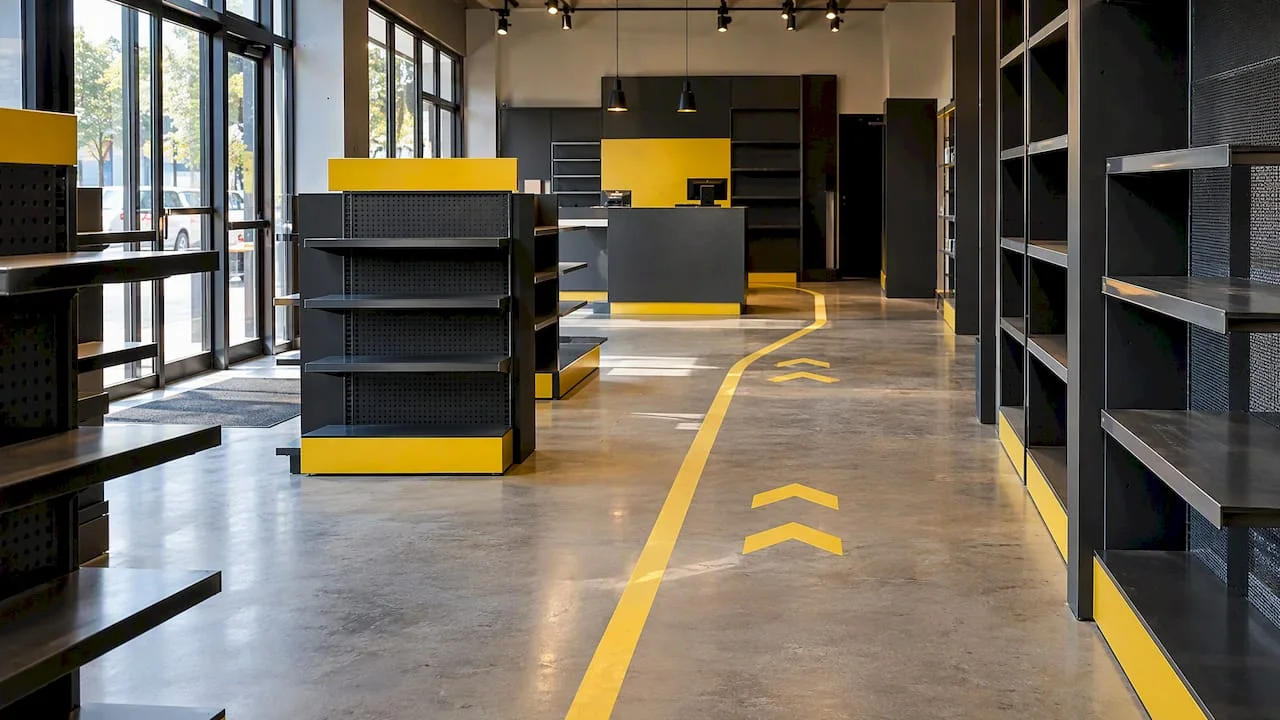
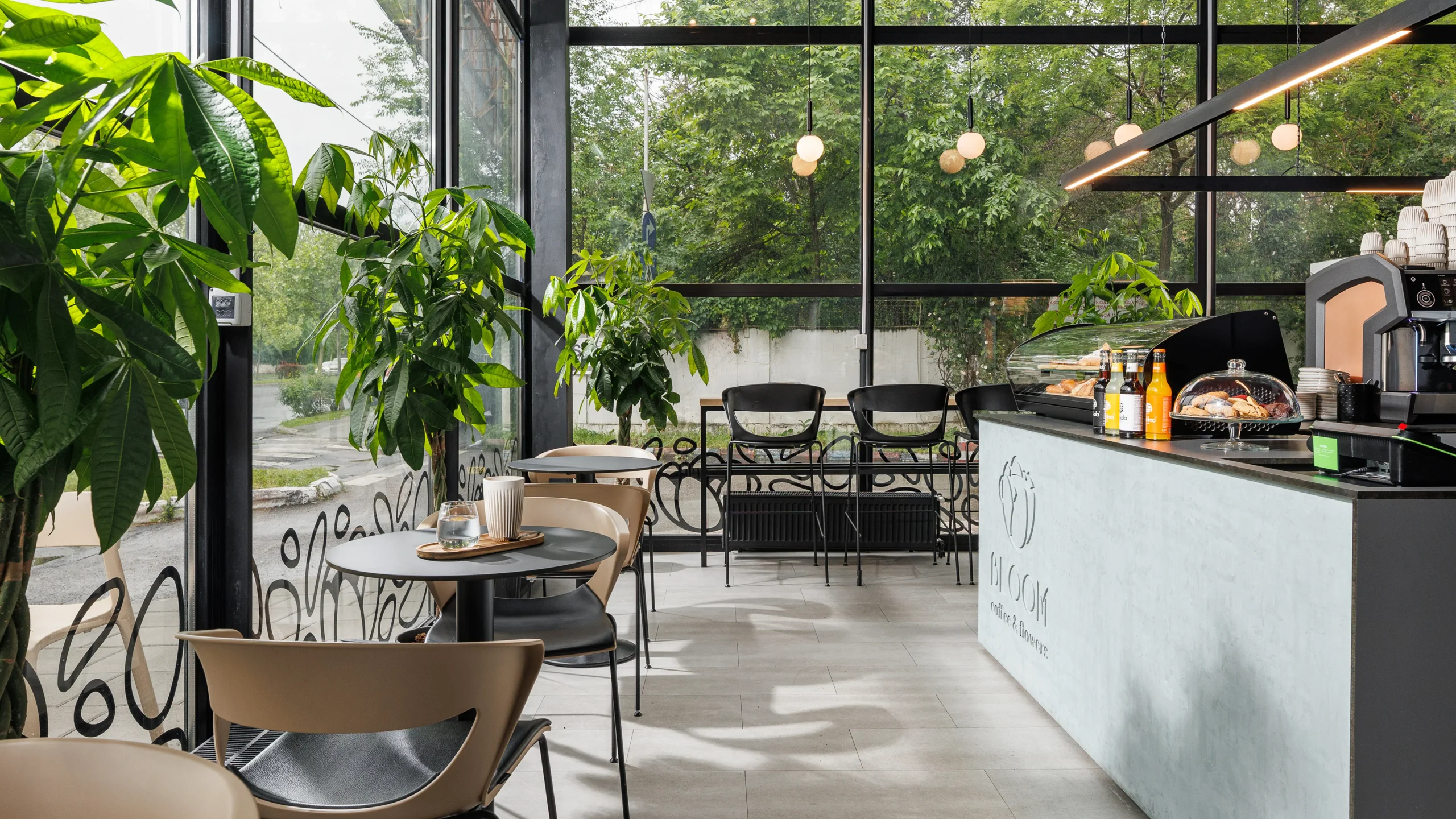
The elements that build this impression are not random. Color schemes, typography applied on walls or furniture, the quality of finishing materials, and the coherence between interior and exterior together form a visual vocabulary that the brain processes instantly. A medical office with cold white walls and generic furniture communicates something different than one with warm tones, natural materials, and clear signage. Both are 'clean,' but only one inspires trust.
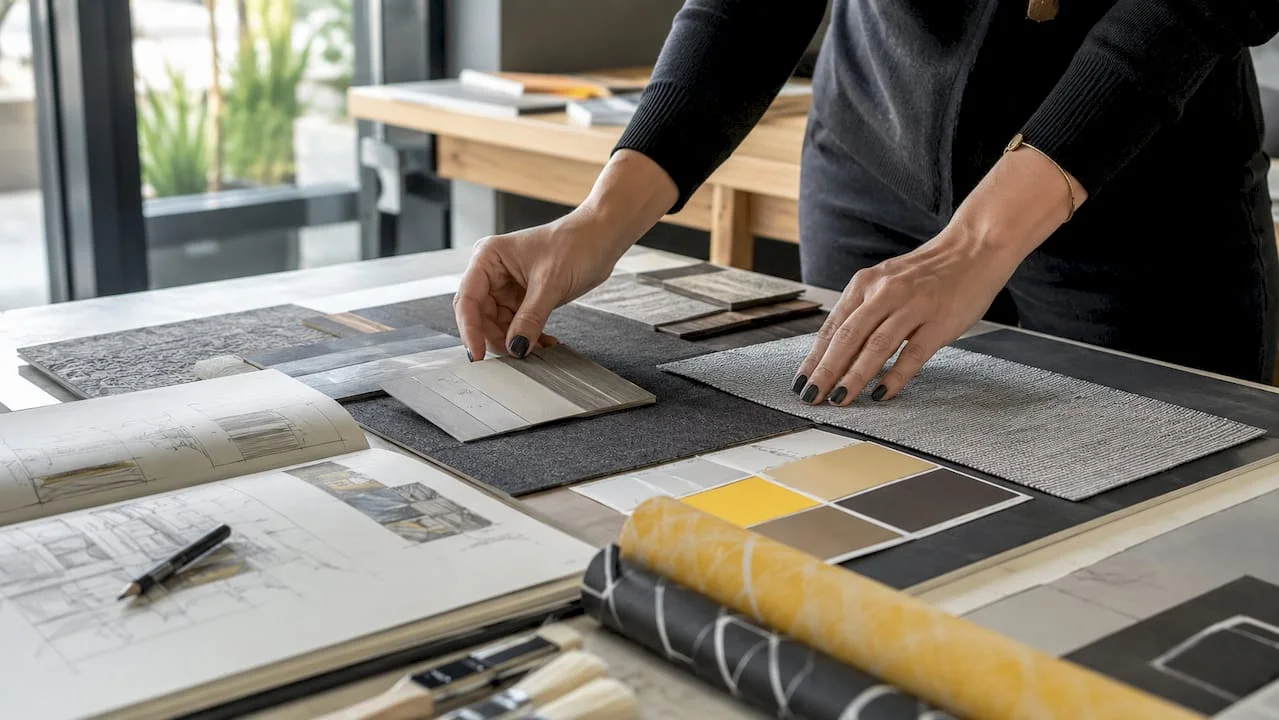
Premium signage materials automatically convey brand value to visitors and reduce the barriers of the first visit. The first visual contact with your brand in the physical space actually begins from the parking lot. Exterior signs, the entrance, and facade lighting are the first sentences of the story your space tells.
Key visual elements that build the first impression include:
- Color palette applied coherently on walls, furniture, and accessories, aligned with brand colors
- Typography used in interior signage, menus, labels, or information panels
- Material quality of finishes, which communicates the level of investment and brand seriousness
- Exterior and interior signage, which guides visitors and reinforces identity at every touchpoint
Professional tip: Before any design decision, map out a client's journey from the parking lot entrance to the moment they meet your team face-to-face. Every touchpoint is an opportunity to confirm or contradict the brand promise.
How Space Influences Organizational Culture and Employee Retention
A space designed according to brand identity speaks not only to clients. It speaks daily to the people who work there. Employees in properly branded spaces report 30% higher satisfaction compared to those working in generic or visually incoherent spaces. Higher satisfaction directly translates into productivity, retention, and quality of work.
This is no coincidence. When an employee enters a space that reflects the company's values, they receive daily confirmation that the place they work in has a clear identity and a stated purpose. An architecture studio using raw materials, abundant natural light, and open collaboration spaces communicates something different than an office with cubicles and gray wallpaper. The first says: 'Creativity matters here.' The second says nothing.
The role of visual identity in interiors becomes even more critical in the context of recruitment. 73% of Generation Z candidates consider the work environment to influence their decision to accept a job. This means your office space is, de facto, a recruitment tool.
Design elements that communicate internal values and support organizational culture:
- Collaboration zones open or semi-open, conveying transparency and teamwork
- Materials and finishes chosen in line with brand values, from sustainability to innovation
- Art and murals that reflect the company's mission or history
- Lighting and acoustics, often overlooked but essential for team comfort and focus
Professional tip: Do not treat office design as an operational expense. Treat it as an HR tool. The space you offer your team says more about company culture than any values document posted on the intranet.
Interior Design vs. Decorating: What's the Difference in the Context of Brand
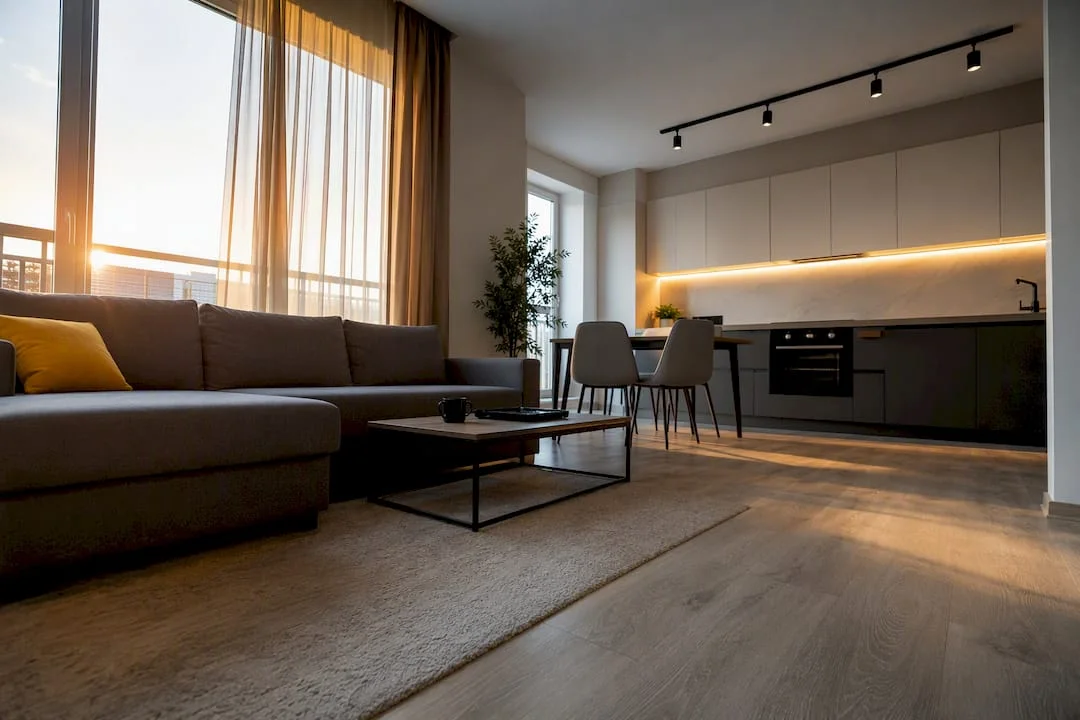
The confusion between interior design and decorating is common and costly.Interior design builds the structure and logic of the space, while decorating finalizes the mood and visual story. If interior design is the backbone of a body, decorating is the expression of its face.
The practical difference becomes clear when you look at a project in stages:
- Interior design establishes layout, circulation flows, fixture positioning, structural finish selection, and architectural lighting integration. All these must support the functionality of the space and be aligned with brand identity from the start.
- Decorating adds the final layer of personality: selected furniture, textiles, decorative objects, plants, art. It completes the visual story that the structure built.
- Coherence between the two is what transforms a space from a beautiful interior into a space that communicates a brand. Without this coherence, decorating becomes arbitrary, and design remains cold and impersonal.
Business owners who jump straight to decorating without an interior design strategy risk getting spaces that look good in photos but don't function in reality and communicate nothing clear about the brand. A restaurant with a well-defined culinary concept but a generic interior loses an enormous opportunity for differentiation. The client feels the discrepancy even if they can't articulate it.
Understanding this difference is the foundation of any correct approach to interior design, regardless of the type of space.
How to Strategically Integrate Visual Identity into Commercial and Workspace Design
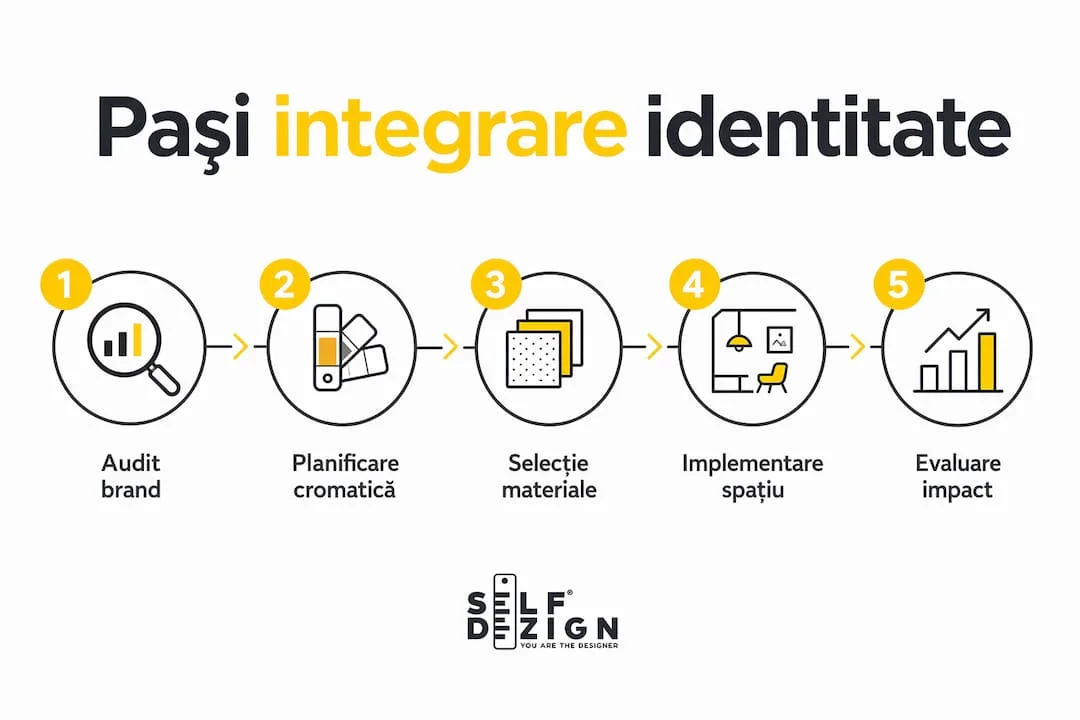
Integrating visual identity is not a step you add at the end of a design project. It is a framework that guides every decision, from the first sketch to the last finishing detail.Integrating interior design in phase zero avoids technical compromises and optimizes planning, reducing later costs and eliminating makeshift solutions.
|
Element |
Reactive approach (without strategy) |
Strategic approach (with integrated visual identity) |
|---|---|---|
|
Color palette |
Chosen based on personal preference or trends |
Derived from the brand guide and adapted to the space's natural light |
|
Materials |
Selected based on available budget |
Chosen to communicate brand values and for durability |
|
Signage |
Added after the design is complete |
Planned structurally from the design phase |
|
Furniture |
Purchased from a catalog without overall logic |
Specified according to flow, use, and visual identity |
|
Lighting |
Standard, functional |
Architectural, integrated into the concept and desired experience |
Phased planning is the method that turns intention into result. Start with a brand identity audit: official colors, fonts, values, and communication tone. Then translate these elements into spatial decisions. Color palettes, typography, and tactile elements contribute to an integrated and coherent spatial branding, creating sensory experiences that complement each other.
Tactile and sensory elements are often underestimated. The texture of a wall, the temperature of a door handle, the sound of footsteps on a certain type of flooring—all these contribute to the overall impression the space leaves. A premium brand that invests in cheap materials or inconsistent finishes sends a contradictory message, no matter how good the logo looks on the facade.
Collaborating with a designer specialized in brand identity in spaces is not a luxury reserved for large companies. It is a decision of efficiency. A customized interior design for businesses reduces the risk of wrong decisions, optimizes the budget, and produces a result that supports the real objectives of the business, not just the aesthetic ones.
What I've Observed After Years of High-Stakes Projects
I work with business owners who know exactly what they want to communicate through their brand but treat the physical space as a shopping list. They buy furniture, choose a wall color, mount a logo at reception, and consider visual identity solved. It is not.
What is usually missing is not budget or taste. What is missing is the strategic framework that connects every design decision with the brand's intention. I have seen medical clinics with premium brands losing patients on the first visit due to an interior that conveys insecurity. I have seen tech company offices with declared values of innovation, furnished with catalog furniture from 2010.
“Space does not lie. It amplifies what already exists in the brand, whether it is clarity and trust, or incoherence and improvisation. The best advice I can give a business owner or a designer is this: treat design as a communication decision, not a comfort one. Ask yourself not 'Do I like it?' but 'What does this communicate about us?'
Interdisciplinary collaboration between designer, architect, and brand team is not a complication. It is the only way a space truly becomes the company's own."— Toni Bunăiașu
How SelfDezign Translates Your Brand Identity into Space
If you've made it this far, you probably already know that your space does more than house people and activities. At SelfDezign, every project starts from understanding the real context of your business, your objectives, your audience, and the values you want to communicate. The SelfDezign team works with commercial spaces, offices, medical clinics, and HoReCa spaces, offering interior concept, technical design, and implementation coordination. If you want a workspace that clearly reflects who you are as a brand, you can explore office design services or browse the consultation guide for commercial spaces to understand what the process looks like in practice.