Guide to choosing finishes: clear criteria for 2026
Finishes are all the visible elements of an interior or exterior space that define the final appearance of the layout. Floors, walls, carpentry, ceramic tiles and sanitary ware together form the “skin” of a space. Their wrong choice costs not only aesthetically but also financially: a material unsuitable for a high-traffic area degrades quickly and generates additional expenses. This guide to choosing finishes covers all types of spaces, from residential to commercial and medical, with up-to-date data for 2026 and clear selection criteria.
What are the main types of finishes and their essential characteristics?
The finishes are divided into four main categories: flooring, wall finishes, carpentry and sanitary ware. Each category has its own technical and aesthetic requirements, and the right choice depends on the type of space and the intensity of use.
Types of flooring
Floors are the most stressed element in an interior. Their choice directly influences the comfort, maintenance and durability of the space.
- Laminate flooringMost affordable, suitable for bedrooms and low-traffic spaces. The moisture resistance is limited, so it is not recommended in bathrooms or kitchens.
- Laminate flooring:Durability superior to laminate, with a layer of natural wood on the surface. The initial cost is higher, butlifetime costis significantly lower due to longevity.
- Massive parquet:The most durable and aesthetically valuable, suitable for premium residential spaces. It can be repressed several times, which extends its life to several decades.
- Sandstone & Ceramic Tiles InstallerThe standard solution for bathrooms, kitchens and commercial spaces with high humidity. Resists water, detergents and heavy traffic, but requires quality joints and adhesives for correct mounting.
Wall finishes
Walls define the atmosphere of a space more than any other element. The main options are:
- Paints and washable paints:Most used, easy to apply and renew. Indoor paints must comply witheuropean standard EN 13300, with a maximum volatile organic compound content of 30 g/L, to protect indoor air quality.
- WallpaperIt offers texture and pattern, with variations from simple to three-dimensional. Vinyl wallpaper is moisture resistant and suitable for kitchens or hallways.
- Decorative plasters:Microcement, Venetian stucco or clay plaster add character and depth. Lime or clay-based materials have natural antifungal properties and regulate indoor humidity.
Carpentry and sanitary ware
Interior carpentry (doors, frames, window sills) and exterior carpentry (windows, entrance doors) complete the overall picture. The quality of the profiles and gaskets influences the thermal and sound insulation. Sanitary fixtures (bathtubs, sinks, toilet bowls) are functional finishes with major aesthetic impact, especially in medical or hotel spaces where hygiene standards are strict.
|
Categorie |
Main options |
Resistance to moisture |
Suitable For |
|---|---|---|---|
|
Pardoseli |
Laminate, laminate, solid, sandstone |
low to high |
Domestic/ Commercial |
|
Wallls |
Paint, wallpaper, decorative plaster |
medium / high |
All types of spaces |
|
Carpentry |
PVC, wood, aluminium |
High |
Exterior & interior: |
|
Sanitary appliances |
Ceramic, Acrylic, Composite |
Very high |
Bathrooms, medical facilities |
How is the finishing budget set in 2026?
Finishes budget is usually underestimated. Many owners only calculate the cost of materials and forget about labor, transportation, waste, and possible fixes. The reality is that for an apartment of 50–70 sqm, the total costs for finishes vary between 25. 000 and 50. 000 Ron, depending on the quality of the chosen materials.
|
Type of work |
Estimated cost (2026) |
|---|---|
|
Plaster (workmanship) |
22–50 Ron/sqm |
|
Floors (materials + mounting) |
Ron 5,000-12,000 |
|
Ceramic cladding (materials + mounting) |
Ron 8,000-15,000 |
|
Interior carpentry |
variable, depending on the number of doors |
|
Paints & Paints |
15–35 Ron/sqm |
These figures cover a standard apartment. Commercial or medical spaces have additional requirements (certified materials, disinfectant-resistant finishes) that increase the budget.
Lifetime cost: the indicator that matters
The initial price of a material doesn't say it all. Laminate flooring costs less on purchase, but is replaced after 8–10 years of normal use. Layered parquet, with a higher initial cost, lasts 25–30 years and can be repressed. Calculated per year of use, laminate flooring is cheaper than laminate flooring. The same reasoning applies to tiles versus vinyl floors or washable paints versus standard ones.
INFORMATION: Prioritize your budget for high traffic or high humidity areas: hallway, kitchen, bathroom. Savings made in these areas almost always lead to higher replacement costs in the medium term. You can choose more affordable materials in bedrooms or storage rooms.
See also the SelfDezign guide tocost of a design projectto understand how finishes fit into the overall design budget.
What is the correct order of the stages of application of finishes?
The order of work is as important as the choice of materials. Failure to follow the correct sequence may addup to 30% on the initial budgetrenovation, due to repairs and rebuilds. This is the correct sequence for an 8-week standard project:
- Technical installations(electricity, plumbing, HVAC): Run first, before any finish. Their subsequent modification involves the demolition of walls or floors already finished.
- Plastering and plasters: Base surfaces must be flat and dry before any application. Clay or lime plasters require a relative humidity of 60–70% for correct drying.
- Ceramic Cladding: The tile and tile are mounted after the installations are completed and the walls are ready. Their installation before installation leads to partial demolition.
- Paints & Paints: Applied after all “dirty” work is finished. Painting before installing floors protects wall surfaces from scratches and stains.
- Pardoseli: Install the last of the main finishes to avoid damaging them during the other works.
- Final cleaning and details: The installation of sockets, switches, ventilation grilles and other small elements is done after the completion of all surfaces.
Compliance with this order reduces the project duration by up to 25% and the budget by 20-30%, by eliminating avoidable repairs. The most common mistake is the installation of floors before the completion of the installations, which requires disassembly and reassembly.
INFORMATION: Ask the Contractor for a written schedule of works, with the estimated milestones and durations. A craftsman who cannot provide this planning is not managing a renovation project correctly.
If you want to understand how these steps integrate into a complete project, the SelfDesign guide onresidential fit-out stepsprovides a detailed perspective.
How do you choose finishes for commercial, residential and medical spaces?
Selection criteria differ fundamentally depending on the type of space. A suitable bedroom finish may be completely unsuitable for a medical clinic or restaurant. Understanding these differences is key to making the right choice.
Residential spaces: comfort and maintenance
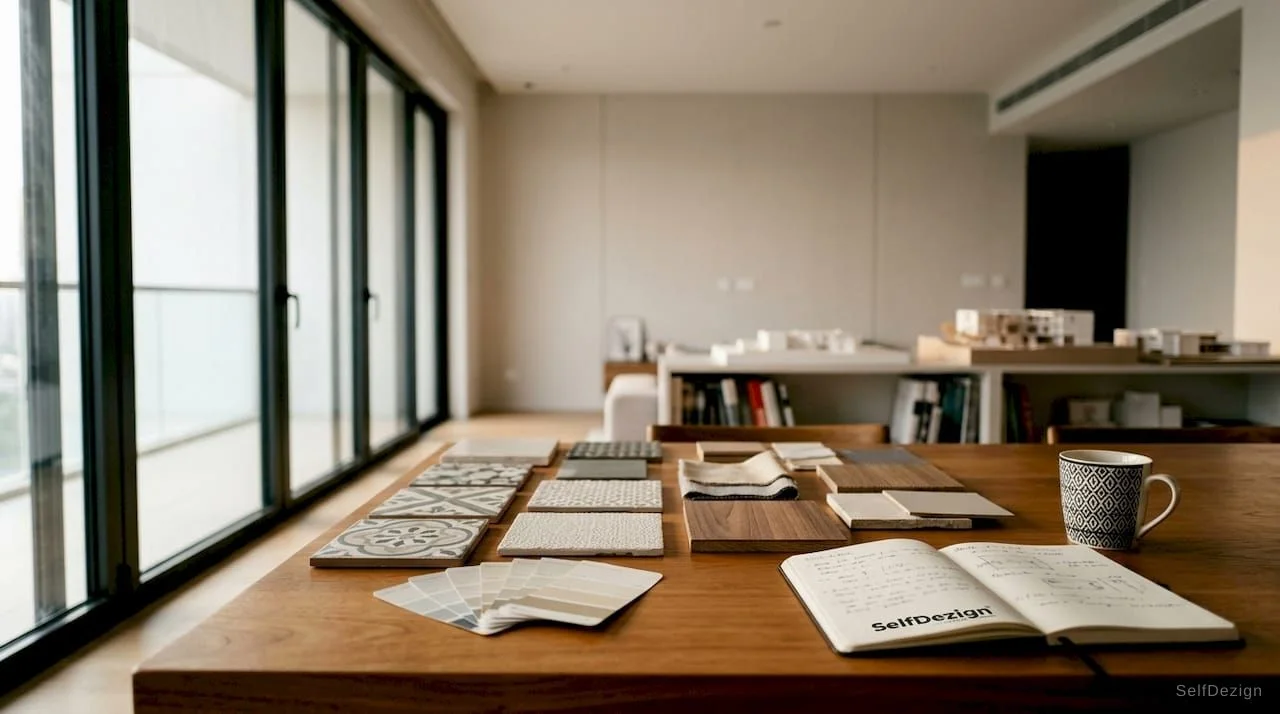
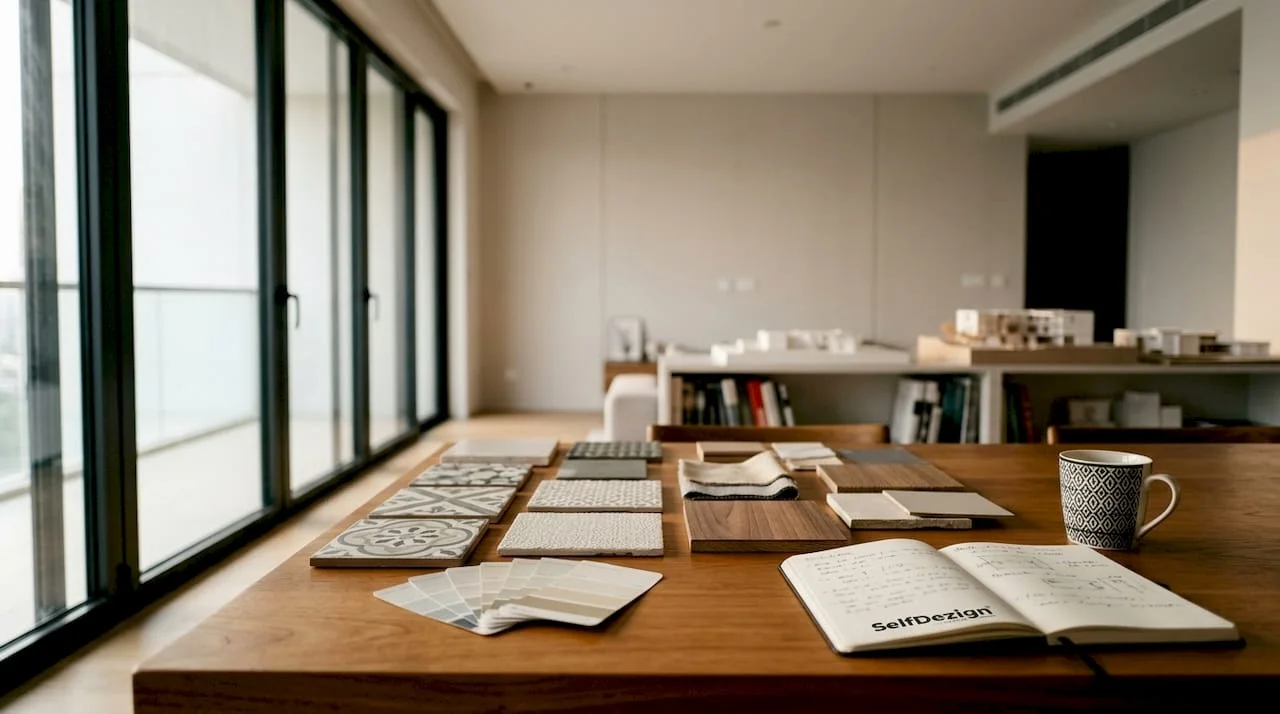
The choice of finishes for the house starts from the lifestyle of the tenants. A family with young children needs scratch-resistant floors and washable paints with high friction resistance. A childless couple can opt for more delicate materials with richer texture.Requesting physical samplesbefore the purchase is a step that many owners overlook, leading to poor choices. Natural light completely changes the look of a material: a tile that looks good in the showroom can seem cold and closed in a north-facing apartment.
Modern living room finishes typically combine two or three materials: a warm parquet, decorative plaster on an accent wall, and washable paint on the rest of the surfaces. This combination provides visual depth without complicating maintenance. The connection between finishes andyour chosen design styleis direct: materials must support the concept, not contradict it.
Commercial spaces: strength and brand image
Commercial spaces with heavy traffic require finishes with a higher resistance class. Floor tiles must have a PEI abrasion class 4 or 5 for high traffic areas. Wall paints must withstand frequent cleaning with detergents.Savings on finishing in high-traffic areascosts more in the long run than a solid initial investment, through repeated replacements and business interruptions.
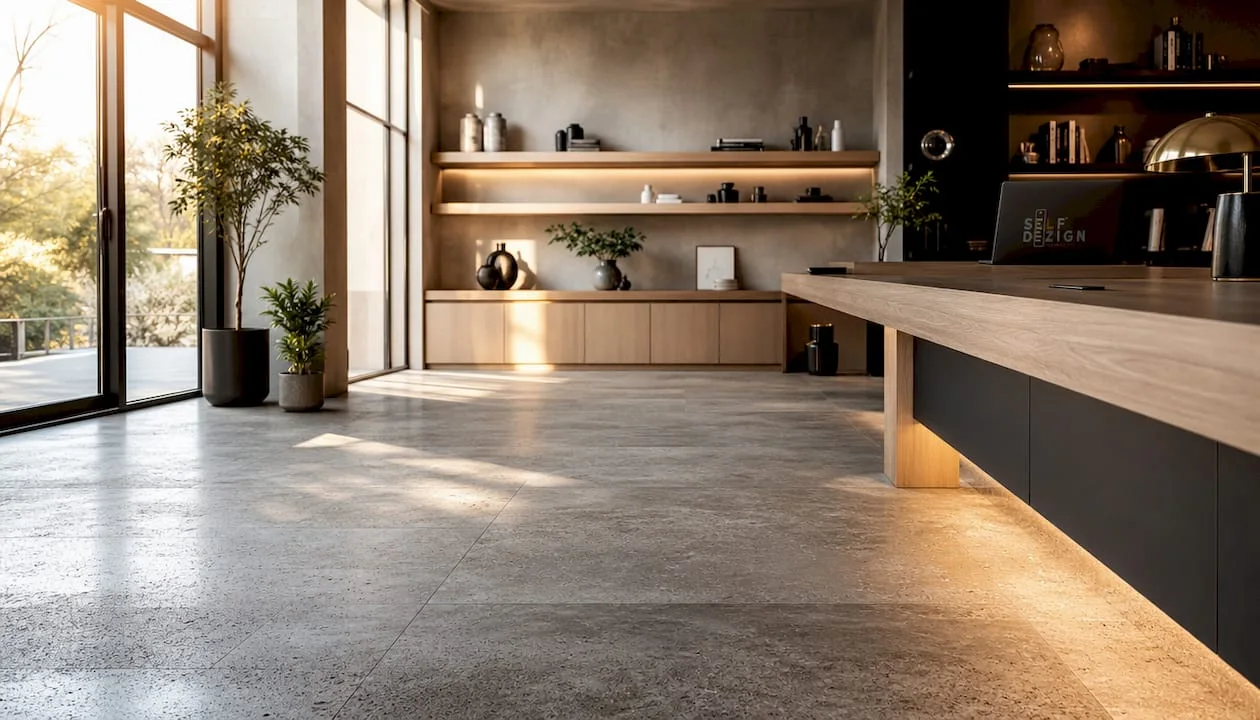
The finishes in a commercial space also communicate the brand identity. A restaurant with low-quality floors sends a negative message about its standards, regardless of the quality of the food. The choice of materials must be consistent with the brand positioning.
Medical Spaces: Hygiene and Compliance
Medical clinics have specific requirements that regular finishes do not meet. Surfaces must be non-porous, resistant to disinfectants and easy to clean. Homogeneous or epoxy PVC floors are the standard in treatment rooms. The walls are finished with antimicrobial paints or ceramic cladding with epoxy joints, which do not allow the accumulation of bacteria.
Indoor air quality is a separate criterion: the paints and adhesives used must comply with strict standards on emissions of volatile compounds. High pH lime-based finishes naturally inhibit mould growth, which also makes them suitable for humidity-controlled medical settings. Details of specific requirements forarranging medical clinicsare available on the SelfDezign dedicated page.
- Residentalprioritizes comfort, aesthetics and ease of daily maintenance.
- Commercial:prioritizes traffic resistance, brand image, and long-term maintenance cost.
- .prioritizes hygiene, health compliance, and resistance to disinfectants.
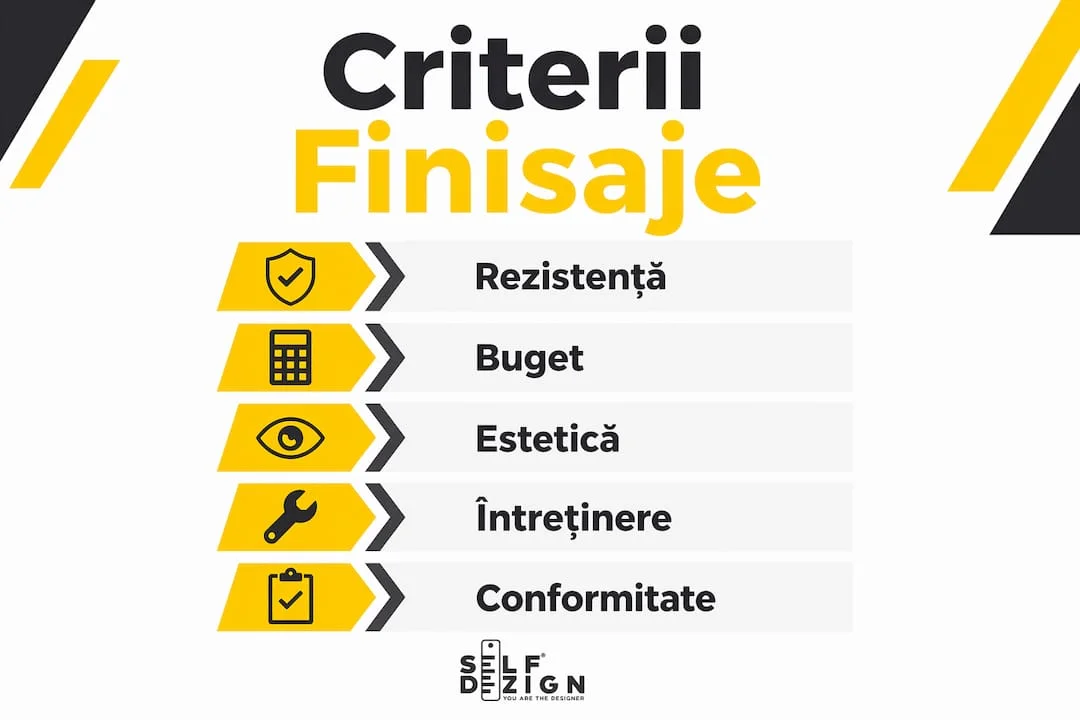
The most common mistake, regardless of the type of space, is choosing materials based only on aesthetics or the initial price, neglecting the resistance to the specific conditions of the room. A beautiful material that degrades in 18 months is not a good choice, no matter how cheap it was to purchase.
Eco-friendly finishes, such as clay or lime-based, are an increasingly relevant option for all types of spaces. Relative humidity control between 60–70% during application prevents cracking, and natural antifungal properties reduce the need for further chemical treatments. If you want to better understandthe role of materials in the arrangement, the SelfDezign perspective provides a practical framework for evaluating options prior to purchase.
One aspect often overlooked is the compatibility of finishes with heating systems. Solid flooring is not compatible with radiant flooring, while tile and laminate flooring work well with this system. Checking this compatibility before purchase avoids a costly and difficult problem to fix later. Errors related to moisture and substrate compatibility are among the most common causes of premature degradation of finishes, andcommon errors in wet environmentsare also documented in international construction practices.
What I learned from real projects about choosing finishes
I have been working with landscaping projects for years and I have seen the same pattern repeatedly: the client comes with a list of materials chosen from pictures on the internet and expects the result to look identical. The problem is that the picture doesn't show the actual light of the space, the actual dimensions of the room, or the actual texture of the material. Testing with physical samples in real space is not an optional step. It's the only way you can see how a material reacts to your light, not to the light in the showroom.
The second thing I've noticed constantly: the budget always cuts from the wrong areas. People spend more on decorative elements and reduce the budget for floors or cladding, that is, exactly the elements that bear the most wear. The result is a space that looks good in the first month and requires interventions after the first year. Durability is not a luxury, but a basic prerequisite for any smart finish choice.
Third, and perhaps most important: execution matters as much as material. A poorly mounted quality parquet will move, creak and degrade quickly. Choosing an experienced contractor and verifiable references is not a detail. It's half the success of the project. I always recommend asking to see completed works, not just promises. Unthe interior designercan coordinate this selection and prevent costly mistakes before they occur.
SelfDezign and choosing the right finishes for your project
SelfDezign works with residential, commercial and medical projects in Bucharest and Europe, integrating the choice of finishes into the complete design and coordination process. The finishes are not chosen in isolation: they are part of a coherent concept that takes into account use, budget, identity and sustainability. If you have a space to set up and want to avoid costly decisions, the SelfDezign team can provide clear advice, from concept to coordination of execution. Whether it's aresidential interior design, an office or a medical clinic, the approach remains the same: we understand the context before we propose solutions.