The role of materials in design: a guide to successful spaces

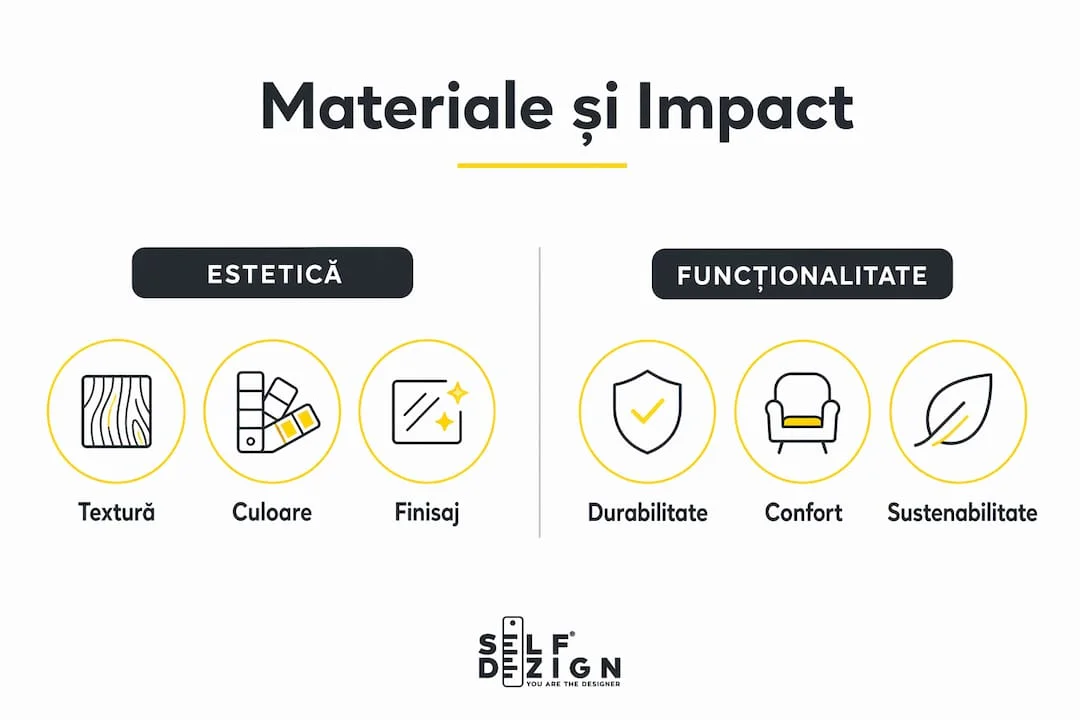
The role of materials in the design directly defines the quality, comfort and durability of any interior space. Materials are not just a finishing detail. They determine what a space looks like, how it feels, and how long it lasts. From FSC-certified wood to low-emission paints of volatile organic compounds (VOCs), every choice has concrete consequences for tenants' health and long-term budget. Understanding these consequences is the first step towards a setting that really works, not just looks good in photos.
How materials influence the aesthetics and atmosphere of a space
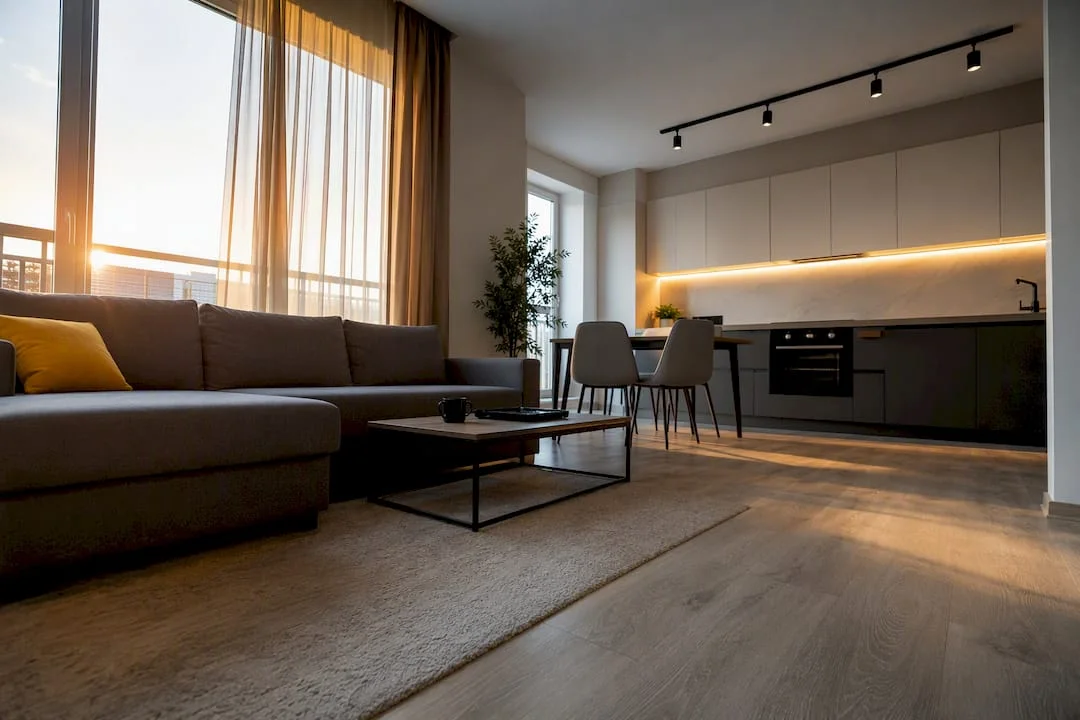
Materials define the atmosphere of a room before any furniture or decorative object is brought into the space. A concrete wall apparently communicates something other than one plastered with matte paint in warm white. The difference is not just visual. It is also tactile, acoustic and thermal.
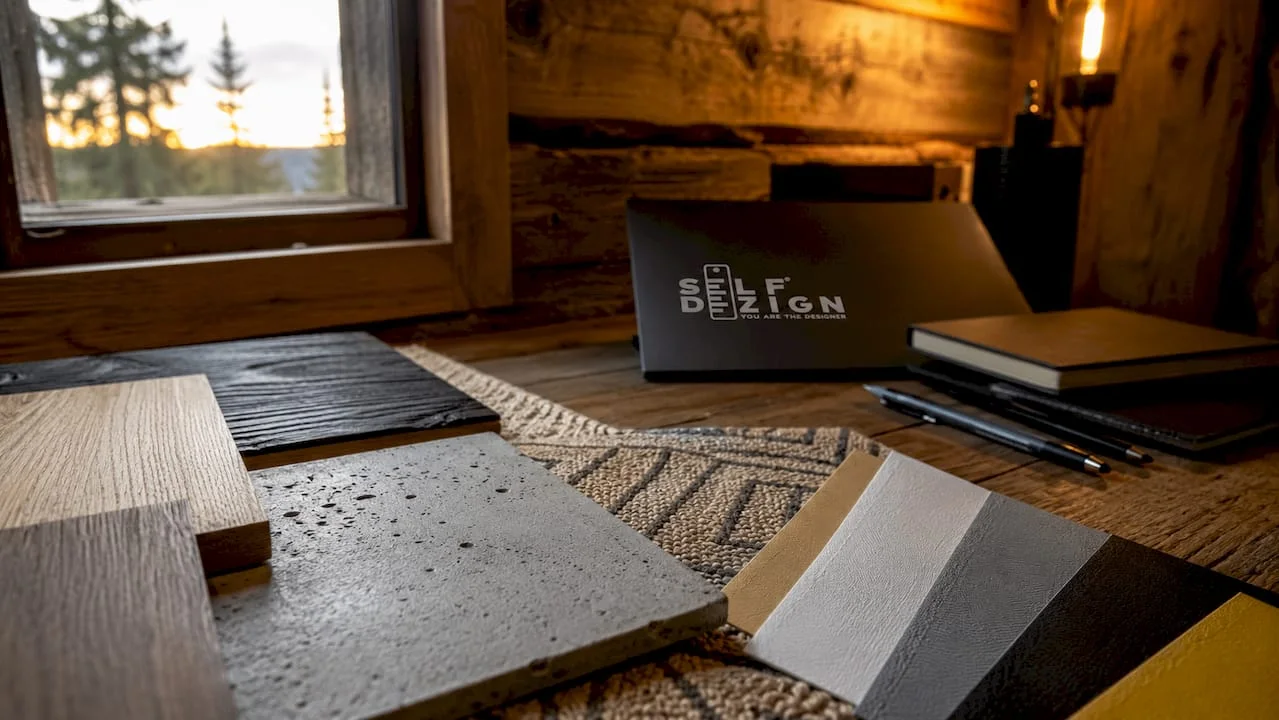
Finishes have a multi-sensory impactthat goes beyond aesthetics: it influences the acoustic comfort, the perceived temperature and the general condition of those who live or work in that space. A solid wood parquet absorbs sound different from tiles, and a matte paint reduces light reflections that tire the eyes. These details matter especially in spaces where people spend hours.
Texture and finish: more than just visual appearance
The texture of a material changes the perception of dimensions and light. A glossy surface reflects light and makes the room appear larger, but it also amplifies noise and imperfections. A matte surface absorbs light and creates a warmer, more intimate atmosphere. Choosing between matt parquet and glossy parquet is not a neutral aesthetic preference. It is a decision that affects daily comfort.
The same principle applies to walls. Fine textured paint and glossy smooth paint live differently in natural and artificial light. Designers working withtypes of decorative materialsi know that the balance between matte and glossy finishes in a room determines whether the space gets tired or relaxes.
The role of colors in design and the connection with materials
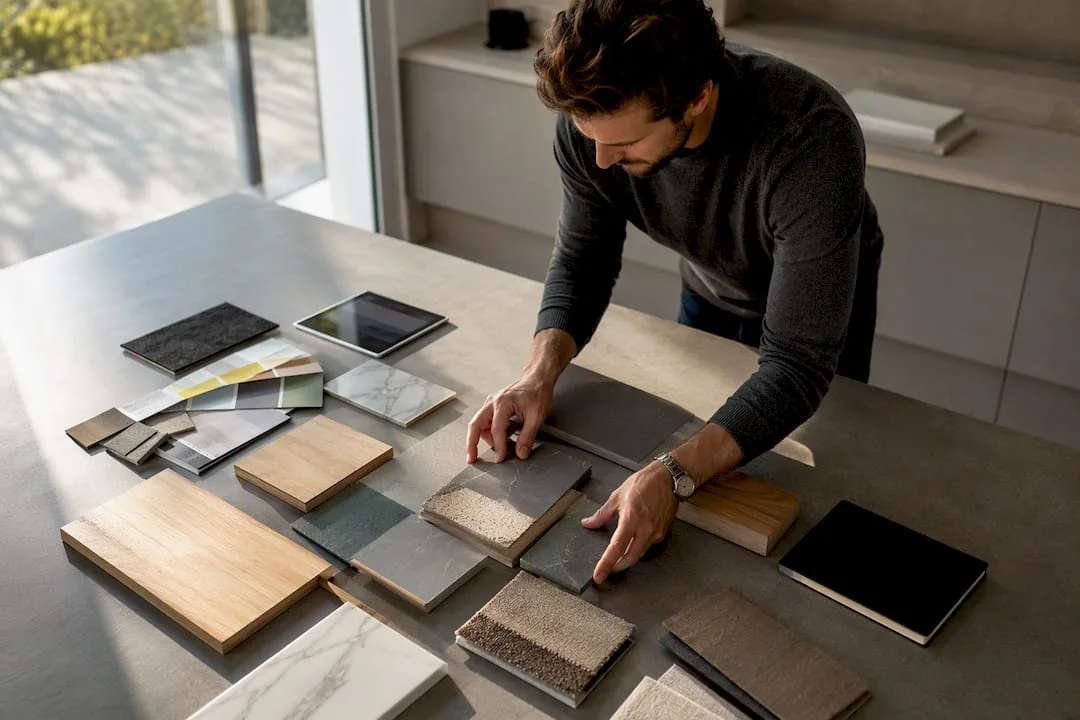
The color of a material does not exist independently of its texture. The same grey tone looks different on a concrete surface, a matte paint and a glossy laminate panel. This is a common mistake: people choose colors from small samples, not taking into account that the final texture will change the perception of that color in space.
The role of colors in design is closely related to the material on which they are applied. A light wood brings warmth even in a minimalist space. A natural stone in cold tones can give elegance without cooling the atmosphere, if combined with warm textiles. Merging materials into décor requires thinking about color and texture together, not separately.
INFORMATION: Before deciding on the final finishes, test the samples in real space, in natural morning light and artificial evening light. The same sample may look completely different under the two conditions.
What criteria follow the selection of materials according to purpose
The choice of materials does not start from aesthetics. It starts with the question: what should this space do? A high-traffic office requires materials other than a bedroom. A medical clinic has completely different requirements than a restaurant. Selection criteria should reflect the actual use of space, not trends of the moment.
There are four fundamental criteria that any choice of materials must pass:
- Usage area:Installations, insulation and floors are critical areas where saving on materials generates serious problems.Investing in quality materialsfor installations and insulation prevents costly repairs that occur after 2–3 years. The finishing materials can be adjusted over time. Structure and installations, no.
- Traffic and intensity of use.An AC4 laminate flooring is suitable for heavy traffic and has an estimated duration of 10–15 years, with material costs between 80–150 Ron/sqm and installation between 60–100 Ron/sqm. A solid wood parquet costs more initially, but it can be sanded and refinished several times. The choice depends on how much space is used and who uses it.
- Long-term value for money.The cheapest material upon purchase is not always the cheapest during the life of the space. A material that degrades in three years and requires complete replacement costs more than a more expensive one at first, but durable for 15 years.
- Compatibility with existing media.Performing materials applied on an unprepared support shall not perform. This is a rule without exceptions in interior design.
INFORMATION: When comparing offers for materials, always ask for the total cost per square meter, including auxiliary materials, adhesives, and labor. The price of a single material without context is a meaningless figure.
Understandingthe right style and solutionfor a space comes before any material decision. Without a clear vision of the desired functionality and aesthetics, material selection becomes a series of isolated decisions that do not support each other.
Natural and sustainable materials in landscaping: benefits and examples
Eco-friendly materials in landscaping are not a niche trend. I am the concrete answer to a real problem: indoor air quality. Natural materials such as FSC-certified wood, cork and low-VOC paints are the current standard for healthy spaces. Volatile organic compounds released by synthetic materials accumulate in indoor air and affect long-term health, especially in spaces with low ventilation.
The advantages of natural materials go beyond health. Recovered wood, bamboo and cork have thermoacoustic properties superior to many synthetic materials. They regulate humidity, absorb sound and bring an authentic character that no synthetic material can reproduce completely. Natural materials bring superior aesthetic durability over synthetic ones, which deteriorate faster over time.
Comparison of commonly used sustainable materials
|
Material |
Home Properties |
Recommended Applications |
Relevant certification |
|---|---|---|---|
|
FSC-certified wood |
Thermal, acoustic, aesthetically authentic |
Floors, cladding, furniture |
FSC (Forest Stewardship Council) |
|
Cork |
Sound and thermal insulation, anti-allergenic |
Decks, bulkheads and deckheads |
European organic certification |
|
Natural paints |
Zero or minimum VOC emissions |
Interior walls, joinery |
EU Ecolabel |
|
Hemp (insulating panels) |
Breathable thermal and sound insulation |
Walls, ceilings, insulation |
Organic Certification |
|
Bambus |
High strength, rapid growth |
Floors, cladding, furniture |
FSC or local certification |
FSC certification ensures that timber comes from responsibly managed forests. This certification is not just a marketing detail. It ensures that the material has clear traceability and that its properties are constant, which matters for the durability and health of the space.
Low VOC paints are now available in a wide range of colours and finishes, with no aesthetic compromise over conventional variants. Switching to these paints is one of the simplest and most effective decisions you can make for indoor air quality, regardless of the type of space.
How the quality of materials affects durability and comfort
The quality of a final finish depends less on the material chosen and more on how the support to which it is applied has been prepared. Up to 70% of the success of finishes depends on the correct preparation of the support. A quality parquet mounted on an uneven screed will creak. A premium paint applied to a wall with residual moisture will peel. Material cannot compensate for wrong execution.
There are a few common mistakes that compromise the sustainability of amenities:
- Thin metal profiles for plasterboard.0.4mm profiles cause vibration and cracking over time. Profiles of at least 0.6mm provide stability over 15–20 years. The cost difference is small. The difference in performance is significant.
- Absence of sound insulation in the walls.The installation of walls without mineral wool generates acoustic discomfort that cannot be subsequently remedied without the demolition of the wall. A minimum of 50mm of mineral wool is required for adequate sound insulation.
- Ignoring the cradle preparation.Most visual and acoustic imperfections come from an inadequate preparation of the support, not from the quality of the finishing material itself.
- Saving on auxiliary materials.Low-quality adhesives, primers and grouts reduce the adhesion and durability of finishes, no matter how good the main material is.
Saving on specific materials such as plasterboard profiles or sound insulation can generate damage and additional costs in the long run, far exceeding the original economy.
The practical recommendation is to prioritize quality where remediation is costly or impossible without major intervention: structure, installations, insulation. In surface finishes, there is more flexibility, but here too the quality of execution remains decisive.Architect's rolein coordinating these decisions is precisely to prevent compromises that seem small at first and become big problems after two years.
What I learned about materials after years of landscaping projects
If I were to summarize what I have observed in interior design projects, I would say that materials are the place where a project is gained or lost. Not on furniture, not on accessories. On materials.
We have seen projects with generous budgets that failed because they saved on plasterboard profiles or the preparation of the screed. And we saw projects with moderate budgets that came out exceptional because material decisions were made wisely, in the right order: first the structure and installations, then the finishes, finally the decorative details.
The most common myth I come across is that natural materials are expensive and inaccessible. The reality is that reclaimed wood or cork may be more affordable than some premium synthetic materials, and have a superior aesthetic lifespan. A solid wood floor that can be sanded three times in 30 years costs less in the long run than three rows of laminate flooring.
The second myth is that aesthetics and functionality conflict. None A beautiful material that does not withstand use is not beautiful after two years. Functionality is the basic condition of sustainable aesthetics. When I choose materials for a project, my starting question is not “does it look good? " but "will it still look good in ten years, under the real conditions of use of this space? "
My concrete advice: do not make isolated material decisions. Think of them as a system. How does the floor interact with the wall? How does the wall texture respond to the light you chose? Merging materials into décor doesn't mean combining different styles. It means building a coherent visual and tactile vocabulary, where each element supports the others.
SelfDezign and choosing the right materials for your project
The choice of materials becomes clear when there is a project strategy behind it. SelfDezign works with clients in Bucharest and Europe on residential, office, Horeca and medical clinics projects, always starting fromanalysis of real needsof the space before any decision of materials or finishes. The process includes the interior concept, the technical design and the coordination of the implementation, so that the chosen materials are coherently integrated throughout the project, not selected in isolation. If you work at an office space and want to understand how materials can support productivity and brand identity,office interior designis a concrete starting point.