
Examples of Innovative Interior Materials in 2026

Innovative interior materials are defined by their ability to combine technical performance, sustainability, and a positive impact on health, going beyond mere aesthetic function. In 2026, choosing a material is no longer a purely visual decision. It is a decision about the quality of the air you breathe, how long the space will last, and what value it adds to your property. Whether you are an architect, designer, or homeowner renovating, this list presents the most relevant examples of innovative interior materials, with clear selection criteria and real-world applicability.
1. Examples of Innovative Interior Materials: FSC-Certified Solid Hardwood Flooring
FSC-certified solid hardwood flooring represents the benchmark for sustainable flooring in residential and commercial projects.A lifespan of over 50 yearsplaces it well above laminate flooring, which lasts between 10 and 15 years. This means that, in the long run, the cost per year of use is significantly lower, and repeated replacements are eliminated.
FSC- and PEFC-certified solid wood guarantees that the source is responsibly managed, without illegal logging.Sustainable furniture, flooring, and finishesmade from these materials eliminate toxic compounds that frequently appear in engineered wood products with synthetic adhesives. The result is a healthier indoor space, free from harmful emissions in the air.
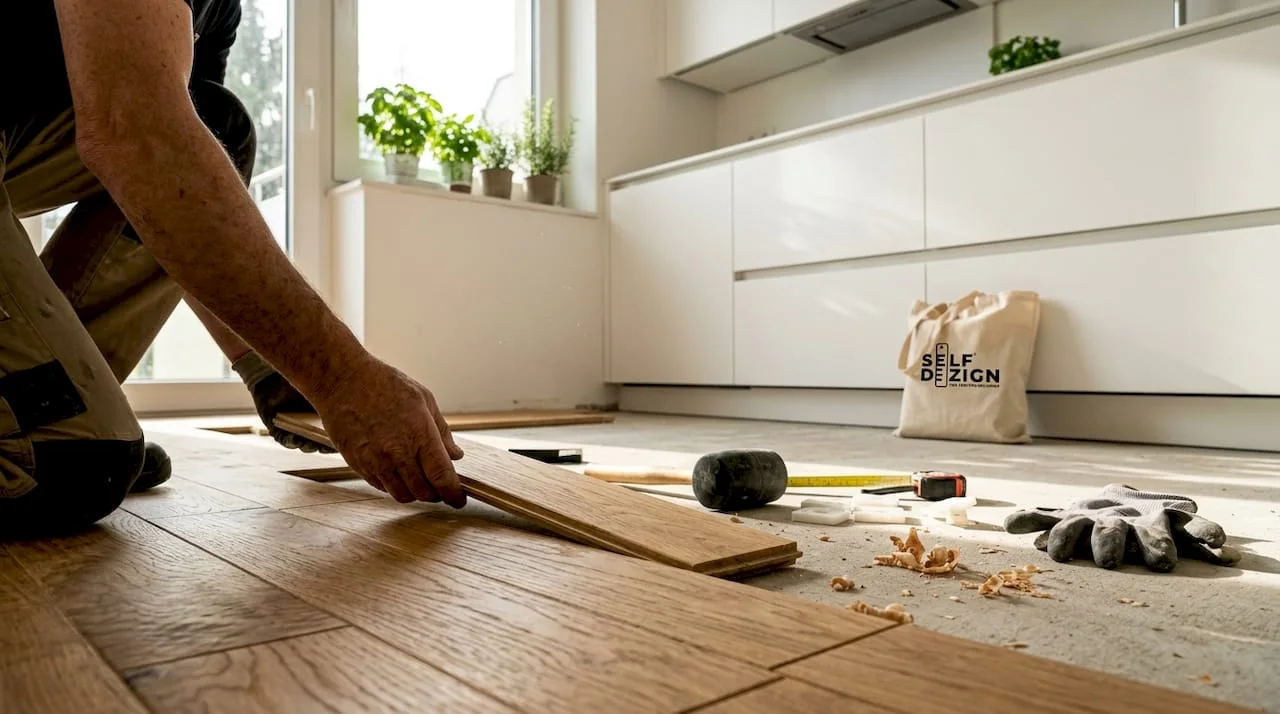
Our advice: Choose high-density wood species, such as oak or ash, for high-traffic areas. Avoid exotic species without clear certification, regardless of aesthetic appearance.
2. 3D Epoxy Flooring: Visual Luxury with Professional Application
3D epoxy flooring is the solution thatmimics Carrara marbleat much lower costs and execution times compared to natural stone. The visual effect is remarkable, and the seamless surface eliminates joints, making cleaning and hygiene maintenance easier. This makes them particularly suitable for commercial spaces, medical clinics, or high-traffic living areas.
The quality of the resin and professional application are decisive for the final result. Incorrect application leads to expansion and yellowing over time, turning a striking finish into a costly problem. If you choose this solution, check the applicator's portfolio and ask for references for similar projects at least two years old.
3. Natural Linoleum and Cork: Comfort and Ecology Underfoot
Natural linoleum is made from linseed oil, natural resins, wood flour, and mineral pigments, without synthetic components. It is an ecological and comfortable material with natural antibacterial properties, suitable for bedrooms, offices, and medical spaces. Unlike PVC vinyl, linoleum does not emit volatile organic compounds and is fully biodegradable at the end of its life cycle.
Cork is another example of a renewable material with superior thermal and acoustic performance. Harvesting cork does not involve cutting down the tree, placing it in the category ofregenerative materialsthat actively contribute to ecosystem restoration. Investors who understand the difference between sustainable and regenerative prefer it precisely for its long-term added value.
4. Hempcrete: The Breathing Hemp Concrete
Hempcrete is a construction and insulation material made from hemp fibers and lime, with superior thermal and humidity-regulating properties compared to conventional materials.Pilot projects with hempcreteare expanding in cities such as Cluj and Brașov, due to its high thermal efficiency and the indoor comfort it generates. Wood construction has grown by 35% in 2026, and hempcrete is gaining ground as an alternative to synthetic insulation.
What makes it truly remarkable is that itabsorbs CO₂throughout its entire lifespan, acting as a natural 'lung' for the building. Unlike polystyrene or mineral wool, hempcrete does not release toxic particles and does not promote mold. It is, essentially, a material that actively improves indoor air quality.
Hempcrete is not a niche material for eco-enthusiasts. It is a construction solution with measurable thermal performance, already adopted in residential and commercial projects in Romania.
5. Natural Plasters Based on Lime, Clay, and Hemp
Natural plasters represent one of the oldest finishing technologies, now reinterpreted with technical precision for current requirements. Variants based on hydraulic lime, clay, and hemp fibers regulate indoor humidity without mechanical systems, reducing the risk of condensation and mold. This 'breathing' capacity of the wall is impossible to replicate with synthetic plasters or acrylic paints.
- Clay plasterabsorbs and releases moisture, maintaining a stable indoor microclimate.
- Lime plasterhas natural antibacterial properties and is compatible with old substrates, including historic masonry.
- Hemp plasteradds mechanical strength and acoustic properties, suitable for partition walls.
- Decorative marble plastercombines refined aesthetics with durability, without synthetic components.
These materials are compatible withinterior design trends for 2025focused on natural materials and discreet technology. Their texture and variable color create surfaces with character, impossible to achieve through standard painting.
6. Rammed Earth Walls: Raw Aesthetics and Thermal Performance
Rammed earth walls are an example of an innovative material that comes from tradition and is validated by modern construction science.Contemporary projects with rammed earth wallsreach up to 790 m², with natural humidity regulation without any costly mechanical system. The high thermal capacity means the wall accumulates heat during the day and releases it at night, reducing energy consumption.
Aesthetically, the visible layering of earth creates a unique visual vocabulary, impossible to fake with synthetic materials. Each wall is, by the nature of the process, a singular element. This makes it suitable for premium residential projects or hospitality spaces where visual identity matters as much as performance.
7. GOTS-Certified Organic Textiles for Interior Decor
GOTS-certified organic cotton, linen, and wool textiles are the right materials for curtains, upholstery, rugs, and bedding in spaces where air quality is a priority. Certified organic textiles reduce toxic compounds indoors and enhance comfort, especially in bedrooms and medical spaces. GOTS certification guarantees that the entire production chain, from cultivation to dyeing, is free from harmful substances.
The difference from conventional textiles is concrete: a synthetic rug can emit formaldehyde and other volatile compounds for years after installation. A certified organic wool rug does not present this risk and has a longer lifespan due to the natural strength of the fiber. Integratingbiophilic designwith natural textiles creates spaces that support mental and physical well-being, not just visual appeal.
Our advice: Check the GOTS label on the product, not just on the packaging. Some manufacturers certify only part of the production chain, which does not guarantee the complete absence of harmful substances.
8. VOC-Free Paints: Air Quality as Standard, Not an Option
VOC-free paints based on clay or decorative lime are the right solution for any interior space, not just 'eco' projects. Eco-friendly VOC-free paints directly contribute to indoor air quality and a healthy environment, eliminating persistent odors and health risks associated with conventional paints. This is a decision with immediate and measurable impact.
The color palette available in natural paints has grown significantly in recent years, eliminating the aesthetic compromise that previously existed. Brands such as Keim, Auro, or Clayworks offer complete color ranges with stable mineral pigments, without synthetic agents. The combination of a clay plaster and a VOC-free paint creates a wall that breathes, regulates humidity, and emits nothing harmful.
9. Smart Glass and Window Films
Smart glass regulates sunlight transmission and indoor temperature by changing opacity state on electric command or based on light intensity.Smart glass and window filmsoptimize natural light and thermal efficiency, reducing the need for artificial lighting and climate control costs. This is a technology with a direct impact on the building's energy consumption.
Smart materialMain benefitApplicabilityElectrochromic smart glassLight and temperature regulationOffices, commercial spacesThermal window filmHeat transfer reductionResidential, clinicsAcoustic absorbing panelSound insulationOpen spaces, hospitalityReflective thermal insulationEnergy efficiencyAttics, exterior wallsWindow films are an affordable alternative to complete window replacement, with quick installation and no structural interventions. For office spaces or medical clinics where thermal and visual comfort directly affect productivity and user experience, this solution offers an excellent investment-to-result ratio.
What We've Learned After Years of Projects with Natural Materials
There is a tendency in the industry to treat innovative materials as a checklist item, not as a strategic decision. I have seen projects where hempcrete was specified on paper but applied by teams inexperienced with the material, resulting in compromised finishes and disappointed clients. The material is never sufficient by itself. Context, the applicator, and integration into the overall project matter just as much.
What has convinced me most over time is thatsustainability in interior designis not a trend. It is a paradigm shift in how we evaluate the value of a space. A client who understands that FSC-certified solid hardwood flooring costs more now but will not be replaced in 15 years makes a better financial decision, not just an ethical one.
My advice for any project with natural or smart materials is to start with the right question: what does this space need to do for the people using it? The answer to that question dictates the materials, not the other way around. The tendency to choose a material for its appearance and build the project around it produces beautiful spaces, but without the functional backbone that makes them truly valuable.
How SelfDezign Integrates Innovative Materials into Your Projects
At SelfDezign, material selection does not start from a catalog, but from the real context of the project. Whether we are working on an office space that needs to support team focus and well-being, or a residential space where air quality and durability are priorities, every material decision is technically and aesthetically argued. If you want to understand what anoffice interior design projectconceived with high-performance materials and a clear spatial logic looks like, our portfolio provides concrete answers. We work with clients from Bucharest and Europe, for commercial, residential, hospitality, and medical clinic spaces, with an emphasis on measurable results, not standard formulas.