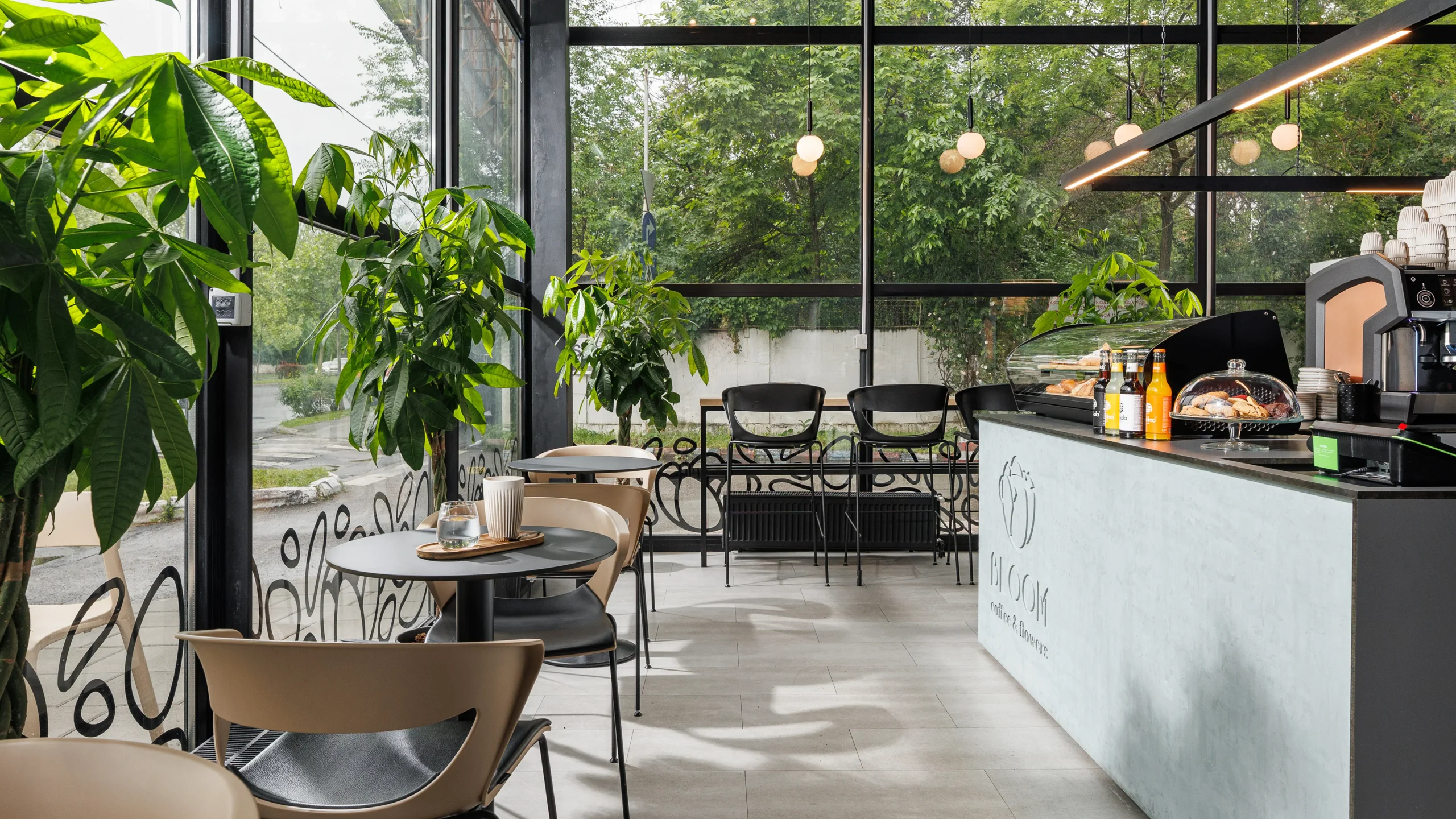

Biophilic design: real benefits and applicability

Spaces with integrated natural elements are not an aesthetic fad. Studies show that productivity and well-being increase significantly in offices and commercial spaces that apply the principles of biophilic design, yet many owners and investors hesitate. Either they don't fully understand what the term involves, or they fear high costs or results that are difficult to quantify. In this article, we clarify what biophilic design truly is, what concrete benefits it brings, which implementation methods work, and where pitfalls can arise that you miss if you rely only on general advice.
Main Ideas
|
Point |
Details |
|---|---|
|
Increases productivity |
Biophilic design leads to higher productivity and well-being for users. |
|
Superior financial value |
Proper integration increases property value and tenant attractiveness. |
|
Strategic choice |
Sustainable implementation delivers real ROI to investors, not just image. |
|
Manageable challenges |
Higher initial costs are offset by savings and long-term benefits. |
What is biophilic design and why it matters
Biophilic design starts from a simple idea: humans have an instinctive connection with nature, formed over thousands of years of evolution. When we live and work in spaces that completely cut us off from natural light, vegetation, organic textures, and sounds of nature, the body and mind react negatively: increased stress, reduced attention, diminished satisfaction. Biophilic design does not mean placing a few pots on a shelf. It means building the space around this connection, deliberately and strategically.

According to thecomplete biophilic definition, an authentic biophilic space integrates nature at multiple levels: direct (living plants, natural light, water), indirect (organic materials, images of nature, textures), and spatial (shapes and proportions that mimic nature).Instinctive reconnection with natureis not an abstract theory, but a measurable physiological response: cortisol decreases, dopamine increases, and concentration improves.
Research differentiates betweendirect versus indirect experiencein contact with nature, and the effects on well-being vary depending on the type of exposure. Direct exposure, i.e., real plants, sunlight, water, produces stronger and more lasting effects. Indirect exposure, through materials or images, also brings benefits, but more moderate ones.
Main reasons why investors and owners choose biophilic design:
- Increases the space's attractiveness to tenants and clients
- Reduces operational costs in the medium term (energy, absenteeism)
- Differentiates the property in crowded markets, adding perceived value
When an owner places an artificial plant in the corner of an office and calls it "biophilic design," they are only doing visual greenwashing. Real effects come from systematic integration, not from isolated decorative gestures.
The role played by thebiophilic consultantis precisely to make this distinction: to identify what type of intervention makes sense for your specific space, not to apply a formula copied from elsewhere.
The impact of biophilic design: productivity, well-being, and financial value
Numbers matter to any investor. And in the case of biophilic design, the data is compelling.Productivity increases by 6%, employee well-being visibly improves, and costs related to absenteeism and staff turnover decrease significantly in spaces that correctly integrate natural elements.
On the real estate value side, things are equally clear.Commercial properties with biophilic designachieve a premium in rents and a higher market value compared to standard buildings. Estimates indicate increases of 7 to 8% in market value, a solid argument when analyzing the profitability of a project in the medium term.
The main effects you can track:
- Tenant and customer satisfaction increases, reducing the churn rate
- Employee retention in urban environments improves by 22 to 31%
- Biophilic spaces are perceived as healthier and more pleasant, influencing the decision to stay or return
- Artificial lighting costs decrease where natural light is maximized
|
Indicator |
Biophilic spaces |
Standard spaces |
|---|---|---|
|
Productivity |
+6% |
Reference |
|
Market value |
+7 to 8% |
Reference |
|
Employee retention |
+22 to 31% |
Reference |
|
User satisfaction |
High |
Average |
|
Estimated ROI |
1 to 5 years |
Variable |
Stress reduction is another measurable benefit. Integrating natural wood and live plants is associated with lower cortisol, the stress hormone, which directly impacts the performance and well-being of daily users.
If you want to understand how these figures translate into concrete decisions,the advantages of biophilic investmentsandthe benefits of sustainabilityin interior design are good starting points for calibrating expectations for a real project.
Effective methodologies and strategies in biophilic design
There are three main categories of intervention, each with its own logic and limits. Understanding this structure helps you make informed decisions, not just copy what worked elsewhere without knowing why.

According to the principles of Kellert's methodologies, direct, indirect, and spatial experiences together form a coherent system, not separate options from a catalog.
|
Type of experience |
Concrete examples |
Advantages |
Limitations |
|---|---|---|---|
|
Direct |
Live plants, sunlight, flowing water |
Maximum effect on well-being |
Requires active maintenance |
|
Indirect |
Wood, stone, nature images, organic textures |
Easy to implement, moderate costs |
Weaker effects without direct exposure |
|
Spatial |
Biomorphic forms, natural proportions, visual connections |
Durable, part of architecture |
Requires planning from the design phase |
Steps for choosing the right approach for your space:
- Evaluate existing conditions: available natural light, surface area, type of activity
- Identify the priority: user well-being, market value, or competitive differentiation
- Choose the level of intervention: direct, indirect, or spatial, based on budget and context
- Plan maintenance before implementation, not after
- Monitor relevant indicators after 3 and 6 months
High-quality artificial plants are recommended in areas with low light or where maintenance of live plants is not feasible. They are not a perfect solution, but they are infinitely better than the absence of any natural element.
Professional advice:In a commercial space with limited natural light, combine realistic artificial plants with authentic organic materials (wood, stone, clay) and warm lighting. The perceived effect is surprisingly close to that of spaces with natural vegetation, if the execution is careful.
For implementingthe integration of plants outdoorsin spaces with access to gardens or terraces, the coherence between interior and exterior significantly amplifies the biophilic effect. Consultthe biophilic consultancy stepsto structure the process correctly from the start.
Challenges and nuances: costs, ROI, and implementation risks
Let's talk about money, because that stops many at the first step. The initial costs of a biophilic project are higher compared to conventional design.A cost increase of 5 to 15%is realistic, but recovery comes quickly through higher rents, reduced energy costs, and better occupancy rates.
Risks to watch out for:
- Maintenance of living natural elements can be costly if not planned from the start
- Uneven effects in buildings with large surfaces or areas without access to natural light
- Risk of gentrification in residential areas where rising value pushes out existing communities
- Greenwashing: small investments with zero impact, presented as biophilic design
ROI is recovered within 1 to 5 years, depending on the type of property and depth of implementation. Premium office spaces and hotels recover the fastest, due to higher rents and high occupant satisfaction.
The most common failure we see: an owner invests in a green wall installed in the lobby, without natural light, without an automatic irrigation system, without integration with the rest of the space. The plant dies within 3 months, and the cost becomes an unpleasant memory.
Professional advice:If the budget is limited, start with indirect interventions: organic materials, natural textures, warm lighting. Add living elements gradually, as you understand and manage maintenance. A phased implementation yields a more predictable ROI and avoids unnecessary losses.
Checkthe actual project costsfor different types of spaces before setting the budget, so you have a realistic picture of the total investment.
What no one says about biophilic design: between ROI and human experience
Everyone talks about the benefits. Less about why so many implementations miss the real effect.
The problem is not the small budget or the lack of plants. It is the lack of coherence and continuity. Not all isolated interventions work, and superior effects only appear with continuous and natural exposure, not with one-off gestures. A painting of a mountain landscape or a potted plant next to the reception desk does not change the experience of a space. What changes it is building an entire visual vocabulary around nature: light, smell, texture, sound, proportions.
There is also a real tension between pure financial ROI and user experience. An investor who sees biophilic design only as a tool to increase rent will cut exactly the elements that make the real difference: maintenance of living vegetation, quality of materials, attention to natural light. The resulting space looks biophilic in photos, but does not feel biophilic in everyday life.
The difference between a memorable space and a generic one lies precisely there: in the details you feel without being able to name them. If you want to understand what that level of depth looks like applied to a real project, a discussion with areal biophilic consultantis the correct starting point.
Transform your space with correctly applied biophilic design
Superficially applied biophilic design does not bring the results you expect. But implemented with care and expertise, it transforms an ordinary space into one that users prefer, return to, and recommend. At SelfDezign, we work with owners and investors who want more than a space that looks good in photos. We want to build spaces that work. Explore solutions formodern office interior designorpersonalized residential design, and consult the commercial space consultancy guide to see what a structured process looks like from start to implementation.