
The role of the design consultant in commercial spaces

TL;DR:
- Strategic interior design can increase sales by up to 40%.
- The process includes space analysis, planning, coordination and optimization for ROI.
- A well-executed design strengthens the brand and reduces operational costs.
The interior design of a commercial space can increase sales by up to 40%, according to retail studies. However, many business owners still treat design as an aesthetic expense, not as a strategic investment. A good design consultant doesn't just choose colors and furniture. They plan, coordinate and optimize spaces for functionality, aesthetics and sustainability. In this article you'll discover exactly what an interior design consultant does, how they manage risks, how they integrate sustainability and how they contribute directly to the ROI and brand identity of your business.
Key Ideas
|
Point |
Details |
|---|---|
|
Strategic design process |
The design consultant pursues planning, auditing and coordination for predictable results and efficiency. |
|
Efficient risk management |
Budget reserves, modular solutions and tailored coordination reduce risks for businesses. |
|
Sustainability and branding |
Sustainable interior design optimizes workflow and builds brand identity. |
|
Measurable ROI through design |
Design consulting increases sales and space efficiency through applied business strategies. |
What the design consultant does: Stages and responsibilities
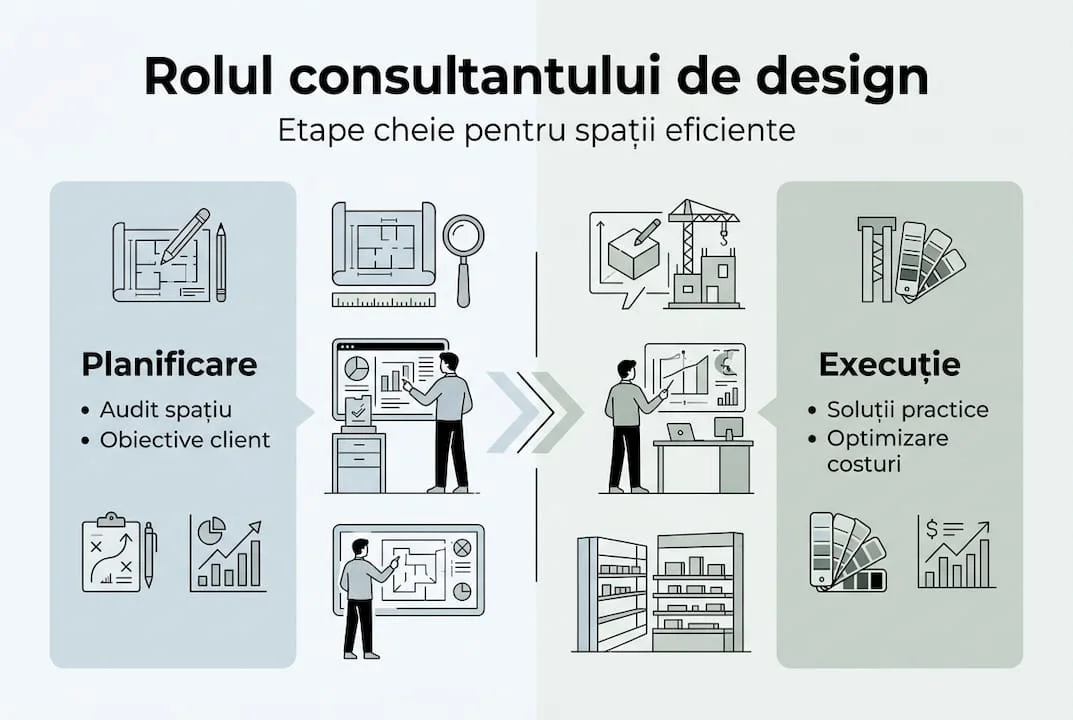
Now that we've established the impact of design, it's essential to understand concretely what the consultant does and how the collaboration unfolds. The process doesn't start with mood boards and color palettes. It starts with a serious analysis of the space and your business objectives.
A design consultant typically goes through several clear stages:
- Initial analysis and space audit — The consultant evaluates the current state of the space, identifies weak points and understands the context of your business. This stage includes discussions about objectives, target audience and brand identity.
- Technical measurements and functional assessment — Precise technical plans are drawn up, the existing infrastructure (utilities, lighting, acoustics) is evaluated and structural constraints are identified.
- Strategic planning and design proposals — Based on the analysis, the consultant develops an interior design concept that reflects the brand identity and meets functional needs.
- Project coordination and risk management — The consultant coordinates the execution teams, manages suppliers and monitors compliance with deadlines and budget.
- Optimization for ROI, ergonomics and brand — Every decision is tied back to business objectives: how the space increases team efficiency, how it attracts customers and how it strengthens the brand image.
To better understand how this collaboration is structured, a collaboration guide dedicated to it can clarify the expectations of both parties.
|
Stage |
Main responsibility |
Deliverable |
|---|---|---|
|
Initial audit |
Space and objectives analysis |
Assessment report |
|
Technical design |
Plans and specifications |
Technical documentation |
|
Design concept |
Visual and functional strategy |
Concept presentation |
|
Execution coordination |
Team and supplier management |
Completed space |
|
Post-implementation optimization |
Functional adjustments |
High-performing space |
What differentiates a good consultant from a mediocre one is precisely this systematic approach. They don't improvise. They build a clear, documented process tailored to your specifics. If you want to delve deeper into the subject, there are numerous interior design guides that explain each stage in detail. Understanding the interior design process helps you know exactly what to ask for and what to expect from the consultant.
Risk avoidance strategies and budget planning in commercial projects
If the consultant's functions are clear, let's see what happens in projects with challenges and how risks are managed. Commercial projects are, by their nature, complex. Tight deadlines, variable budgets, multiple teams, international suppliers. Every extra variable means an extra risk.
There are significant differences between projects with tight budgets and those with flexible budgets:
|
Project type |
Main challenges |
Recommended strategy |
|---|---|---|
|
Tight budget |
Limited materials, short deadlines |
Modular solutions, functional prioritization |
|
Flexible budget |
Risk of overspending, scope creep |
Detailed planning, clear milestones |
|
Heritage/Historic |
Legal restrictions, special materials |
Specialist consultation, rigorous documentation |
|
Complex sites |
Difficult coordination, structural unforeseen events |
15-20% budget reserve, contingency plan |
The best consultants know that edge cases such as heritage, tight budgets or complex sites require dedicated solutions, not standard formulas. A renovation project for a space with historical value, for example, involves strict legal restrictions, hard-to-source materials and long approval times. Without an experienced consultant, these variables can turn a 6-month project into an 18-month one.
Here's how you can prevent the most common budget and planning mistakes:
- Set a realistic budget from the start including a reserve of at least 15% for unforeseen events.
- Document all decisions in writing including any changes requested along the way.
- Choose modular solutions where the budget is limited, to allow for later expansions.
- Coordinate international suppliers through a single point of contact, the consultant, to avoid fragmented communication.
- Review the budget at every key stage, not just at the end.
Professional tip: Before signing any contract with suppliers or contractors, make sure you have a clear contingency plan. Your consultant should present you with alternative scenarios for the main identified risks. You can consult details about interior design project costs and about risks and solutions in management to better understand how budgets are structured. There are also dedicated resources about interior design pricing that can clarify financial expectations.
Sustainability and space optimization: Real benefits for businesses
Once risks and budgets are managed, consultants move on to optimization and sustainability, areas essential for commercial development. Sustainability is no longer a niche trend. It's a business decision with a direct impact on operational costs and brand image.
A well-trained design consultant optimizes spaces for functionality, aesthetics and sustainability, influencing both team workflow and long-term ROI. Concretely, this means:
- Reducing energy consumption by choosing LED lighting systems, materials with good thermal insulation and efficient equipment.
- Optimizing workflows by strategically positioning functional areas, so that the team wastes as little time as possible on unnecessary movement.
- Choosing durable materials that require minimal maintenance and stand the test of time, reducing replacement costs.
- Integrating branding elements into the architecture of the space, not as decorations added later, but as part of the visual structure.
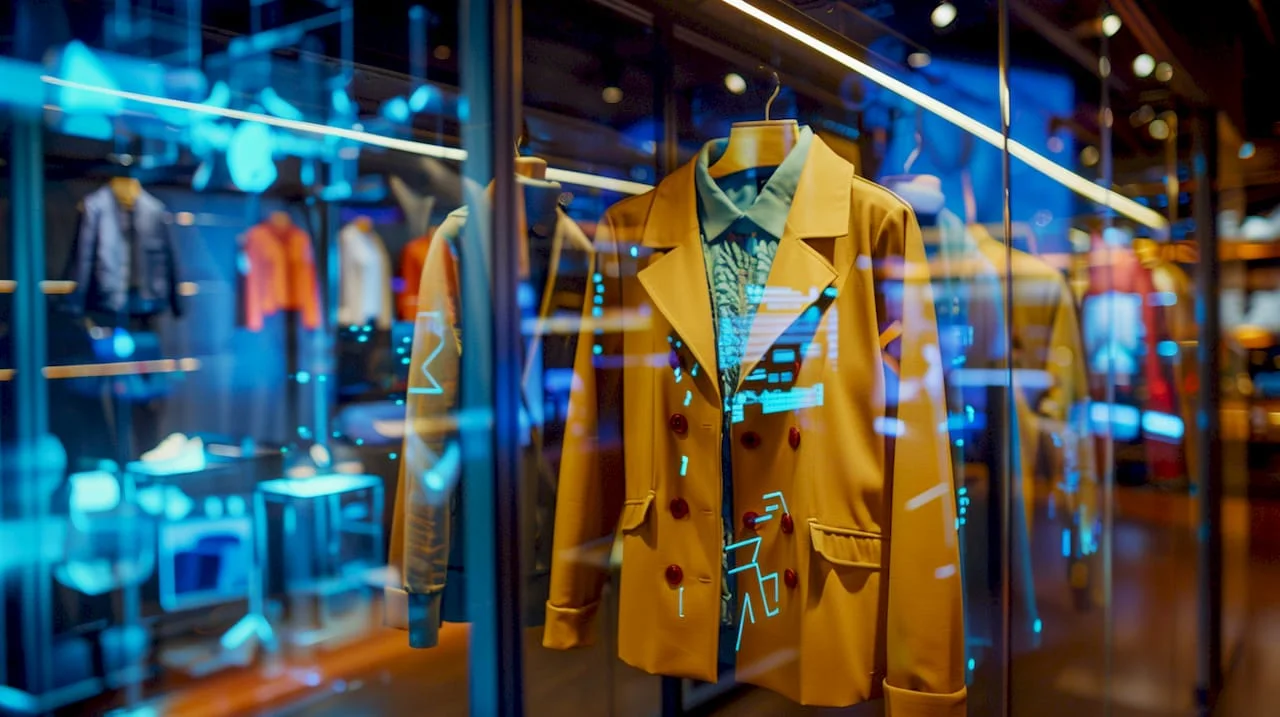
- Creating an ambiance that attracts and retains customers, through the interplay of light, textures and space organization.
Ergonomics is another area where the consultant brings real value. An ergonomically designed office reduces absenteeism and increases productivity. A commercial space with a well-thought-out flow reduces waiting times and improves the customer experience. These effects are measurable and are directly reflected in financial results.
Professional tip: When evaluating a consultant's proposals, ask them to present concrete examples of sustainable materials and technologies they have used in previous projects. Real references are more valuable than general promises. You can explore more about sustainable interior design and about how a well-thought-out interior design concept can transform the operational efficiency of your business.
The design consultant as business strategist: ROI, branding and the psychology of space
The last essential component is how the design consultant directly influences the image, efficiency and results of the business, beyond the visual side. Many business owners underestimate this dimension. Design is not just aesthetics.
"Design is business strategy — workflow, color psychology, ROI, error avoidance and risk reduction are all part of a well-executed design process." — Claudia Coteanu
Color psychology, for example, is not an abstract theory. Warm colors stimulate impulse purchases in retail. Cool colors create a feeling of professionalism and trust in service spaces. Directed lighting can guide the customer toward high-profit-margin areas. All of these are tools that an experienced consultant uses deliberately.
Here's what a business-oriented design consultant can concretely bring:
- Increasing sales by optimizing customer flow and product display areas.
- Strengthening brand identity through visual coherence between space, communication and customer experience.
- Reducing operational costs through functional solutions that minimize waste of time and resources.
- Differentiating from competitors through a memorable space that leaves a lasting impression.
- Increasing employee satisfaction through ergonomic and pleasant workspaces that reduce staff turnover.
The link between design and brand identity is tighter than it seems at first glance. Your physical space is, in fact, your brand's most powerful communication tool. Customers experience it directly, with all their senses. If you want to understand how to choose the right designer for your objectives, there are clear criteria that can guide you. A consultant who understands the impact of interior design on business will always ask the right questions before proposing solutions.
The SelfDezign perspective: Why design consulting transforms businesses, not just spaces
After exploring all the formal and strategic aspects, we want to offer you our perspective, based on real projects from Romania and Europe. We have worked with commercial spaces, offices, restaurants and medical clinics, and one thing has remained constant: the projects that brought the best results were those in which the client treated design as a business decision, not as a personal preference.
Improvisation costs. Not necessarily during the execution phase, but later, when the space doesn't function as it should, when the brand isn't reflected in the layout or when everything has to be redone after two years. Structure and strategy are essential from the very first step.
We've learned that flexibility and ROI orientation are not opposites. A good consultant finds creative solutions within any budget constraint, without sacrificing the coherence of the concept. If you want to understand what an efficient collaboration with a design consultant looks like, read the experiences of other business owners who have been through this process.
Professional tip: Choose consultants who ask you questions about your business before they talk about colors. If the first thing you discuss is style, something is wrong.
Discover SelfDezign solutions for high-performing commercial spaces
If you need concrete results and want to see what professional consultants can do for your business, discover SelfDezign solutions. Our team works with business owners and managers from Romania and Europe to transform commercial spaces into real business tools. From office interior design to HoReCa spaces and medical clinics, every project starts from your objectives, not from current trends. You can see a concrete example in the Prima Development project, which illustrates how a strategic approach transforms an office space. Contact the SelfDezign team for a personalized consultation and establish your project priorities together with us.
2026 trends in design consulting for commercial spaces
The commercial design sector is evolving rapidly. According to the IIDA 2025 Commercial Design Outlook report, these directions define successful projects in 2026:
- Flexible and modular spaces — rapid reconfiguration for events, pop-ups or seasonal rebranding becomes a standard requirement, not a luxury.
- Data-driven design — consultants integrate traffic heatmaps and behavioral analytics to optimize customer flow and product placement.
- Certified sustainability — commercial clients request materials with EPD environmental declarations and smart LED lighting as part of the initial brief.
- Brand identity in every detail — from wall texture to ambient scent, sensory coherence becomes a competitive differentiator in retail and HoReCa.