
Essential steps for evaluating interior design efficiency

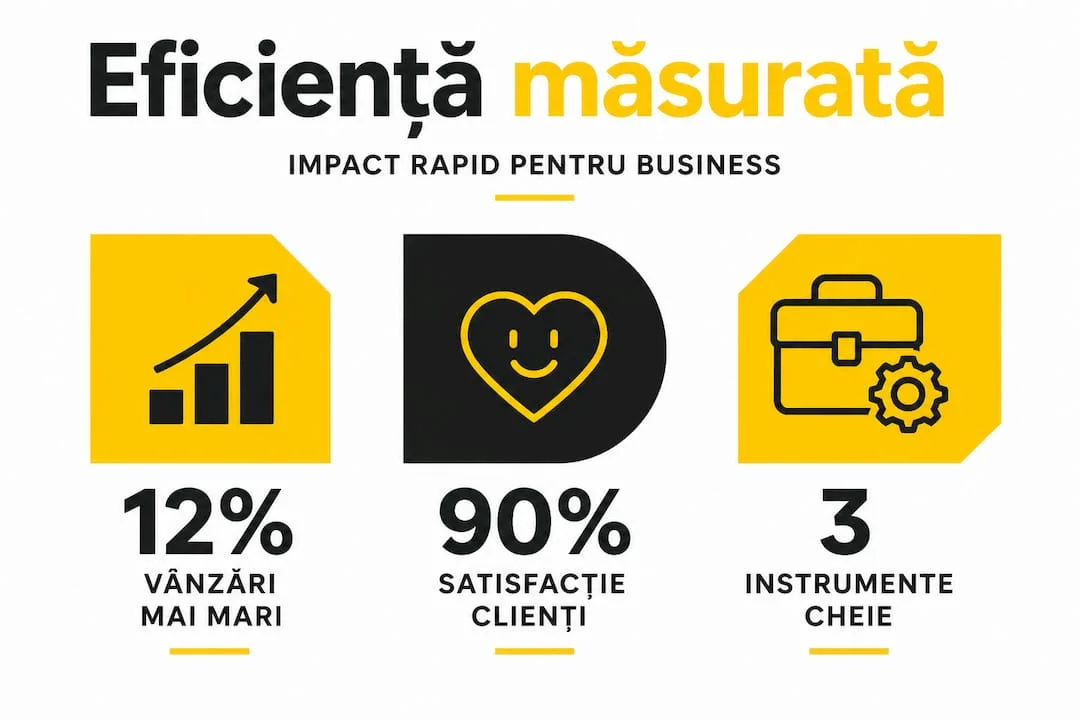
Interior design is not just about aesthetics. It is about money, customer flow, productivity, and strategic decisions. An efficient interior design can increasethe time customers spendin a commercial space by 20-30%, and sales by 12%. However, very few entrepreneurs know how to concretely assess whether their space design works or whether the investment has brought the expected results. This guide explains exactly what steps to follow, what tools to use, and what mistakes to avoid in order to transform the evaluation of interior design efficiency from a vague intuition into a clear and actionable process.
Key Ideas
|
Topic |
Details |
|---|---|
|
Measurable Impact |
Interior design efficiency directly influences business performance and customer experience. |
|
Data Triangulation |
The combination of quantitative and qualitative data ensures a truthful evaluation. |
|
Phased Approach |
Apply clear steps: define objectives, collect data, analyze, and adjust. |
|
Avoid Common Pitfalls |
Do not evaluate too early or too late, and do not ignore actual user feedback. |
|
Use Results Strategically |
Transform evaluation data into concrete decisions for optimization and competitive differentiation. |
Why Evaluating Interior Design Efficiency Is Essential
Many business owners treat interior design as a one-time expense, not as a variable that continuously influences space performance. This is the first and most costly mistake. A space may look good in photos, but it can generate invisible friction in the actual customer experience: confusing paths, inadequate lighting, problematic acoustics, or unused areas that block natural flow.
The benefits of interior designare directly felt in business metrics. Think about the design of a restaurant, a clinic, or a retail space: every visual and functional element influences how long the customer stays, how much they spend, whether they return, and whether they recommend it to others. Evaluating efficiency is not a luxury, but a management tool.
Specifically, here is what a well-structured evaluation process can reveal:
- How satisfied customers arewith the space ambiance, not just with the product or service
- Whether the space is used at full capacityor if there are underutilized areas that consume resources
- What the friction points arein the customer experience, caused by layout or design
- Whether the initial investment in designhas produced the expected return over time
"Customer satisfaction related to interior design reaches 78%." This is not a symbolic figure. It is proof that the physical space matters just as much as the product or service you sell.
The advantages of investments in designbecome clear when comparing similar spaces with different approaches to evaluation. Those who evaluate periodically and adapt achieve significantly better long-term results than those who treat design as a project finalized once and for all. Evaluation is, essentially, the mechanism through which you transform a static space into a dynamic asset for your business.
Tools and evaluation criteria: what you need to have at hand
Before moving on to practical steps, you need to know what you are working with. Evaluating the efficiency of an interior design relies on a combination of quantitative and qualitative tools. None of them, taken separately, provides the complete picture.
The main tools you can use:
- Satisfaction questionnairesapplied to clients or employees after a period of actual use of the space
- Direct observationof user behavior in the space (how they move, where they stop, which areas they avoid)
- Performance metricsdirectly related to business: sales per square meter, average time spent, return rate
- Structured interviewswith key users, especially in office spaces, clinics, or hotels
- Heat mapsgenerated by tracking systems or manual observation, showing high-traffic areas versus dead zones
- Operational cost analysisin relation to space efficiency: energy, maintenance, repeated adaptations
|
Tool |
Data type |
Main use |
Implementation difficulty |
|---|---|---|---|
|
Satisfaction questionnaire |
Qualitative and quantitative |
General satisfaction, aesthetic perception |
Low |
|
Direct observation |
Qualitative |
Real behavior in space |
Medium |
|
Financial metrics |
Quantitative |
Direct impact on sales |
Low (if data exists) |
|
Interviews |
Qualitative |
Detailed, nuanced feedback |
Medium to high |
|
Heat maps |
Quantitative |
Space utilization by zones |
High |
|
Energy audit |
Quantitative |
Operational costs |
Average |
The criteria you need to measure cover three main dimensions:user satisfaction,functional efficiency of the spaceandfinancial impact. Each dimension complements the other two. A space can be positively evaluated aesthetically but generate unjustified operational costs or limit customer flow.
Triangulation of quantitative and qualitative dataoffers the most valid assessment. In other words, never rely solely on numbers or solely on subjective feedback. Combine them.
Professional tip:Before launching any evaluation tool, establish a baseline. Collect relevant data before design implementation or at the zero point of evaluation, so you have a real point of comparison. Without this reference, any subsequent figure is difficult to interpret correctly. You can learn more aboutcosts and investments in interior designto calibrate your financial expectations regarding the process.

Practical steps for evaluating the efficiency of an interior design
Now that you know which tools you are working with, you need to organize them into a coherent process. Chaotic evaluation generates fragmented data and wrong conclusions. Here is how to structure the process step by step.
- Define the evaluation objectives.Do not evaluate "design in general." Establish what you specifically want to understand: is customer dwell time increasing? Is the traffic flow working? Is the space perceived as professional and trustworthy? A clear objective dictates the tools and metrics you will use.
- Collect baseline data before or at the zero point.Whether it is about sales, number of customers per hour, or satisfaction level, you need a starting point. Without initial data, you cannot demonstrate any improvement.
- Let the space function for enough time.Evaluations too early or too late can distort results. A reasonable period of actual use is at least 3 months for commercial spaces and 6 months for offices or clinics. People need time to adapt to a new space.
- Involve end users directly.Customers and employees are the main sources of valuable feedback. Anonymous online or physical questionnaires, short exit interviews, or focus groups with the internal team bring perspectives that no financial analysis can capture on its own.
- Perform data triangulation.Combine financial metrics with direct observation and qualitative feedback. If sales have increased but customers complain about a hard-to-navigate area, you have an optimization opportunity that numbers alone do not show.
- Compare results with initial expectations and industry benchmarks.A solid benchmark is that 70% positive feedback regarding space optimization represents a minimum acceptable threshold. Below this figure, adjustments are necessary.
|
Approach |
Advantages |
Disadvantages |
|---|---|---|
|
Quantitative (metrics, numbers) |
Objective, easy to compare, demonstrable |
Can miss nuances of real experience |
|
Qualitative (interviews, observation) |
Deep, nuanced, humanly relevant |
Subjective, hard to scale |
|
Combined (triangulation) |
Valid, complete, actionable |
More costly in time and resources |
Professional advice:If you have never evaluated the efficiency of a space before, start with a pilot space or a limited area. Apply the process on a small scale, adjust the methodology, then expand. Methodological mistakes in a small space cost much less than in a large project.interior design consultancyfor commercial spaces can significantly accelerate this stage.
Common pitfalls and how to avoid them
Evaluating the efficiency of an interior design may seem simple at first glance, but there are several typical mistakes that occur repeatedly and can invalidate the entire process.
- Evaluation at the wrong time.Most mistakes arise from urgency. Owners evaluate the space one month after opening, when people are still in the adaptation period, or after two years, when problems have become entrenched. Premature or delayed evaluations alter the accuracy of adjustments and can lead to wrong decisions.
- Superficial interpretation of feedback.An average satisfaction score of 8/10 can hide the fact that 20% of clients have a very poor experience and do not return. Read the data in depth, not just the average.
- Neglecting real usage data.A manager's opinion about how the space functions is often different from the actual behavior of clients. Direct observation and traffic data are much more objective sources.
- Lack of a post-evaluation action plan.Many entrepreneurs collect data and then do nothing with it. Evaluation without action is a useless exercise. Every conclusion must generate a concrete decision or at least a hypothesis to test.
A good space is not the one that looks perfect at handover. It is the one that continues to perform after six months, one year, or two years of real use. The difference is made by systematic evaluation, not intuition.
The architect's role in evaluationis often underestimated. An experienced specialist can quickly identify functional problems that users feel but cannot clearly articulate. Involving a professional in interpreting evaluation data adds a level of analysis that few entrepreneurs can achieve internally.
Professional advice:Start with a small pilot and an informal evaluation before launching a formal large-scale process. Test the tools, adjust the questionnaire questions, and calibrate the success criteria based on initial results. Rigidity of methodology in the early phase is a classic trap.
What results you can obtain and how to use them in business
A well-executed evaluation process does not just generate data. It generates competitive advantage. Here is concretely what you can obtain:
- Increased customer satisfaction and loyalty.Clients who feel good in a space return more often and spend more. Evaluation shows you exactly which design elements contribute to this state and what needs adjustment.
- Optimization of operational costs.A functionally inefficient space generates hidden costs: wasted energy on unused areas, frequent maintenance of prematurely worn elements, or costly subsequent adaptations. Periodic evaluation identifies these losses before they become chronic.
- Rapid adaptation to market changes.A retail or HORECA space must evolve alongside consumer behavior. Periodic evaluation gives you the early signals you need to adjust before problems affect sales.
- Solid arguments for future investments.If you want to convince partners, investors, or a board of directors to approve a redesign budget, data from a rigorous evaluation is far more persuasive than any aesthetic presentation.
The numbers speak clearly: in retail, good design increases sales by 12%. This is not a vague estimate. It is the measurable result of a space that functions in alignment with customer behavior.The benefits of design consultancyinclude precisely this ability to translate business objectives into design decisions and measure them over time.
What you are not told about interior design evaluation: the SelfDezign perspective
There is a circulating idea in the industry that once an interior design project is completed, the job is done. The client receives the keys, beautiful photos, and a renovated space. But we believe that is precisely when the truly important part begins.
Efficiency evaluation is not an annual report you do because you have to. It is an ongoing dialogue with the space, its users, and your business objectives. From our experience, the best results do not come from perfect projects on the first implementation. They come from teams and owners who periodically return to simple questions: what works, what doesn't work, and why.
Another truth that few say directly: there is no universal evaluation recipe. What works for a coworking space in Bucharest does not necessarily work for a medical clinic in Warsaw or a restaurant in Barcelona. The local context, type of clientele, organizational culture, and specific characteristics of the space require a tailored approach, not a copied checklist.
We became convinced of the value of iterative feedback precisely in projects where initial evaluations yielded surprising, sometimes counterintuitive results. A space visually appreciated by clients still generated frustration in the waiting area. An office appreciated by management was perceived as cold and isolating by employees. Without structured evaluation, these tensions remained invisible.
We think ofsustainability and adaptationas an integrated dimension of evaluation, not separate from it. A sustainable space is, by definition, a space that lasts over time, adapts to needs, and maintains relevance for its users. Periodic evaluation is the mechanism through which sustainability becomes practice, not just theory.
Turn evaluation into a competitive advantage for your business
At SelfDezign, we do not design spaces and leave. We understand that an effective interior design is one that continues to deliver value over time, and this involves both evaluation and adaptation. If you want to understand how your space truly works, you can exploreour project portfolioto see how we approach various types of spaces, from retail to offices and clinics. For workspaces,office design solutionsare built precisely on the principle of measurable functional efficiency. And if you have a residential space and want to understand how the impact ofpersonalized residential designis evaluated, we have dedicated resources for this context as well. Contact us for a preliminary, no-obligation discussion, and we will establish together what the priorities and next steps are for your space.