
Why personalization is the key to successful design
TL;DR:
- Personalized design differentiates spaces, reflecting the uniqueness of your brand and needs.
- The essential steps include analysis, the moodboard, furnishing plans, and the selection of durable materials.
- Personalization brings benefits such as reduced stress, increased productivity, and long-term value.
The spaces where we live and work influence us more than we think. Biophilic elements in design reduce stress by up to 15% in offices, and that's just one example of what a space truly designed for you can do. Personalized design is no longer a privilege reserved for large corporations or luxury homes. Today, it is a real strategic differentiator, both for businesses that want to stand out and for owners who want to feel that their space truly belongs to them. In this article we explore why personalization matters, what the process looks like in practice, and what concrete benefits it brings you.
Key Ideas
|
Point |
Details |
|---|---|
|
Personalization creates value |
A personalized design reflects the uniqueness of the brand and increases the attractiveness of the space. |
|
Structured process |
Success depends on clear steps, careful budgeting, and choosing the right specialists. |
|
Real benefits for users |
Personalized spaces reduce stress and improve the well-being of those who use them. |
|
Watch out for budget and risks |
Proper planning prevents financial surprises and maximizes the investment. |
Why personalization matters in your design project
When you choose a standard design, you are actually choosing a compromise. Furniture comes from a catalog, finishes are the most popular of the season, and your space looks like dozens of others. Maybe it works. But it doesn't speak about you, about your brand, or about the values you want to convey to clients and employees.
Personalization fundamentally changes this equation. A interior design concept designed specifically for you means that every decision, from the layout of the space to the choice of materials, serves a clear purpose. Brand recognition becomes organic. The experience of the space's users becomes memorable. Adaptability to the real needs of your business increases significantly.
Here is a clear comparison between the two approaches:
|
Criterion |
Personalized design |
Standardized design |
|---|---|---|
|
Visual identity |
Unique, reflects the brand |
Generic, replicable |
|
Adaptation to space |
Maximum |
Limited |
|
Execution time |
Longer |
Shorter |
|
Initial cost |
Higher |
Lower |
|
Long-term value |
High |
Medium to low |
|
Risk of subsequent changes |
Reduced if well planned |
High |
Of course, personalization also comes with real challenges. According to interior design experts, personalization involves risks of hidden costs, longer timelines, and costly subsequent changes if the process is not managed correctly from the start.
The main advantages of personalization include:
- Distinct identity that differentiates your space from the competition
- Optimized functionality for the specific activities carried out there
- Visual coherence between your brand and the physical environment in which you operate
- Increased satisfaction of employees, clients, or residents
"A personalized space is not just more beautiful. It is more efficient, more human, and more authentic to who you are as a business or as a person." This is the essential difference that a interior design concept well built brings compared to a catalog solution.
Now that we have established the importance of personalization, let's clearly see what the practical steps are that every personalized project follows.
The essential steps for personalizing a design project
A personalized design project does not start with choosing colors. It starts with a simple but profound question: what do you want people to feel when they enter your space? The answer to this question guides every subsequent decision.
The professional methodology involves several clear stages, each building on the previous one:
- Initial analysis of the space and needs The designer studies the dimensions, circulation flows, natural light, and the activities that will take place there. At the same time, they understand the client's objectives, the brand's values, and the available budget.
- The visual concept with moodboards A first image of the aesthetic and functional direction is created, using visual references, color palettes, and textures. The moodboard is the map of the project, not a simple collage.
- Furnishing plans and space layout Each area is designed in relation to the others. Ergonomics, accessibility, and the natural flow of movement are priorities.
- Selection of materials and suppliers Sustainable and durable materials are increasingly preferred, and choosing an interior designer with sourcing experience makes the difference between a budget kept and one exceeded.
- Detailed budgeting and phased planning Each element has an estimated cost and a safety margin. Financial surprises appear most often when this stage is treated superficially.
- Coordination of implementation and site management According to specialists, the complete methodology includes initial analysis, visual concept, furnishing plans, selection of sustainable materials, budgeting, and site management, all integrated into a coherent process.
|
Stage |
Estimated duration |
Deliverable |
|---|---|---|
|
Analysis and brief |
1-2 weeks |
Requirements document |
|
Concept and moodboard |
2-3 weeks |
Validated visual direction |
|
Technical design |
3-6 weeks |
Complete plans |
|
Implementation |
4-16 weeks |
Completed space |
Professional tip: 3D visualizations are not a whim. They allow you to "live" in the space before a single nail is hammered, significantly reducing the risk of costly changes during execution. You can see examples from the portfolio to understand what a concept carried through to the end looks like.
Managing a complex design project also requires skills in managing complex projects, not just aesthetic taste. That is precisely why choosing the right team matters enormously.
The psychological and functional benefits of personalizing space
Now that we have presented the technical steps, let's see what real impact a personalized design has on people and the business. And the impact is, many times, surprisingly concrete.
In a personalized office, employees don't just work better. They feel more valued. The space conveys that the organization has invested in their comfort, which is directly reflected in motivation and retention. The same principle works in restaurants, medical clinics, or homes.
The main documented benefits of personalization include:
- Reduced stress through the integration of natural elements, adequate light, and thoughtful acoustics
- Increased productivity through correct ergonomics and optimized workflows
- Strengthened brand image through visual coherence between the company's identity and the physical space
- Increased property value in the long term, for both commercial and residential spaces
- Memorable experience for clients, who associate the quality of the space with the quality of the service
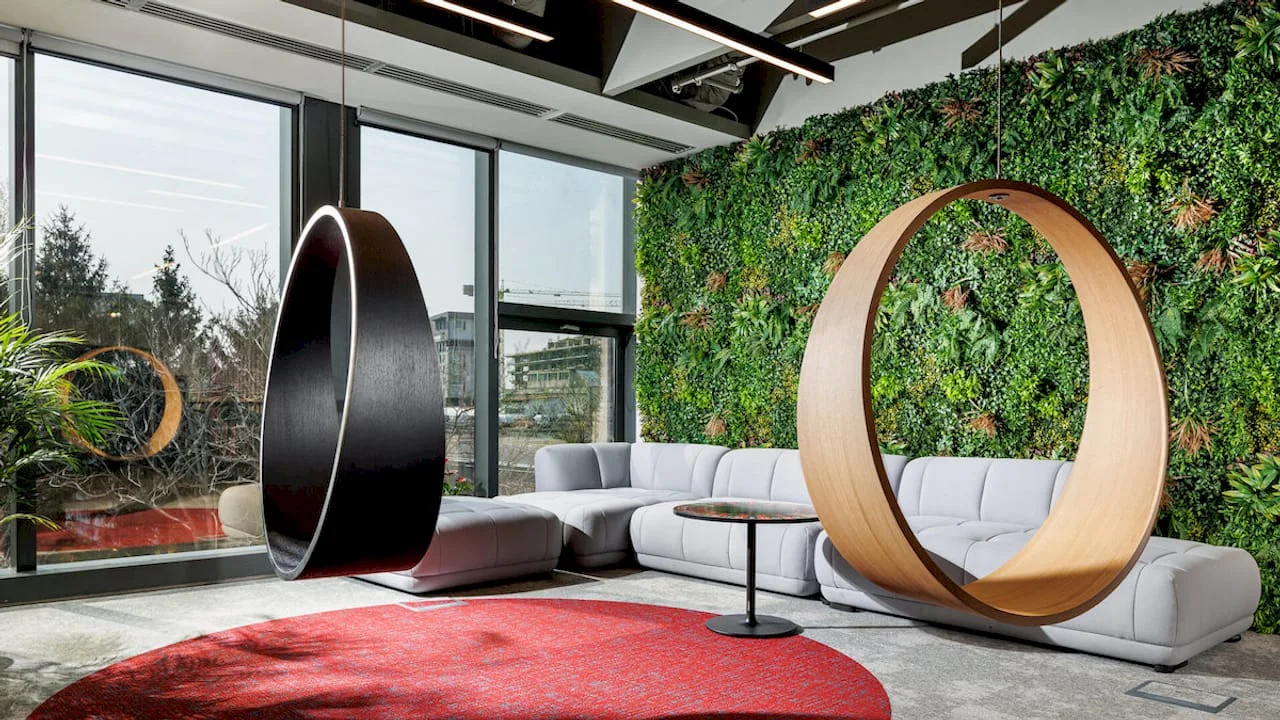
Relevant statistic: Biophilic elements in personalized design reduce stress by up to 15% in offices. Plants, natural materials, natural light, and organic textures are not decorative. They are functional.
In a restaurant, for example, personalized design can directly influence how long clients stay at the table and how much they spend. Colors, lighting, acoustics, and furniture arrangement create an atmosphere that either invites relaxation or accelerates table turnover, depending on the business strategy.
Professional tip: If you want to better understand how integrating biophilic design works in commercial or residential spaces, explore concrete projects before making decisions. Theory is good, but real examples show you what is possible in your specific space. Also, the effects on property value are increasingly documented and relevant for owners who think long term.
The costs and budgeting of personalized design projects
The benefits are clear, but many entrepreneurs are afraid of costs. Here is how you can budget intelligently and avoid common financial traps.
The first reality you must accept: personalization costs more than a standard solution, at least at the beginning. But the difference in initial cost can be recovered quickly through operational efficiency, resale value, or the positive impact on revenue.
The main sources of additional costs are:
- Subsequent changes Changes in direction after the project has begun are the most expensive type of decision in design. Every structural or conceptual change adds time and money.
- Premium materials Quality comes at a price, but you don't have to choose premium for every element. A good designer knows where the investment is worth it and where you can save without compromising the result.
- Site management Coordinating craftsmen, suppliers, and deadlines requires time and expertise. Without a dedicated coordinator, costs can spiral out of control.
- Lack of a clear brief When the client doesn't know exactly what they want, the designer iterates, and iterations cost money. Clarity from the start saves money at the end.
According to specialists, personalization can involve risks of hidden costs, but phased planning can significantly reduce these risks. Contracting in stages, with clear deliverables and intermediate approvals, is the best protection against surprises.
Professional tip: Before signing any contract, ask for a detailed quote broken down by expense categories, not a lump sum. Transparency in budgeting is the sign of a serious partner. You can learn more about the cost of design projects for different types of spaces or you can explore the price of a personalized project depending on complexity and surface area.
The investment in personalized design is, in essence, an investment in the identity and functionality of your space in the long term. Thought through correctly, it is not a cost, but an asset.
Our perspective: what you aren't told about personalization
There is one thing that few articles about design say openly: personalization doesn't mean doing everything that crosses your mind. It means making the right choices for you, not for the trend.
The best projects we have seen are not the most visually spectacular. They are the ones that solve a real need, with honesty and coherence. A restaurant that works perfectly for the kitchen team and for the clients in the dining room is more valuable than one that looks impressive in photos but creates chaos in operations.
Costly mistakes almost always arise from the same cause: poor communication between client and designer. The client assumes the designer understood, the designer assumes the client approved, and both discover at the end that the space doesn't meet the real needs.
Flexibility, open dialogue, and taking responsibility throughout the process are not optional. They are the basic conditions for a successful project. The SelfDezign approach starts precisely from this reality: we understand the context and the real objectives before any aesthetic decision.
Professional solutions for personalized design projects
If you feel that personalization is the right solution, here are the next steps you can take. At SelfDezign, we work with business owners and homeowners who want more than a beautiful space. They want a space that works, that reflects who they are, and that supports their real objectives.
Our services cover the entire process, from concept to implementation, for office interior design, horeca spaces, medical clinics, and residential interior design. Our portfolio includes projects from Bucharest and across Europe, each with solutions designed specifically for that space and that client. Contact the SelfDezign team for a preliminary discussion and discover what your space can look like when it is truly designed for you.
2026 trends in interior design personalization
Clients in 2026 reject generic solutions and demand spaces that reflect their unique identity. Research in neurodesign confirms that personalization improves well-being and productivity by up to 32%:
- Personalized biophilic design — the integration of plants, natural materials, and natural light adapted to the occupant's specifics, not according to generic templates.
- Furniture capsule collections — premium manufacturers offer custom configurations with competitive delivery times, democratizing access to made-to-order furniture.
- Psychological color palette — the selection of colors based on the occupant's psychological profile, not just seasonal trends.
- Digitalization of the selection process — 3D and VR renderings allow the client to experience personalization before any investment, reducing decision risk.