SPC vs LVT: which floor to choose by room and budget
For kitchens, hallways, and high-traffic areas, choose SPC. For bedrooms and living rooms where comfort on foot matters more than extreme resistance, LVT remains the right choice. The difference comes from the structure: SPC has a rigid stone and PVC core, LVT has a flexible core, closer to classic vinyl. Both are waterproof on the surface, but they mount differently and behave differently in the long run.
A few quick milestones before you go into technical details:
- The SPC better withstands bumps in the screed and heavy traffic, but is less tolerant of mounting errors.
- LVT offers softer gait and slightly superior sound insulation, ideal for seating areas.
- The cost of material and workmanship differs depending on the type of mounting (floating click vs. glued) and the state of the support.
Story Highlights
The choice between SPC and LVT depends on traffic, humidity and desired walking comfort, not on a universal superiority of one material over another.
SubiectDetaliiThe core structure decides the performanceSPC has rigid core, more dimensionally stable; LVT has flexible core, more comfortable to step on.Wear layer matters more than the labelCheck 0.3mm for regular traffic, 0.55 mm for heavy traffic, 0.7mm for commercial.Mounting influences screed preparationSPC click tolerates small unevenness; glued LVT requires a well leveled and self-leveling screed.UFH compatibility requires verificationComplies with the surface temperature limit and the thermal resistance declared by the manufacturer.SelfDezign integrates the flooring into the conceptSelfDezign consultancy evaluates the mat, recommends the right material per room, and estimates the full budget.SPC vs LVT: comparison by structure, performance and cost
Structural difference explains almost all other differences. The SPC has arigid stone plastic core, a mixture of stone powder and PVC, which gives it a dimensional stability that flexible vinyl cannot achieve. LVT, on the other hand, is based on a flexible PVC core, structurally closer to traditional vinyl, which makes it more pleasant to step on, but also more sensitive to bumps.
Water resistance is not the criterion that separates them. Both are waterproof at the level of the decorative layer and can be mounted in kitchens or bathrooms without the risk of swelling that classic laminate flooring has. What differs is the long-term behavior: the higher density of the SPC makes itmore resistant to mechanical damage, while LVT tends to yield more visibly under concentrated weights, such as the legs of a refrigerator or a massive sofa.
Tip: Don't be fooled by the trade name. Always ask for the thickness of the wear layer in millimeters, not just the SPC or LVT labeling.
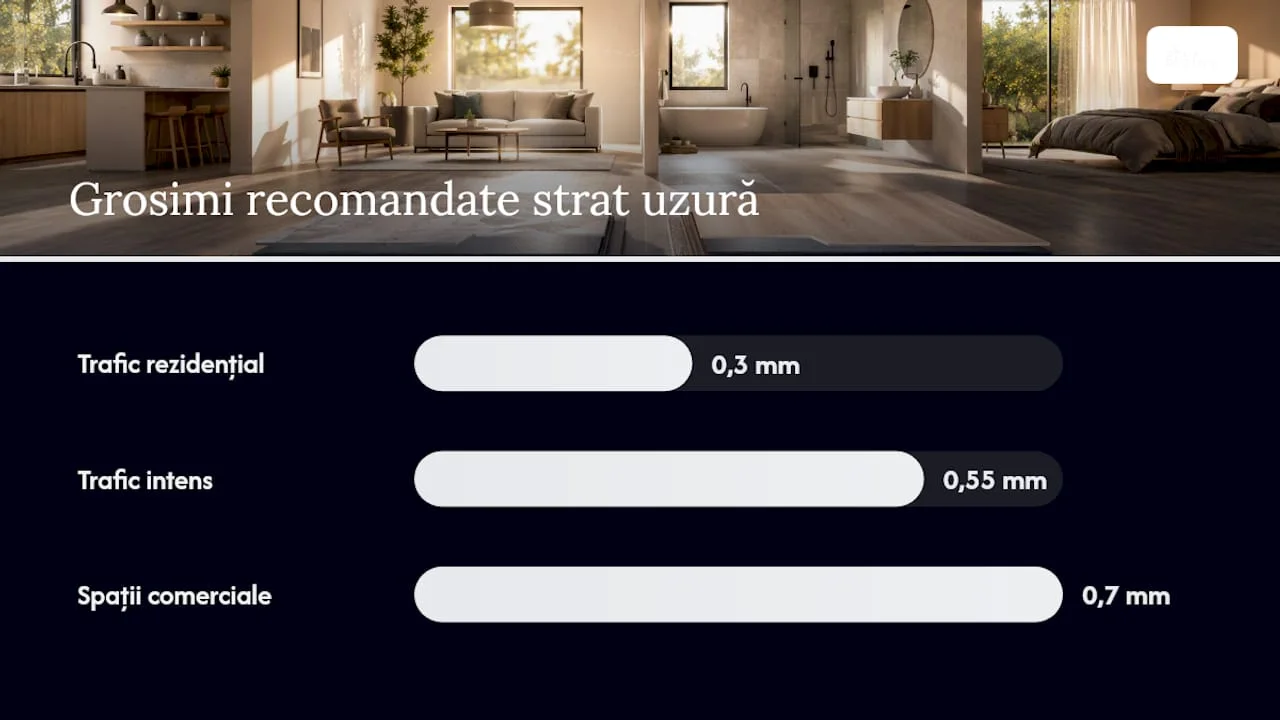
The wear layer actually determines the actual life of the floor regardless of the type of core. Guidance recommendations show0.3 mm for regular residential traffic, 0.55 mm for heavy traffic and 0.7 mm for commercial spaces. A 0.2mm wear layer SPC floor can perform worse than a premium LVT by 0.5mm, so the EN usage class (e.g. 33 or 42) matters more than the acronym on the label.
Dimensional stability clearly favors SPC. Rigid core toleratestemperature variations and sun exposurewithout visibly dilating, which makes it suitable for rooms with large windows or closed balconies. LVT may suffer small deformations in extreme heat, especially near direct light sources or radiators.
With the sensation of walking, the situation is reversed. The SPC is thicker and firmer under the soles, almost like a classic rigid floor. LVT, being more flexible, better absorbs the impact of the step and provides slightly better sound insulation, an important aspect in apartments with neighbors on the ground floor or in children's rooms.
Costs vary depending on thickness, wear layer quality and mounting type. SPC material tends to be slightly more affordable for basic click variants, and premium LVT with realistic textures or glued fitting can reach a higher price per square meter. The final difference, in both cases, depends a lot on the need for self-leveling and the complexity of the workmanship, not just the price of the material.
When using SPC and when using LVT: practical camera-by-room scenarios
There is no one-size-fits-all solution. The decision is taken camera by camera, depending on traffic, humidity and the condition of the existing screed.
- Kitchen:The SPC is the logical choice due to its impact resistance and stability in the face of occasional moisture.
- Bath:both operate at surface waterproofing level, but the SPC better tolerates fixed weights such as bathtub or hanging furniture.
- Hallway and access area:SPC better copes with repeated traffic and sand brought in from outside.
- LivingLVT provides superior step comfort for long hours on the sofa or carpet.
- BedroomLVT remains recommended for warmer sensation and better sound insulation.
- Closed balcony:SPC, due to the stability to temperature variations and sun exposure.
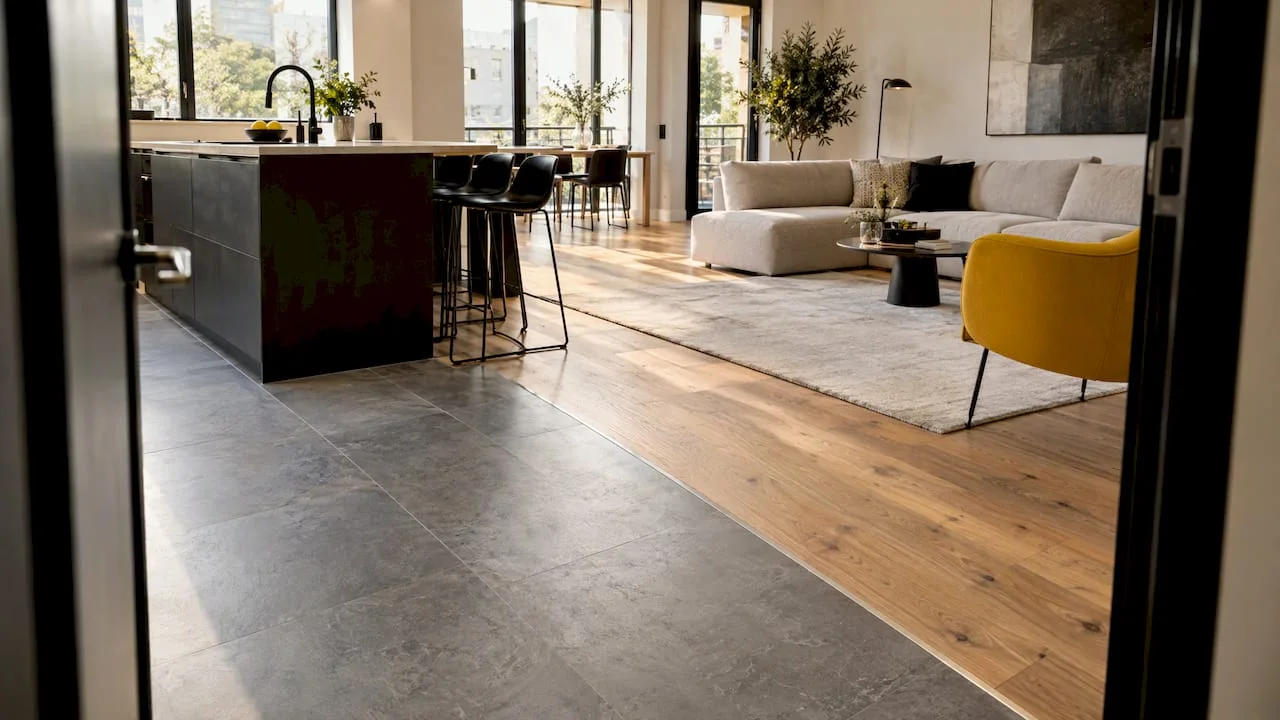
Combining the two types in one project is completely normal and often the smartest solution. SPC in technical areas, LVT in relaxation areas, with a well-chosen transition threshold, provides a balance between strength and comfort.
Pentru quick renovations over an existing floor, SPC click reduces execution time and support preparation costs. Bonded LVT requires a better leveled screed, but provides a visually closer finish to natural wood.
Decisional Checklist and Site Checks for Owner
Before you order the material, a few steps save you from further complaints and money spent on an inappropriate solution.
Practical steps before ordering:
- Accurately measures the area and adds a spare percentage for cutting losses.
- Test the moisture level of the screed, especially on the ground floor or above the radiant floor.
- Check the unevenness of the mat with a ruler of at least two meters.
Questions to ask the fitter or supplier:
- What is the exact thickness of the wear layer, in millimeters?
- What class of EN use does the product have (e.g. 33 for residential intensive, 42 for commercial)?
- Is it compatible with underfloor heating and what is the declared thermal resistance value?
- What preparation of the support does the offer include: levelling, self-leveling, adhesive?
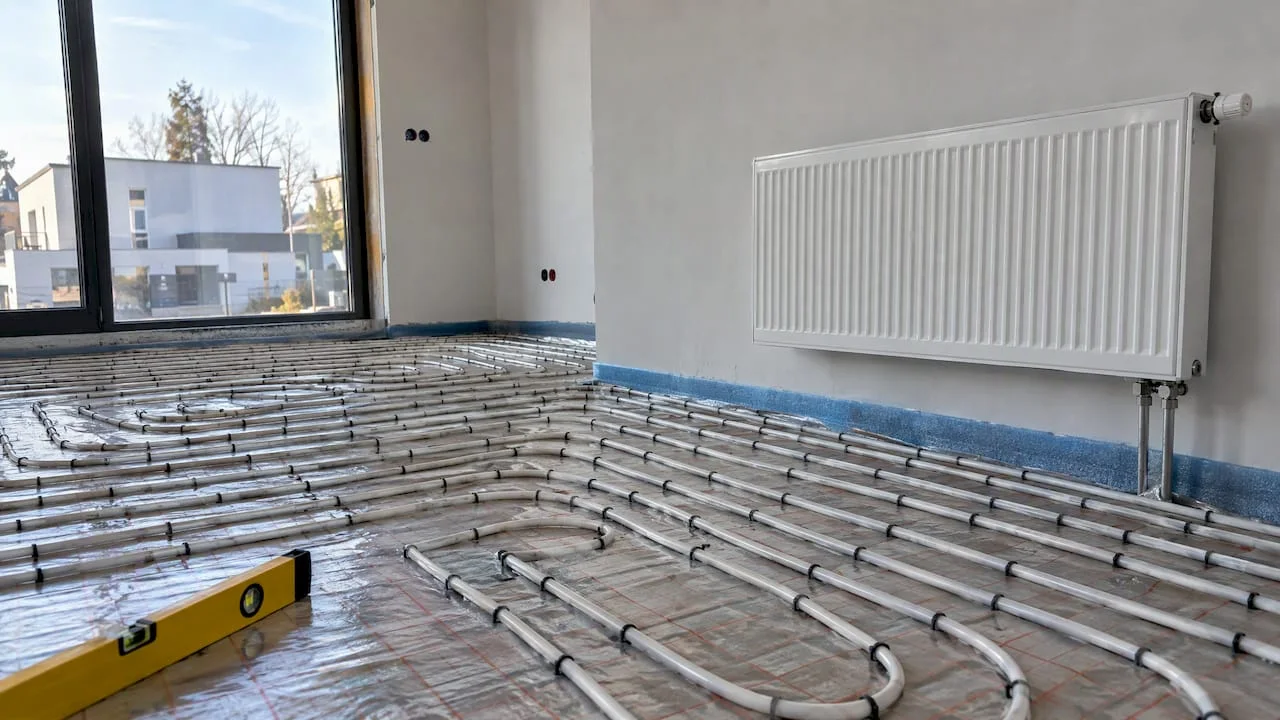
Compatibility with underfloor heating deserves separate attention. Both SPC and LVT can operate over radiant systems but comply with the manufacturer's limits: surface temperature below 27 to 28 degrees Celsius and a total thermal resistance below 0.15 m²K/W. Ignoring these values can deform the floor or reduce the efficiency of the heating system.
The total cost often includes hidden elements: self-leveling, special adhesive for bonded LVT, transition thresholds and dismantling of old flooring. An offer that does not mention any of these lines separately is an alarm sign, as is the lack of technical declarations for the EN class or the wear layer.
Maintenance and cleaning differ between the two types
The SPC, being denser and stiffer, tolerates wet mop cleaning and common detergents without the risk of deformation when in contact with stagnant water for a few minutes. The rigid surface also resists hard-brushed vacuum cleaners, a real advantage in homes with pets.
LVT requires a little more attention to moisture, especially at joints, if the fitting is bonded and the joints are not perfectly sealed. In the long run, both types maintain themselves similarly: avoid abrasive or ammonia-based detergents, which can attack the decorative layer, and use mats at the entrances to reduce scratches caused by pebbles or sand.
Stains from wine, coffee or grease are easily wiped off from both surfaces thanks to the top protective layer. The real difference occurs at deep scratches: a thicker wear layer, whether it is SPC or LVT, delays the appearance of visible signs of wear. Heavy furniture should be equipped with felt protectors, a simple measure that extends the life of both types of flooring by years.
SelfDezign perspective: integrating the flooring into the design concept
In a residential project, flooring is not the last decision, but one of the first. Determine the color of the walls, the type of furniture that visually “breathes” on it, and how natural light is reflected in the room. At SelfDezign, we prioritize function in technical areas (kitchen, hallway, bathroom) and leave room for aesthetics to lead in relaxation areas, where LVT with natural wood texture creates a warmer atmosphere.
We recommend removable click solutions when the customer plans further renovations or when the budget requires a quick execution. We choose permanent glued variants in projects with constant commercial traffic, where long-term stability justifies the wider preparation of the support. In a recent residential project, such as the one in the French Quarter, the technical check included testing the moisture of the screed and choosing the right EN class for each area of the home, not a single uniformly applied solution.
Toni
SelfDezign services for floor selection and integration
Beyond the SPC vs LVT comparison, the right decision takes into account the entire concept of the home, not just a technical table. SelfDezign offers punctual consultancy sessions in which we assess the condition of the support, recommend the type of flooring suitable for each room and estimate the realistic budget, including the hidden elements that many offers omit. For more complex projects, where the flooring must work together with the furniture, lighting and circulation flow, a full-service project coordinates all these decisions from concept to execution. You can see how we structure such a project inthe complete checklist for interior designand you can request a review of your space directly from the SelfDezign team.