LVT vs parquet: which flooring to choose for each space
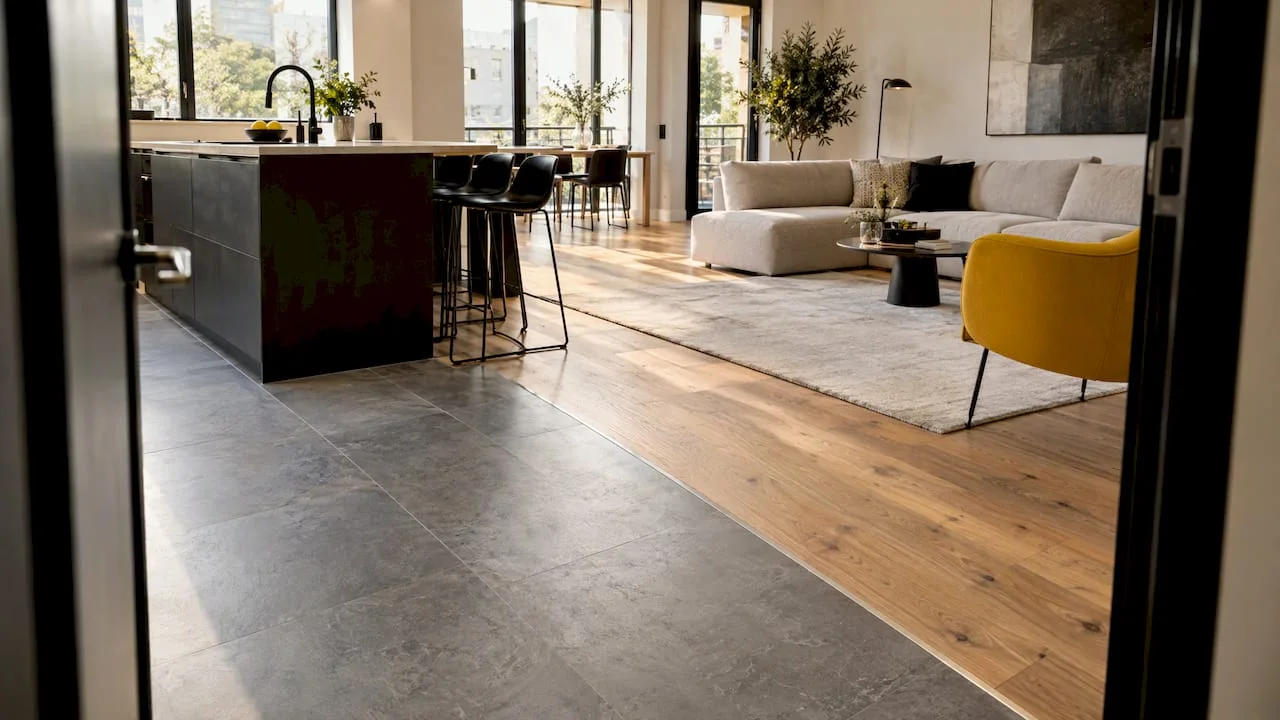
For areas exposed to moisture and heavy traffic, LVT is the right choice: it resists water, requires little maintenance. For projects where natural aesthetics and the option to refinish are more important than everyday convenience, natural parquet remains the superior option. LVT and engineered wood parquet work well with underfloor heating; solid wood parquet calls for more caution. The two materials also differ in how they age.
In summary:For areas with high humidity and heavy traffic, LVT is water-resistant and low-maintenance, making it the ideal solution.Natural parquet, which can be refinished by sanding, retains value and authentic appearance, but is vulnerable to moisture and deformation.LVT is installed by gluing or as a floating floor, while parquet requires a smooth subfloor and can be glued, nailed or installed as a floating floor.In spaces with underfloor heating, engineered wood parquet is more compatible than solid wood parquet to prevent deformations.In the choice, the priority for commercial or medical spaces becomes the durability and ease of maintenance of LVT, and for the residential environment, the authenticity of natural wood.
SelfDezign
Choose the right flooring for your space
SelfDezign designs custom interiors for commercial spaces, hospitality, offices, clinics and homes.
What are LVT and parquet: main components and variations
LVT stands for luxury vinyl tile and is built from several overlapping layers: a transparent wear layer, a decorative layer that prints the pattern (wood, stone or abstract textures) and a backing layer that provides stability. Depending on the composition of the backing, we encounter flexible LVT, softer to step, and SPC, a rigid variant with stone composite core, more resistant to impact and deformation. The technical differences between the two variants are explained at length in comparison of SPC versus LVT.
Natural parquet is divided into two large categories: solid, cut from a single piece of wood, and engineered (multi-layer), consisting of a wear layer of noble wood glued to a multilayer wooden base. Solid wood parquet provides maximum depth and can be reconditioned many times, but reacts more strongly to humidity and temperature variations. Engineered wood parquet is more dimensionally stable, fits better with underfloor heating and reduces the risk of deformation.
Thickness and weight differ significantly between the two materials, and this detail influences both the type of fitting possible and the transitions between rooms.
Water and moisture resistance, and suitability for bathrooms and kitchens
LVT is virtually waterproof due to its vinyl structure, making it suitable for bathrooms, kitchens and high humidity areas. However, the actual resistance depends on the quality of the joints and the correct sealing at the edges, especially around the frames and showers, where the water stagnates.
Natural parquet, regardless of the type, remains vulnerable to prolonged moisture: wood swells, deforms and can develop mold under the varnish. We avoid installation in bathrooms or in areas with direct exposure to water, even for variants treated with resistant varnishes.
Regardless of the material, subfloor preparation remains essential. The technical instructions for laying and finishing parquet describe the requirements for a clean, level cement screed subfloor, and the same precautions apply to LVT, where a moisture barrier membrane prevents further problems.
Durability, traffic resistance and repair options
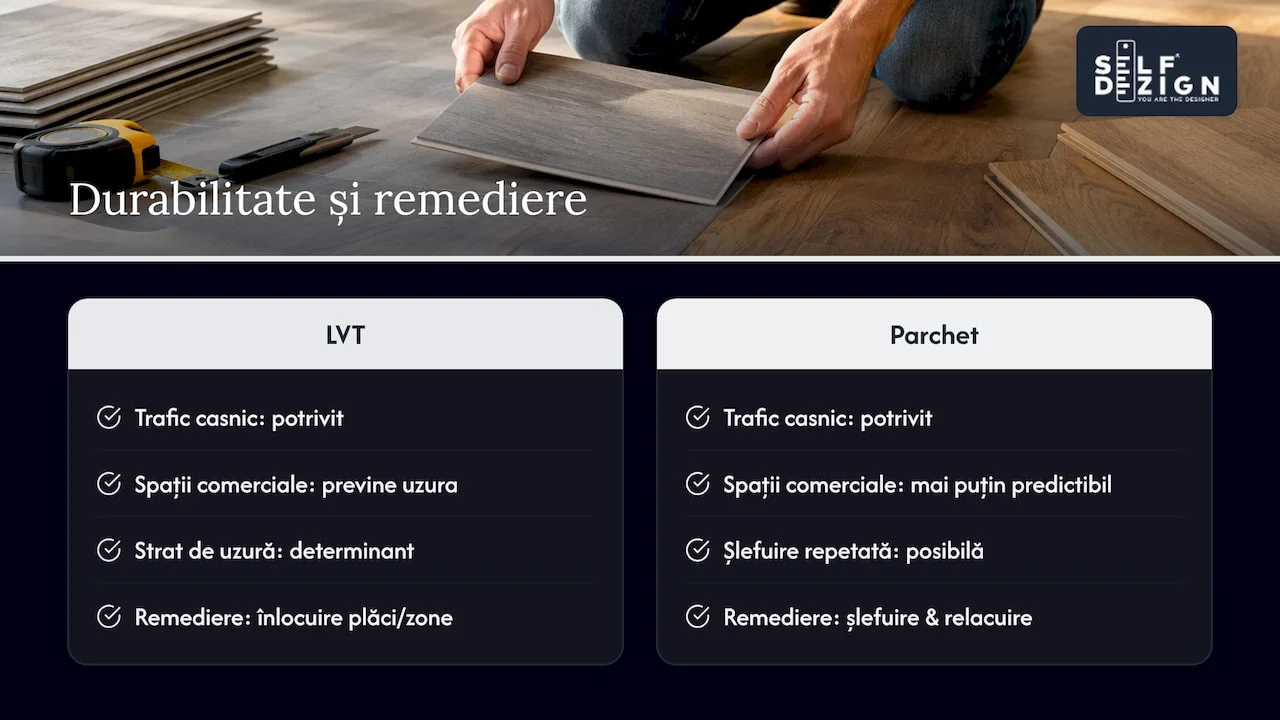
The durability of LVT largely depends on the thickness of the wear layer, the transparent component that protects the decorative layer from scratches and abrasion. A thicker wear layer better withstands heavy traffic, such as office lobbies or commercial spaces with constant flow of visitors, but when the layer wears out, the usual solution is to replace the board or the affected area, not refinish.
Natural parquet ages differently: scratches and wear of the finish occur over time, but its structural advantage is the possibility of refinishing by sanding and re-varnishing. Solid wood parquet can be sanded several times; engineered parquet, as many times as the thickness of its wear layer allows. Refinishing extends its service life. LVT, on the other hand, does not offer this option: once the wear layer is degraded, the only solution is to replace it.
For regular household traffic, both materials perform well when chosen correctly for their level of use. For light commercial spaces, such as offices or medical offices with moderate flow, LVT with a generous wear layer tends to be the more predictable solution, because it simplifies long-term maintenance and reduces the risk of rapid visible damage. However, the parquet remains the right recommendation where the owner wants a material that takes on character over time, not just one that lasts.
Installation: methods, complexity and installation time
LVT is installed by two main methods: full-surface gluing on a prepared subfloor or floating system with click joint, without adhesive. Floating installation is faster and allows almost immediate circulation, while bonding provides additional stability in high-traffic areas but requires adhesive drying time.
The natural parquet admits three methods: gluing, nailing (specific to solid wood parquet on wooden structures) and floating installation for engineered variants. All require a smooth, dry and level subfloor, and the technical instructions for laying and finishing the parquet detail the requirements for preparing the screed before gluing. The working time ranges from a few hours for floating installation to a few days for glue-down installation and complete finishing, including drying periods between layers of varnish.
Maintenance and repair: practical routines and long-term costs
LVT is cleaned with wet mop and neutral detergents, without waxes or abrasive products that can opacify the wear layer. Parquet requires special wood products, avoiding excess water and, periodically, waxing or re-varnishing to maintain protection.
In the long run, the refinishing of the parquet involves a higher point cost, but rarely repeated, while worn LVT is replaced area by area. Over time, parquet that can be refinished may offset its higher initial cost.
Aesthetic appearance and perceived value: when natural wood matters
Current printing technologies allow LVT to faithfully reproduce the texture and shades of wood, but in direct natural light, differences in depth and natural fiber variation remain visible to a careful eye.
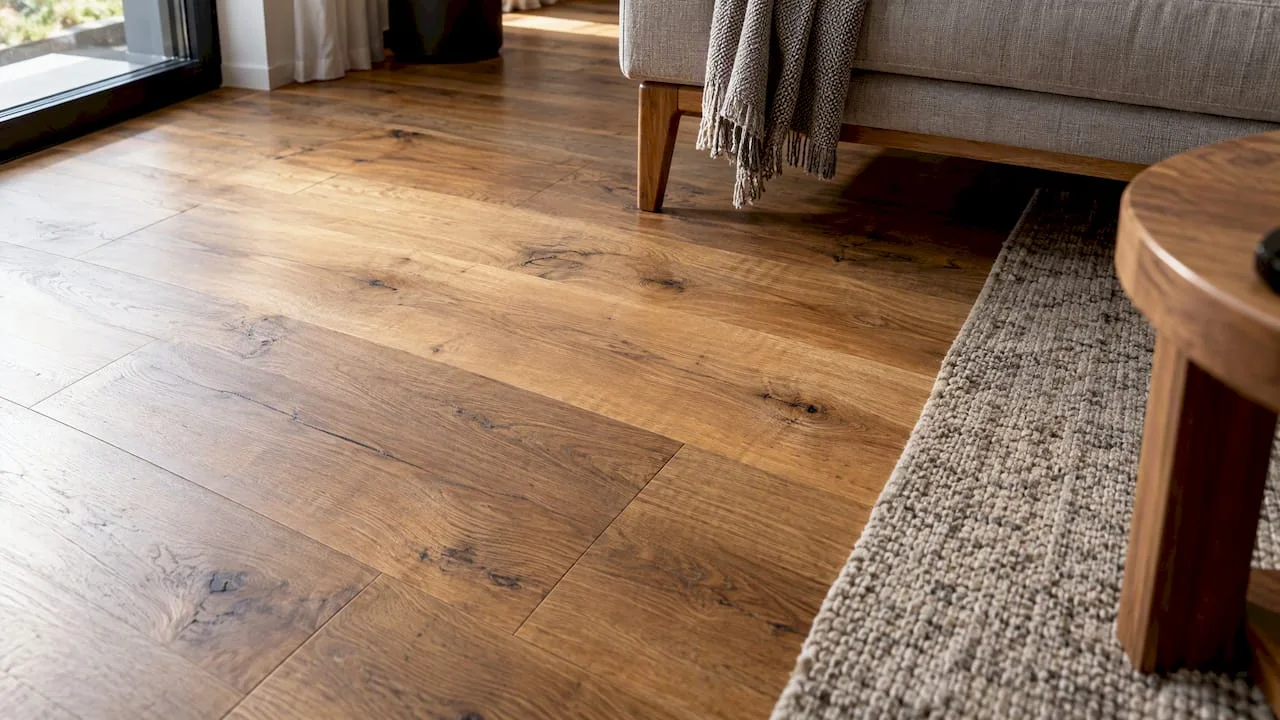
Natural parquet acquires patina over time, a quality that no synthetic material can replicate identically, and this detail matters in premium projects where the authenticity of the material is part of the identity of the space. The choice depends on how much the link between the material and the perception of long-term value matters to the owner.
Sustainability and emissions: what to look for in datasheets and labels
Emissions of volatile organic compounds (VOCs) influence indoor air quality, and this is becoming increasingly relevant in residential and commercial projects. Ask the supplier for the product's technical data sheet and VOC emission declaration, tested to a recognised European method, especially in long-occupancy spaces such as offices or clinics.
For other examples of low-impact materials, see innovative materials for the interior.
Safety and slip resistance: standards and recommendations
Slip resistance is measured by a standardized test called ramp test, described by the German institute BAuA in its slip resistance testing guide, which classifies surfaces on a scale from R9 to R13, according to the angle at which the test person begins to slide. Higher grades mean better grip on wet or oily surfaces.
Both LVT and parquet finishes can achieve different R classifications depending on the texture of the surface, and in risk areas such as entrances, stairs or bathrooms in commercial spaces, it is worth asking the supplier for the exact classification of the product. Further details on the application of these standards in sensitive spaces can be found in the article on medical clinic floors.
Pragmatic checklist: questions to ask and final selection criteria
Before signing an order, check the following points with the supplier:
- What is the level of traffic and exposure to moisture of the space.
- If compatibility with underfloor heating is required.
- How important it is for the project that the material can be reconditioned.
- What thickness the wear layer has at LVT or what thickness of the useful layer the engineered parquet has.
- Which VOC emission certifications accompany the product.
- What mounting method the manufacturer recommends for your existing subfloor.
A vague offer, without these explicit details, is a warning signal: compare the written warranties, not just the verbal promises of the seller.
SelfDezign perspective: when we recommend LVT and when natural parquet
For a restaurant with heavy traffic and constant risk of splashing, LVT can be a good choice. For a residential villa where authenticity matters, natural parquet is often preferred depending on the identity of the space. We evaluate each technical context separately, for examples see horeca design.
What should you weigh more than the price per square meter
Most LVT versus parquet comparisons stop at price and appearance, but the most important criterion remains the time horizon of the project. A good LVT solves the problem of moisture and maintenance, but never offers the same relationship to time as natural wood, which visibly wears out but can be brought back to life.
The conventional recommendation treats the choice as a purely technical decision: moisture equals LVT, aesthetics equals parquet. The reality of projects looks different: many successful commercial spaces combine both materials in different areas, precisely because none covers all needs at once. What owners often underestimate is the impact of the finish on the quality perception of the entire space, not just on the floor itself.
If you prioritize one thing, it would be the context of the actual use of the space, not the fashion of the moment or the lowest price found in the offer.
One option: SelfDezign consultancy for flooring decision and implementation
The right choice between LVT and parquet depends on the context, not on general preferences, and a well-documented technical assessment prevents costly regrets after installation. We analyze the material in relation to the function of the space, select the appropriate technical solution and prepare the installation documentation necessary for the execution team.
This approach makes sense especially in high-stakes projects: commercial spaces, medical clinics or premium residential developments where every technical detail influences the final result. For a full assessment of your project, you can refer to our interior design services, where you can find both design consultancy and technical coordination of the implementation.
Sources
Frequently Asked Questions
What is the main difference between LVT and parquet?
LVT is a multi-layer synthetic material that visually mimics wood and resists moisture well, while parquet is natural wood, solid or engineered, that can be refinished by sanding. The choice depends on your priority: low maintenance or authenticity and longevity through reconditioning.
Is LVT suitable for bathroom or kitchen?
Yes, LVT is practically waterproof and works well in bathrooms and kitchens, provided the joints and edges are sealed correctly. Natural parquet, by contrast, is not recommended in areas with direct and constant exposure to water.
Can parquet be installed on underfloor heating?
Engineered wood parquet is compatible with underfloor heating due to better dimensional stability than solid wood parquet. For details on the full compatibility of materials with this system, see the article on parquet or tiles on underfloor heating.
What does the R rating mean for slip resistance?
The R classification (R9 to R13) shows how resistant a surface is to slipping, based on the standardized test described by the BAuA. Higher classes are recommended for wet or high-traffic areas, such as entrances or commercial restrooms.
How often should natural parquet be refurbished?
The frequency depends on the traffic in the space and the thickness of the useful layer, but the parquet can be reconditioned several times throughout its life by sanding and re-varnishing. This possibility is missing at LVT, where damage to the wear layer requires replacement of the affected area.