Parquet or tiles on underfloor heating: what really matters

If you want maximum efficiency from underfloor heating, porcelain tiles are the right choice. If your priority is comfort underfoot, sound insulation and visual continuity, parquet, as engineered wood or SPC, remains the right option. The real difference shows in the product data sheet, under thermal resistance (R), not in how it looks in the showroom.
In short:
- Parquet offers better tactile and acoustic comfort, as it feels warmer and reduces impact noise compared with tiles.
- Porcelain tiles transfer heat most efficiently and have a very low thermal R, which makes them ideal for underfloor heating.
- The R values of the materials laid over the heating directly affect performance and consumption; porcelain tiles have the lowest value, followed by SPC and then engineered parquet.
- In kitchens and bathrooms, porcelain tiles or SPC are recommended for moisture resistance and better heat transfer, while parquet is preferred in bedrooms for comfort.
- Correct installation and an explicit check of the product data sheet are essential to avoid defects and get the most out of underfloor heating.
Parquet vs tiles: practical pros and cons
The choice is not only a matter of taste. Each material comes with a set of trade-offs that you feel every day, not just during installation.
- Tactile and acoustic comfort: parquet clearly wins. The surface feels warmer to bare feet, and its structure absorbs part of the impact noise, which helps in flats with neighbours below.
- Heat transfer: porcelain tiles win outright. The dense structure of the material lets heat pass into the room much faster than a layer of wood or wood composite.
- Durability and water resistance: tiles withstand constant moisture and scratches; parquet, even SPC, needs more care in areas with frequent splashes.
- Maintenance: tiles are easy to wash, with no risk of swelling; engineered parquet can suffer from prolonged contact with water, and solid wood needs periodic refinishing.
- Installation cost: tiles need more expensive and slower labour (adhesives, joints, drying); floating parquet goes down quickly, but the glued-down version for underfloor heating comes close to tiles in price.
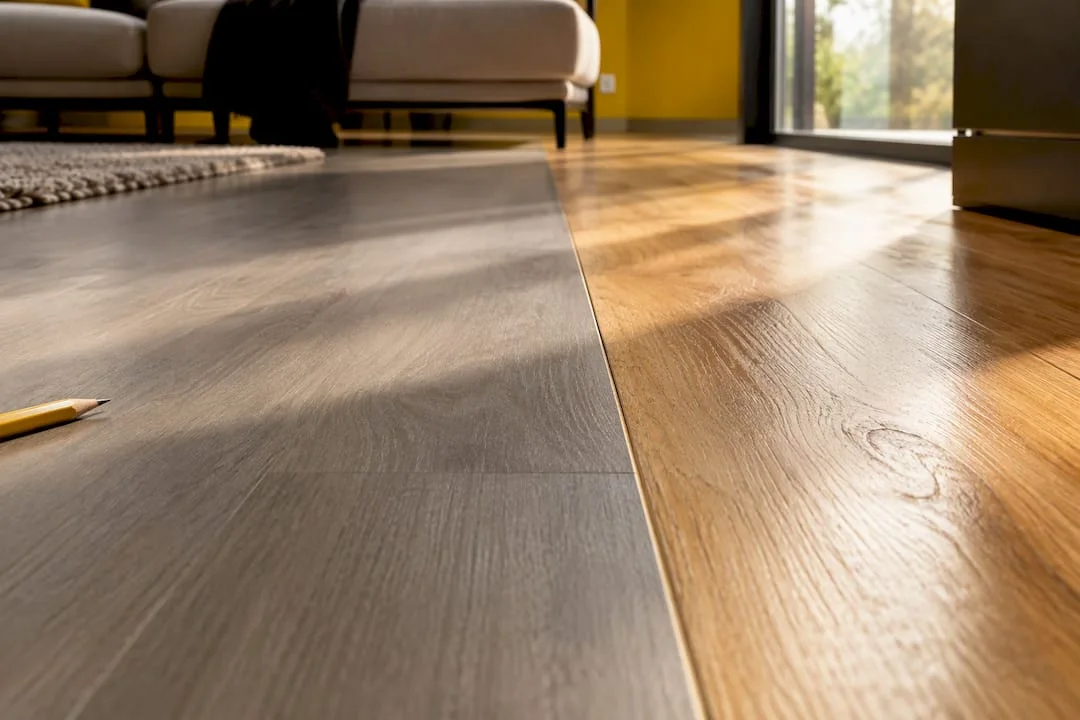
Wood-effect tiles, meaning porcelain tiles with a wood look, become the best solution exactly where you want thermal efficiency without giving up the warm look of wood, especially in kitchens open to the living room.
How does thermal resistance R affect heating efficiency?
Thermal resistance (R) measures how strongly a material resists the flow of heat. It is calculated simply, as the ratio between the thickness of the layer and the thermal conductivity of the material, and the result is expressed in m²K/W. The lower the value, the faster the heat moves from the screed into the room.
For underfloor heating systems, the general target is a total R below 0.10 m²K/W. If the home runs on a heat pump, the threshold becomes stricter: ideally below 0.05 m²K/W, for maximum system performance.
The typical order of R values, from the most efficient to the most insulating, is:
- porcelain tiles, a very low value, almost negligible;
- SPC flooring, a moderate value, acceptable for most systems;
- laminate or engineered parquet, a higher value, sometimes at the upper limit of what is acceptable.
Heat pumps are particularly sensitive to this parameter. A layer that insulates too much forces the system to supply water at a higher temperature for the same comfort, which lowers the coefficient of performance (COP) and raises the energy bill.
Pro tip: Always ask for the product data sheet before you decide, not just the showroom seller's recommendation. The R value must be stated explicitly, not estimated “from experience”.
In practice, every extra degree Celsius the system has to deliver because of an insulating finish means higher consumption, month after month, not just a theoretical loss on paper.
Which floor is recommended for each room?
The decision changes from one room to another, depending on traffic, humidity and how much visual continuity matters.
- Bedroom: parquet remains the natural choice for comfort when you wake up, but wood-effect tiles become a solid alternative if you want the same thermal efficiency as in the rest of the home.
- Living room or open-plan space: if the kitchen is integrated, visual continuity with porcelain tiles avoids threshold strips and makes daily cleaning easier.
- Kitchen and bathroom: here, porcelain tiles or glued-down SPC are clearly better, thanks to their moisture resistance and better heat transfer exactly where you spend more time barefoot.
- Hallway and entrance: the priority is resistance to dirt and heavy traffic, so anti-slip tiles beat parquet whatever the type of heating.
If the bathroom or kitchen needs a moisture-resistant alternative with a warmer look than classic tiles, it is also worth looking at the comparison between microcement and tiles, a solution in growing demand in recent projects.
How do you install flooring correctly over underfloor heating?
Wrong installation cancels any technical advantage of the chosen material, however good the product data sheet is.
- Check the moisture of the screed before installation; the level must be below the limit set by the adhesive manufacturer, otherwise the risk of cracking rises directly.
- Choose an adhesive of class C2 S1 or higher for tiles on underfloor heating. Class S1 gives the flexibility needed to absorb the thermal movement of the screed.
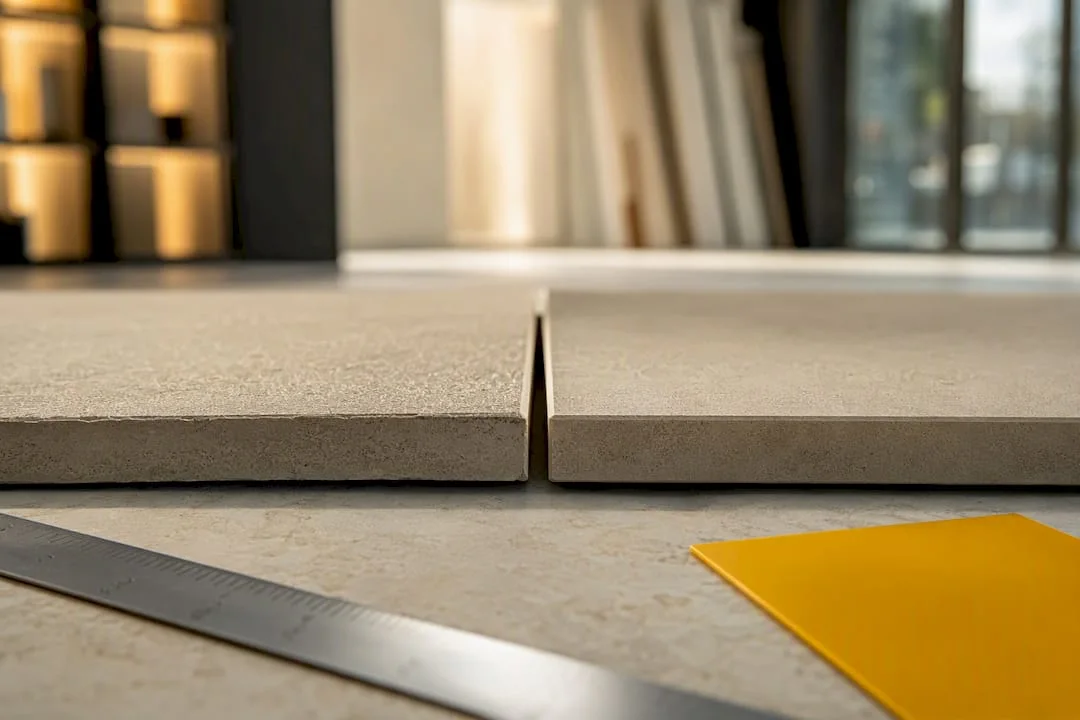
- Provide expansion joints at the edges of the room and at regular intervals on large surfaces, as the manufacturer's technical guidance recommends.
- Prefer glued-down installation wherever you want maximum heat transfer; full contact between screed and finish makes the difference compared with floating installation.
- If you choose floating installation for SPC flooring, use only a thin underlay compatible with the heating system, not thick insulating foam.
- Ramp up the heating gradually, with small temperature increases over several days, both before and after the final finish is laid.
Pro tip: After the first days of operation at normal temperature, check the joints and edges of the floor. Fine cracks or local detachment in the first weeks almost always point to ramping up too fast or a screed that was not dry enough, not to a problem with the material itself.
A correctly followed first start-up protocol prevents most of the defects you would otherwise see in the first year of use.
How much does parquet cost compared with tiles in the long run?
Prices for materials and installation vary widely with quality, and both parquet and tiles have budget and premium ranges, with neither being universally more expensive.
- Laminate flooring has the lowest initial cost, but its lifespan is limited, especially in areas with heavy traffic or occasional moisture.
- Engineered parquet costs more than laminate, lasts better over time and can be partly refinished by sanding.
- SPC has an intermediate price, is waterproof and dimensionally stable, ideal where you want peace of mind without the cost of glued-down tiles.
- Porcelain tiles have a variable material cost, but the installation labour (adhesive, joints, drying) usually makes them more expensive to install than floating parquet.
In the long run, hidden costs matter more than the purchase price: refinishing parquet, redoing tile joints or replacing a finish chosen wrongly for the heating type. For a ground-floor home with a heat pump, the higher initial investment in porcelain tiles pays back through lower bills. For a rental flat, SPC offers the best balance between cost, durability and looks.
How does parquet behave thermally compared with tiles?
The difference between parquet and tiles is not only how well they transfer heat, but also how quickly they respond to the thermostat. Porcelain tiles respond more slowly at start-up, because the density of the material needs more energy to warm up, but that same density gives them high thermal inertia: once warm, they hold the temperature for hours, even after the system switches off.
Parquet, especially laminate or engineered, reacts faster to temperature changes in the screed, because the layer is thinner and less dense. In practice, you feel the change in temperature underfoot sooner, but the heat also dissipates faster when the system reduces the flow.
For homes with variable occupancy, such as home offices or rooms used occasionally, the quick response of parquet can be a real advantage: you do not wait hours for the space to feel comfortable. For rooms in constant use, such as the living room of a family that is at home most of the day, the inertia of tiles becomes an asset, because the temperature stays stable even with short variations in the heating system. So the right choice also depends on how the room is used, not only on the material.

How sustainable are parquet and tiles?
The environmental footprint of the two materials differs both in the resources used and in their real service life. Solid wood parquet from responsibly managed forests is a renewable material, but the production of laminate flooring involves resins and synthetic layers that make recycling harder at the end of its life.
Porcelain tiles are made from clay and minerals, which are abundant resources, but firing at high temperatures uses a considerable amount of energy during manufacturing. On the other hand, their physical durability is much greater: well-laid tiles last for decades without needing replacement, which reduces the total footprint calculated over the service life, not just at manufacturing.
SPC, as a composite material with a mineral core, raises legitimate questions about full recycling at the end of its life, even though it offers clear advantages in waterproofing and stability in daily use.
For someone who puts sustainability first, the right question is not “which material is greener to make”, but “which one lasts longer without needing complete replacement”. From this angle, well-installed porcelain tiles and solid wood parquet, refinished periodically, come out ahead of laminate options with a short life cycle.

How does flooring affect the value of a property?
The type of flooring shapes a potential buyer's perception more than its cost would suggest. Porcelain tiles in the kitchen and bathroom are considered the market standard in most current residential projects; their absence, or a low-quality choice in these areas, can be a warning sign for buyers who pay attention to detail.
Solid wood or quality engineered parquet in the living areas remains a strong selling point, especially in homes aimed at the premium segment, where buyers associate wood with durability and refinement. Cheap laminate that has aged prematurely has the opposite effect: it can lower the overall impression of how well the home has been maintained.
The compatibility of the finish with the underfloor heating system is becoming an increasingly relevant argument in valuations, especially where heat pumps are already installed. An informed buyer will ask about the thermal resistance of the existing floor, not just its looks. A home where the finishes were chosen correctly from this point of view sells more easily and supports a stronger price argument than one where the new owner has to redo the floor so the heating system can work efficiently.
The SelfDezign view: flooring in the design concept
In our projects, flooring is not chosen in isolation, but in relation to how the space works, daily comfort, long-term maintenance and, only then, pure aesthetics. This order matters: a finish that looks superb on paper but is incompatible with the heating system becomes a costly problem a few years later.
We have often validated compromises such as wood-effect tiles in open-plan spaces with heat pumps, precisely for the balance between thermal efficiency and the visual warmth the client wants. When a project involves several technical factors at once, such as the heating system, wet areas and transitions between rooms, a design discussion before buying materials avoids costly regrets later. We have set out the full selection criteria in our guide to choosing finishes.
— Toni
SelfDezign advice on flooring and underfloor heating
SelfDezign coordinates exactly the points where the “parquet vs tiles” decision becomes costly if it is left to chance: the compatibility of the finish with the heating system, the transitions between rooms with different materials and the sound insulation problems that only appear after installation. We offer on-site or remote assessment, a materials selection matched to the real product data sheets and technical coordination of the installation, including the screed ramp-up protocol. A design discussion is especially worthwhile when the home has a heat pump, several planned types of finish or noise problems between floors. For homes and complete residential fit-outs, you can see how we structure these decisions on our residential interior design page and request an initial discussion about your project.
Sources
For technical depth: heat pump efficiency and the impact of thermal resistance (IDM Energie), the screed ramp-up protocol (Ghid Amenajari) and the detailed comparison of SPC flooring versus tiles (ePardoseli). For your own projects, see also the essential steps for a residential fit-out by SelfDezign.