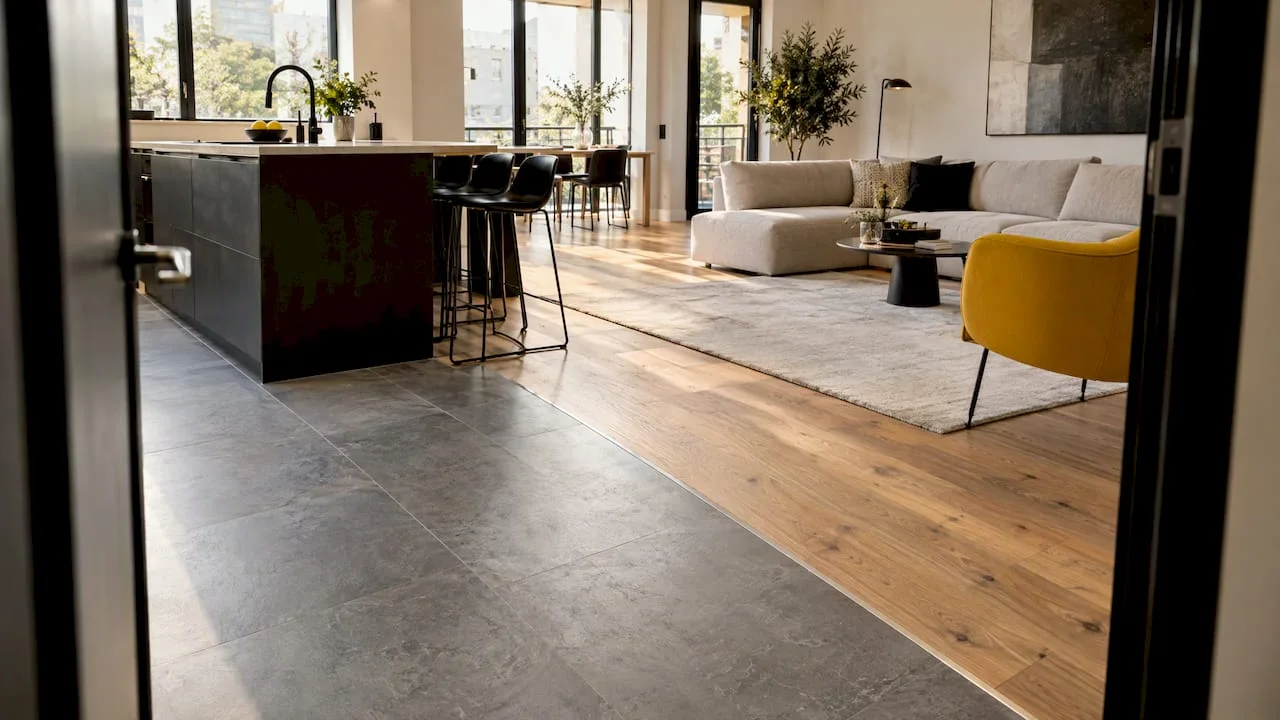
Underfloor Heating or Radiators: How to Choose Correctly in 2026
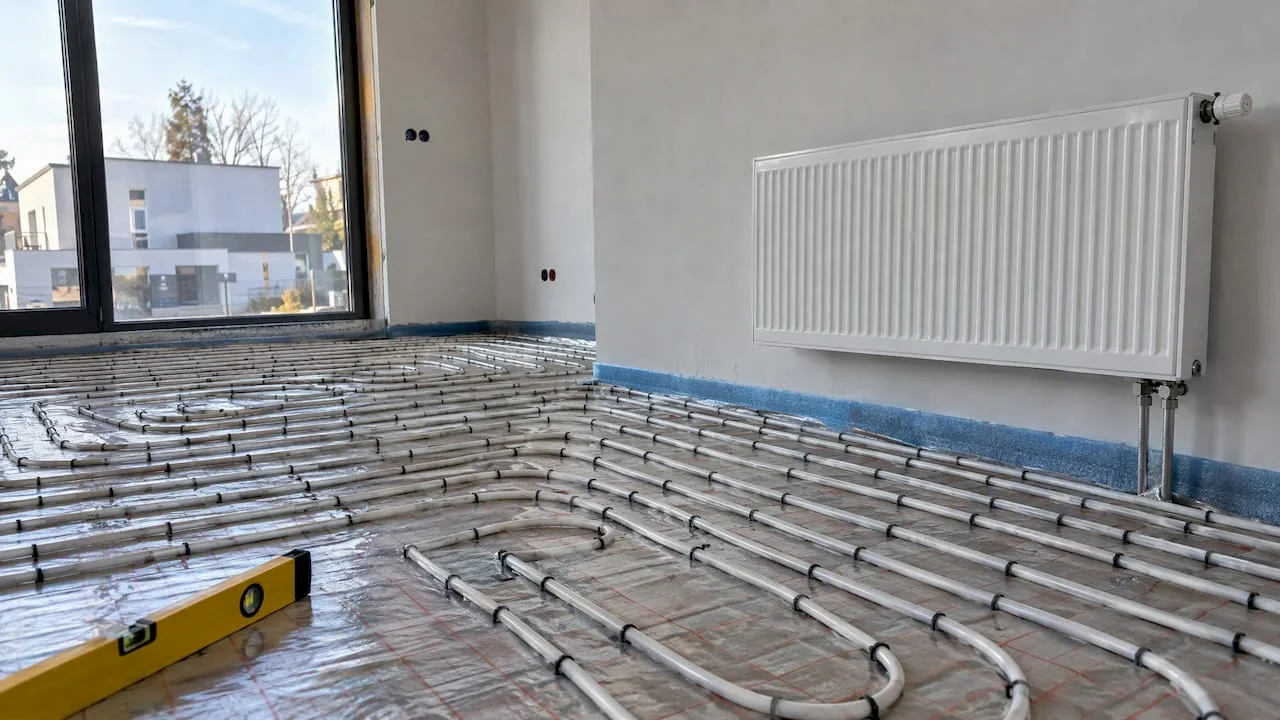
Underfloor heating is the best fit when you build from scratch or do a major renovation, when you want uniform comfort, and when you work with a heat pump. Radiators are the more rational choice in an already finished space, where you want a lower upfront investment, fast heat, and no intervention in the floor structure. Most real projects sit between the two extremes: houses with underfloor heating on the ground floor and radiators upstairs, clinics where hygiene matters more than anything else, restaurants where every meter of free wall means one more seat at a table. Below you will find the full comparison, covering costs, efficiency, maintenance, and the effect each system has on the interior.
SelfDezign
Integrate heating into the interior project
SelfDezign designs interior spaces and coordinates implementation, taking into account the real context and goals of the project.
In short
- Installation cost of underfloor heating is, on average, about 20-40% higher than that of a radiator system, according to market estimates in Romania.
- Efficiency of underfloor heating comes from the lower temperature of the heating medium. The advantage becomes real only with a suitable source (heat pump, condensing boiler) and a well-insulated building.
- Radiators win in existing apartments, in spaces with limited height, and wherever you need a quick response.
- Interior design changes radically: underfloor heating frees up the walls, but limits your choice of finishes and built-in furniture.
- The right decision is made before the technical design, not after the screed has been poured.
How each system works, in brief
To compare fairly, it helps to see the difference in principle. A radiator is a hot spot in a room: it heats the air around it, the warm air rises toward the ceiling, cools down, and sinks, creating a continuous circulation. That is why you sometimes feel warmer air at head level and cooler air at foot level, especially in high-ceilinged rooms.
Underfloor heating turns the entire floor surface into a low-temperature heat emitter. Heat is transmitted mainly by radiation, from the bottom up, and the temperature is distributed more evenly across the room. For a simple picture: the radiator is a small fireplace in the corner of the room, while underfloor heating is a warm carpet spread over the whole surface.
There are two variants of each:
- Hydronic underfloor heating (water-based): pipes carrying heating medium from a boiler or a heat pump, embedded in the screed.
- Electric underfloor heating: resistive cables or films under the finish, powered directly from the grid.
- Hydronic radiators: connected to the boiler or to a heat pump.
- Electric radiators: standalone units, each with its own heating element and its own thermostat.
The comparison on the criteria that matter
The table below summarizes the differences. There is no absolute winner: there is a system that fits a given context.
|
Criterion |
Hydronic underfloor |
Electric underfloor |
Hydronic radiators |
Electric radiators |
|---|---|---|---|---|
|
Upfront cost |
High |
Medium |
Medium |
Low |
|
Intervention in construction |
Major (screed, layers) |
Minor to moderate |
Minor |
Minimal |
|
Response time |
Slow |
Medium |
Fast |
Fast |
|
Heat uniformity |
Very good |
Very good |
Medium |
Medium |
|
Heat pump compatibility |
Excellent |
Not applicable |
Good, with correct sizing |
Not applicable |
|
Running cost |
Low, with an efficient source |
High, at grid tariff |
Medium |
High, at grid tariff |
|
Design impact |
Free walls, limited finishes |
Free walls, limited finishes |
Takes up wall space |
Takes up wall space, furniture |
|
Maintenance |
Rare, but hard to access |
Almost none |
Periodic, simple |
Almost none |
Upfront cost: where the difference comes from
The price difference does not come from the pipes, but from everything built around them. Hydronic underfloor heating needs thermal insulation under the pipes, manifolds, screed, and drying time. According to estimates published by Daibau, delivery, installation, connection, and pressure testing for underfloor heating cost between 100 and 200 lei/sq m. The same source puts the total cost of underfloor heating about 20-40% above that of a classic radiator system.
Another market benchmark: CazaneCentrale.ro estimates underfloor heating at 110-190 lei/sq m, depending on materials and surface area, and the installation of a radiator at roughly 150-250 lei each, plus the boiler. Treat these figures as orders of magnitude, not as a quote: the final price depends on the heat source, the floor build-up, and how much has to be demolished.
An indicative calculation: for a 100 sq m ground floor, the labor alone for underfloor heating can reach, at the levels above, between 10,000 and 20,000 lei, without materials and without a heat source. For the same area, eight radiators would mean installation labor of around 1,200-2,000 lei. The real difference shrinks, however, if you are pouring a new screed anyway, as happens in new construction or a full renovation.
Efficiency: why the heating medium temperature decides everything
Underfloor heating warms a large surface, so it gets by with less hot water than a radiator needs to achieve the same comfort. That matters enormously for heat pumps, whose efficiency drops the hotter the water you ask of them.
Fraunhofer researchers have shown, however, that this advantage is not exclusive to underfloor heating. A Fraunhofer study on heat pumps installed on radiator systems analyzed how the operating temperature can be lowered in existing buildings through measures such as selectively replacing a small number of undersized radiators or reducing the heat demand of some rooms. The result: the pump's electricity consumption can drop significantly, without tearing up the floor of the whole house.
The conclusion is also confirmed by the Fraunhofer ISE research project completed in 2025: heat pumps work efficiently in existing buildings too, and correctly sized radiators can operate at temperatures as low as underfloor heating.
In short: underfloor heating is naturally more efficient, but well-sized radiators can come surprisingly close. What makes the difference is the system as a whole, not just what you see in the room.

Comfort and response time
Underfloor heating delivers constant warmth, with no cold zones at foot level and no drafts. On the other hand, it has high inertia: the screed takes hours to heat up and cool down. It is ideal for continuously used spaces, such as a home, a clinic open all day, or an office with fixed hours.
A radiator reacts quickly. You turn it on and feel the heat shortly after, which is an advantage in intermittently used spaces: a guest room, an event hall open only on weekends, a showroom with short hours. Here underfloor heating would burn energy to maintain a thermal mass that nobody uses.
Electric underfloor heating vs electric radiators
When both options are electric, at the same kWh consumption, the running cost is similar, because both convert electricity directly into heat. The difference lies in comfort and space: electric underfloor heating gives uniform warmth and frees up the walls, while the electric radiator is cheap, portable, and installs in minutes. Electric underfloor heating is an excellent solution for small areas, such as a bathroom or a changing room, where you want the comfort of a warm floor without a whole hydronic installation. On large areas with daily use, the electricity bill becomes the argument that counts.
There are also intermediate solutions: compact electric generators that heat water for an underfloor or radiator circuit, with no gas boiler and no flue.
The drawbacks you will not find in brochures
Every system has limits that you usually discover too late. We put them on the table from the start.
Underfloor heating:
- Lost height. The build-up (insulation, pipes, screed, finish) raises the floor. In an apartment with doors already installed or with a low ceiling, this can be a real obstacle.
- Weight. In old buildings, a classic wet screed can load the slab beyond its capacity. Daibau recommends dry screeds in such cases, which are lighter and thinner, and are also installed faster.
- Finishes. Not every parquet, wall-to-wall carpet, or rug works well over a heated floor. A thick rug can cancel the effect across a whole zone.
- Fixed furniture. No pipes go under built-in wardrobes, kitchen islands, or the bars in a restaurant. The furniture plan must be settled before the installation design.
- Repairs. A failure is rare, but when it happens, access means removing the finish.
Radiators:
- Occupied walls. Each radiator blocks a wall or the area under a window, where you can no longer place furniture, shelves, or benches.
- Uneven distribution. The area around the radiator is warmer, the opposite corners colder.
- Dust. Air circulation raises dust, and finned surfaces are hard to clean, which matters in clinics and food spaces.
- Higher heating medium temperature. With a heat pump, undersized radiators force the system to run at temperatures that lower its efficiency.
Maintenance, system by system
Radiators need simple but regular maintenance. Before each cold season, bleed them, check the valves and thermostatic heads, and clean the space between the fins. If a radiator is cold at the top and warm at the bottom, it usually has air in it; if it is cold at the bottom, it may be a matter of deposits, and this is the moment to call a licensed installer, not to take it apart yourself.
Hydronic underfloor heating needs rare maintenance: checking the pressure and flow rates on the manifold, bleeding the circuits and, at longer intervals, a system flush done by a specialist. The electric variant has practically no maintenance, but any problem with the cables means working under the finish.
In both cases, hydraulic balancing done correctly at commissioning saves you years of adjustments and higher bills than necessary.
How to choose by type of space
The choice is one of context, not a purely technical one, as shown by the analyses published for the Romanian market: underfloor heating for new projects or major renovations, radiators for already finished spaces and lower upfront budgets.
New homes and two-story houses
A commonly used solution is the mixed one: underfloor heating on the ground floor, where you have the living room, the kitchen, and large areas of tile or parquet, and radiators upstairs, in the bedrooms, where many people prefer a lower temperature and a quick response. Both can run from the same source, on separate circuits. If you choose underfloor heating, the finish decision comes right after; we explained the differences in the guide on parquet or tile over underfloor heating and in the comparison LVT vs parquet.
Existing apartments
Here radiators usually remain the rational option. Raising the floor by a few centimeters affects doors, thresholds, and sometimes the window frames, and a wet screed can be problematic on old slabs. Electric underfloor heating in the bathroom is an elegant compromise, with minimal intervention.
Restaurants, cafes, hotels
In HoReCa, walls are commercial space: banquettes, shelves, bar, display areas. Underfloor heating frees these surfaces, but it must be coordinated with traffic flows, fixed furniture, and the heating of the areas next to the shopfront glass, where losses are high. Many venues combine underfloor heating in the serving area with other emitters for quick response; the comparison between fan coil units and split systems helps if you also need cooling.
Clinics and medical offices
In a clinic, uniform warmth and the absence of dust raised by air currents directly support the patient experience. Underfloor heating suits waiting rooms and consulting rooms well, provided the finishes resist disinfection and are thermally compatible. You will find the fit-out details in our guide to fitting out a clinic.
Offices and commercial spaces
In offices, plan flexibility matters: if you move the partition walls in three years, a well-thought-out zoned underfloor system helps you, fixed radiators do not. For commercial buildings, efficiency comes from automation and from monitoring consumption.
What matters beyond the emitter
The "underfloor heating or radiators" discussion often misses the most important element: the building. The official summary of EU legislation on the energy performance of buildings shows that member states must set minimum energy performance standards, reviewed every five years, which cover the building, its components, and the energy used for heating, cooling, and hot water. In other words, performance is judged at system level.
Underfloor heating in an uninsulated house will run at higher temperatures than it should and lose its advantage. A radiator system in a well-insulated building, with room thermostats and a correctly tuned heating curve, can be very efficient. The correct order of decisions is: building envelope, heat source, emitters, automation.
The SelfDezign perspective
When a client asks us whether to install underfloor heating or radiators, we rarely answer directly with one of them. We first ask what the space has to support. A restaurant that needs every wall for banquettes, a clinic where the patient must feel safe from the first minute, a home where the family walks barefoot on parquet: each of them calls for a different answer.
For us, heating is a design decision, not just a plumbing one. It determines where furniture can go, which finishes are allowed, how free the walls remain, and how the space feels in winter. We have seen projects where the underfloor heating was poured before a furniture plan existed, and then the kitchen island ended up right over the main circuit. We have also seen radiators installed on exactly the wall where the bookcase was supposed to stand.
That is why we work with installers from the concept phase: the furniture plan, the floor build-up, and the routes of the installations are thought through together, and then we coordinate them on site. We do not look for the fashionable solution, we look for the solution that fits your context and that you will not regret ten winters from now.
When a second opinion before construction is worth it
If you are at the stage where you can still change the plan, a structured conversation can spare you costs that only appear after the screed is poured. Through the SelfDezign consultancy with written conclusions, at 500 RON per session, we analyze together the plan, the use of the space, and the impact of the heating system choice on furnishing and finishes, and you leave with the recommendations written down, ready to hand to the execution team. For complete projects, commercial or residential, you will find all our services on the services page.
Sources
- Daibau: underfloor heating, prices
- CazaneCentrale.ro: how much boiler and radiator installation costs
- Fraunhofer: heat pumps installed on radiator systems
- Fraunhofer ISE: heat pumps in existing buildings (2025)
- Playtech: how to choose between radiators and underfloor heating
- EUR-Lex: energy performance of buildings