The Difference Between Custom Design and Trends

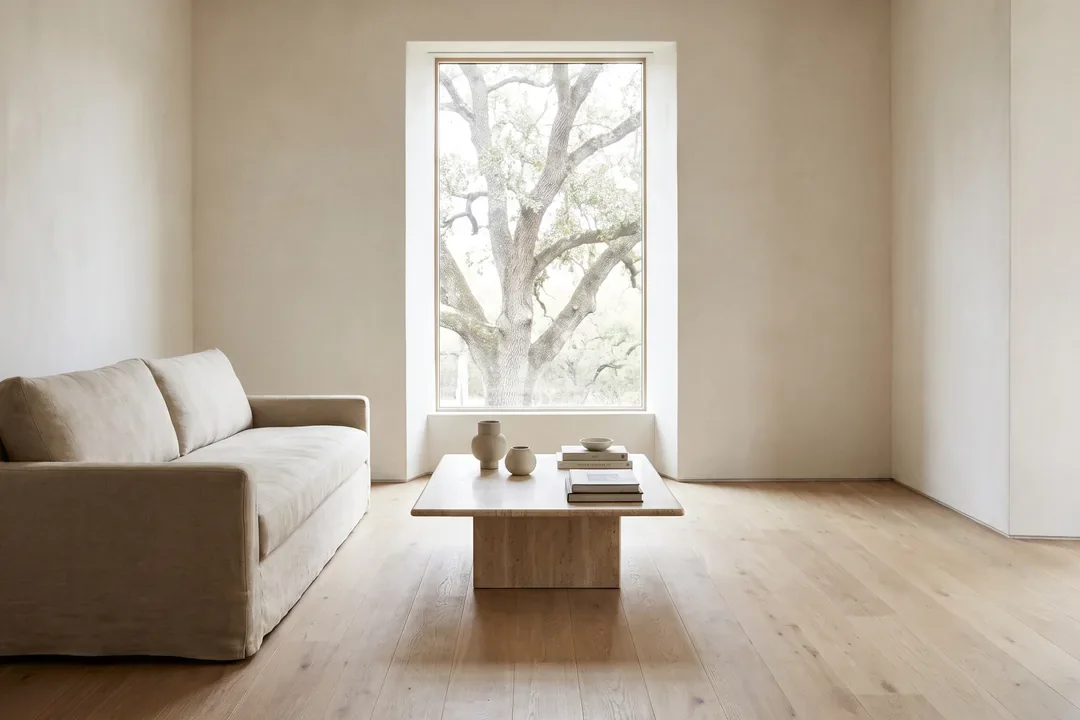
The difference between custom design and trends is, essentially, the difference between a space built around you and one built around the moment.Custom design reflects the needs and unique identity of the user, while trends are temporary aesthetic directions influenced by popularity and collective cultural shifts. Both have value, but confusing them leads to costly decisions and spaces that age quickly. Understanding this distinction is the first step toward an arrangement that stands the test of time and truly belongs to you.
What are the advantages of custom design in interior design?
Custom design starts with a simple question, but one that is rarely asked correctly: what does this specific space need, for this specific person? The answer is not found in magazines or on Pinterest, but in the conversation between the user and the designer. Personalization contributes to comfort, quality of life, and property value, not just visual aesthetics. This is the backbone of a successful project.
The concrete advantages of custom solutions include:
- Adaptation to the actual dimensions of the space. Custom-made curtains, drapes, or wallpaper fit the room's proportions exactly. Standard products compromise aesthetics through dimensional mismatch, creating a cluttered visual effect even when materials are of high quality.
- Aesthetic durability. An interior designed around your identity does not become outdated with the change of the aesthetic season. Personal style has a longevity that no trend can match.
- Real functionality. Custom furniture, lighting configurations tailored to daily activities, and storage solutions designed for your specific habits transform a beautiful space into a useful one.
- Authentic uniqueness. Bespoke projects involve extensive collaboration with the client, selection of unique materials, and adaptation to personal objects, resulting in spaces that cannot be replicated.
Working with a specialist makes the difference precisely at this stage. An experienced interior designer does not sell you a style, but builds a visual vocabulary starting from your lifestyle. You can read more about how this process is built in the SelfDezign article about interior design concept.
Our advice: Before any aesthetic decision, list three activities you do daily in that space. Your designer will use this information more than any mood board.
How are trends defined and interpreted in interior design in 2026?
A trend in interior design is an aesthetic direction adopted collectively at a given time, influenced by culture, technology, and social changes. Trends are not wrong. They are misunderstood when treated as rules rather than tools.Correct interpretation of trends means choosing solutions that last over time and maintain aesthetic coherence, not blindly following fashion.
For 2026, the dominant directions globally gravitate around a few clear themes:
- Material sustainability. Natural, recycled, or low-carbon materials dominate furniture and finishes collections. This is not a passing fad but a structural shift in values.
- Comfort and hybrid spaces. The home is no longer just a place to sleep. It simultaneously functions as an office, relaxation space, and socializing area, requiring flexible and adaptable solutions.
- Personalization as a trend in itself. According to a Pinterest Trends 2026 report, 42% of users only engage with trends that fit their personality and style, avoiding aesthetic FOMO. This confirms that personal imprint dominates how people consume visual inspiration.
- Textures and materials with character. Exposed concrete, raw wood, artisanal ceramics, and matte-finished metals replace the glossy, uniform surfaces of the previous decade.
Trends for 2026 are based on sustainability, comfort, and personalization, reflecting a shift toward flexible and durable spaces. This means that, for the first time in many years, trends and custom design converge, not contradict each other.
Trends can serve as a tool for preserving identity, not as an obligation. In 2026, the focus is on creative adaptation, not conformity.
The essential difference remains clear: a trend tells you what is popular now. Custom design tells you what works for you, now and ten years from now.
How to choose between custom design and trends based on your style?
The choice is not binary. You don't have to opt exclusively for one or the other. The right question is: in what proportion and in which areas of the space do you apply each approach? Here is a simple process to make this decision consciously:
- Identify the fixed elements of the space. The architectural structure, ceiling height, window orientation, and room dimensions are real constraints. Ignoring these constraints leads to significant aesthetic disproportions, no matter how popular the applied trend is.
- Determine what will not change in five years. Flooring, partition structure, installations, and basic finishes are long-term investments. These should reflect your personal preferences, not the trend of the moment.
- Reserve trends for easily replaceable elements. Decorative pillows, plants, art objects, accent lighting, and textiles are the ideal place to experiment with current aesthetic directions without compromising overall coherence.
- Consult a specialist before any major investment. An experienced interior designer can assess whether a trend suits your specific space or will create visual tensions in the long run.
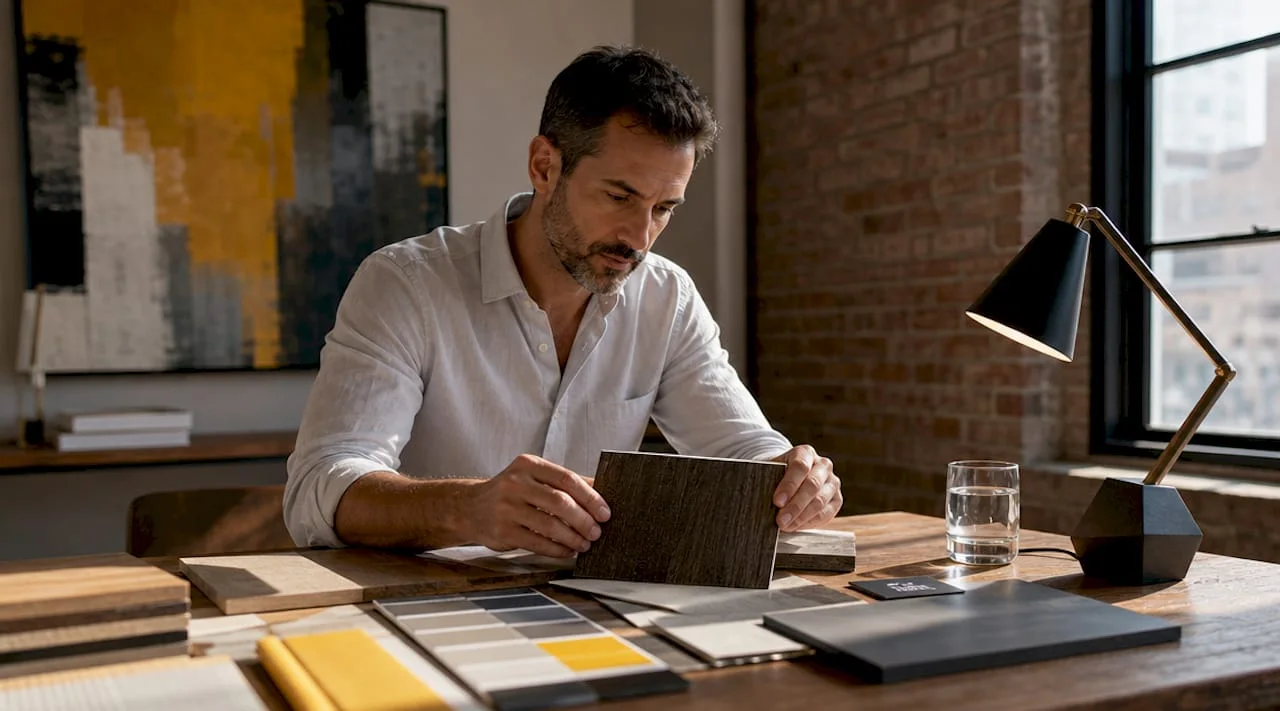
- Test before deciding. Material samples, 3D simulations, and mood boards are tools, not optional. They prevent costly decisions based on images seen on screen.
|
Criteria |
Custom Design |
Trend Design |
|---|---|---|
|
Aesthetic Durability |
High, lasts over time |
Low, goes out of style quickly |
|
Space Adaptation |
Precise, based on measurements |
Generic, sometimes unsuitable |
|
Initial Cost |
Higher |
Variable, often affordable |
|
Long-Term Cost |
Low (does not require frequent renovation) |
High (repeated replacements) |
|
Visual Identity |
Unique, personal |
Common, replicable |
|
Aesthetic Risk |
Low |
High if applied without adaptation |
Adopting trends without adaptation leads to incoherent style and unnecessary expenses. Balance and adaptation are key to an authentic and durable image, regardless of when the space was created.
What is the long-term impact of custom design versus trend-based design?
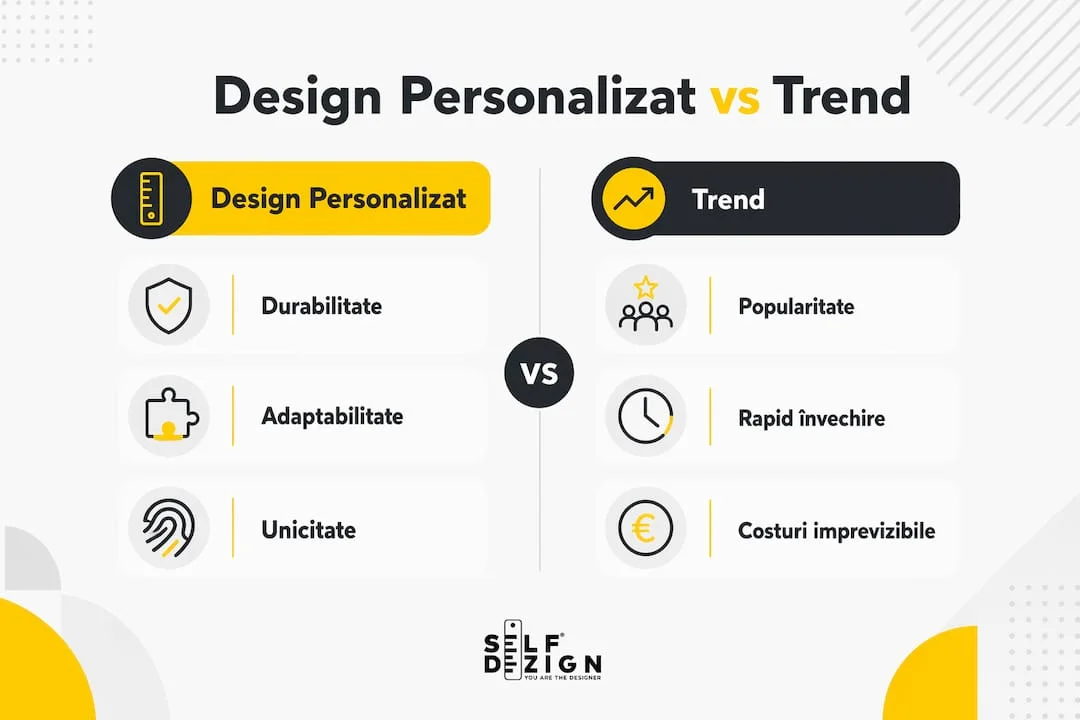
An interior dictated exclusively by trends visibly ages in three to five years. This is not an opinion but a documented observation in design practice. Bespoke design is more expensive initially but reduces the long-term risk of becoming outdated, making it an investment, not an expense.
The concrete long-term impact of the two approaches:
- Property value. Spaces with custom finishes, quality materials, and sustained aesthetic coherence sell better and faster than those arranged according to momentary trends.
- User satisfaction. A space that reflects who you are generates an authentic sense of home that does not disappear with the change of the aesthetic season. Custom-made products last longer and create this emotional connection.
- Maintenance and renovation costs. Trend-led interiors require frequent updates to remain visually relevant. Each renovation cycle involves additional costs, disruption, and material waste.
- Overall coherence. A personalized space has a visible internal logic. Every element was chosen with a purpose, not because it was popular at the time of purchase.
You can delve deeper into this perspective in the SelfDezign article about the value of space, which details how personalization directly influences the perception and value of an interior.
Our advice: Treat basic finishes as a ten-year investment. Treat decorative objects as a one-year experiment. This mental separation will save you money and regrets.
My perspective on choosing between personalization and trends
"I have worked on residential, commercial, and hospitality projects, and I can say with certainty that the most frequent regret of clients does not come from choosing something too personal. It comes from choosing something too popular, too quickly.
Trends are seductive precisely because they offer immediate validation. When everyone adopts the same style, the decision seems safe. But a space does not need to be safe. It needs to be yours. Treating trends as optional ingredients, not absolute rules, leads to successful long-term results. This is, in fact, the philosophy with which SelfDezign approaches every project.
What I constantly observe is that people who invest in space personalization no longer feel the need to renovate after two years. Their space grows with them, not against them. Trends can offer valuable inspiration, especially when they converge with personal values, as with sustainability or comfort in 2026. But no trend can replace the fundamental question: what do you want from this space?
The answer to this question is custom design. The rest are ingredients."
— Toni
How SelfDezign can help you create a space that belongs to you
SelfDezign designs residential, commercial, office, and medical clinic spaces with one core principle: the space must support the identity and goals of its user, not follow a standard formula. If you want to understand what a project built around your real needs looks like, explore the residential design services and discover how personalization translates into concrete decisions, from concept to implementation. The SelfDezign team works with clients from Bucharest and across Europe, offering consultancy and full coordination for custom residential arrangements that stand the test of time.