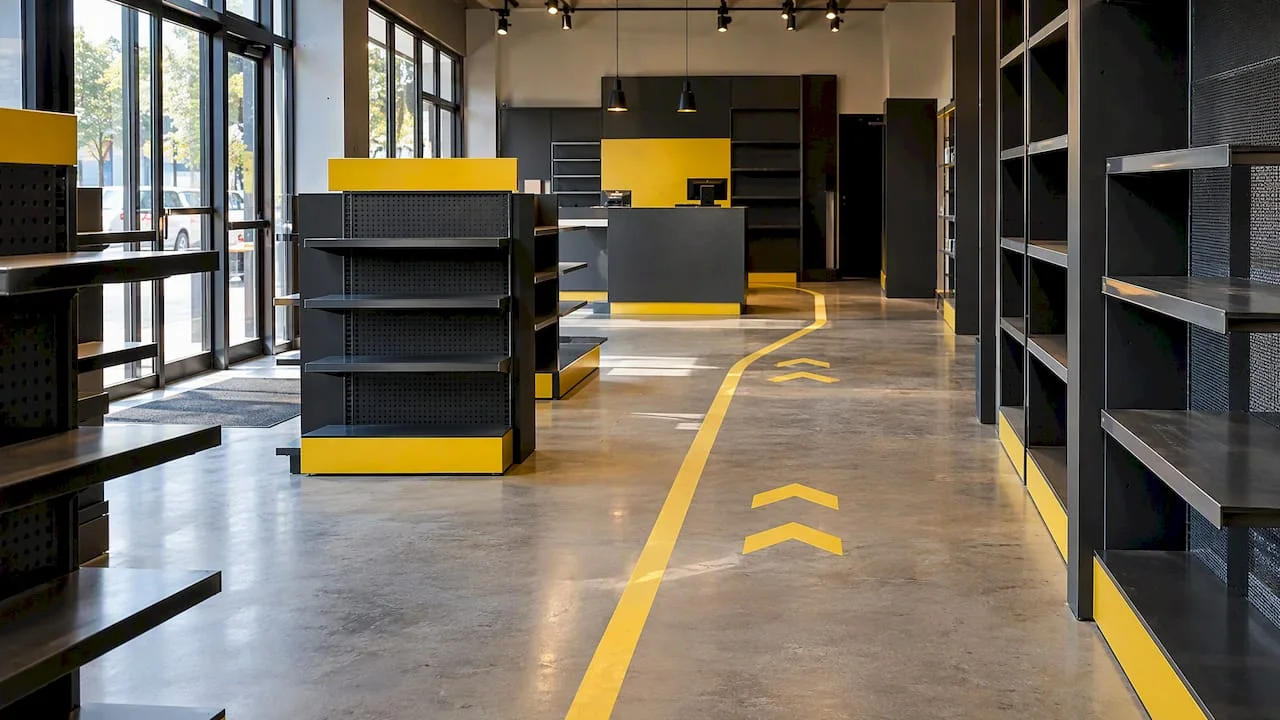
Steps for indoor branding in a clinic: practical guide 2026

The interior branding of a medical clinic is the process by which the visual identity and institutional values of the clinic translate into concrete design decisions: materials, colors, furniture, lighting and spatial arrangement. The steps of clinic interior branding are not an optional aesthetic exercise. They are the backbone of the perception that the patient forms within the first 30 seconds of entry. Physical space speaks before any doctor or nurse opens their mouth. If the message conveyed by the space does not align with the values of the clinic, the patient feels this dissonance, even if he cannot articulate it.
What are the essential elements of indoor branding for a medical clinic?
The interior branding of a clinic is not just a logo on the wall and a few randomly chosen colors.Consistency of colors, fonts and graphicsis the foundation on which the perception of professionalism and safety is built. Every visible item in the space communicates something about the clinic, whether you intended it or not.
The elements that form a coherent interior branding are:
- Visual identity applied in the space.Logo, color palette and fonts must appear consistently on signage, reception, printouts and digital screens. An aesthetic dermatology clinic will use a neutral, warm palette with gold or sage green accents, while a pediatric clinic will choose more vivid colors with rounded shapes and friendly illustrations.
- Materials and finishes.The surfaces you touch and look at communicate quality or lack of it. Natural stone tiles, matt veneer joinery, textile acoustic panels, all build a tactile and visual experience that supports or undermines the brand.
- Furniture adapted to the target audience.A private oncology clinic needs comfortable armchairs with lumbar support in quiet waiting areas. An active adult dental clinic will choose ergonomic chairs, clear lines, without unnecessary ornaments.
- Spatial arrangement.The patient's flow through the clinic, from the entrance to the reception, to the waiting room, to the office, must be thought through in such a way as to reduce anxiety and create clarity. Confused or crowded spaces transmit disorganization, no matter how good the medical staff is.
- Staff uniforms.The colors and cut of the uniforms must resonate with the palette of the brand. A clinic with a blue and white visual identity will lose consistency if staff wear green or grey robes with no connection to the rest of the space.
- Visual accent elements.Large customized paintings placed strategically, behind the reception or in the waiting rooms, support the transmission of the brand message without becoming visual noise.
INFORMATION: Before choosing any visual element, define three words that describe the experience you want your clinic to offer. Every design decision must be able to be justified by those three words.
How do you plan and implement interior branding step by step?
The internal branding process for a medical clinic does not improvise or compress. It is a project with clear stages, each dependent on the previous one. Here's what a structured process looks like, applicable to both a new and a reinventing clinic.

1. Analysis of the clinic profile and its valuesBefore any visual decision, you need to know clearly what your clinic represents. What are the values you promote? What sets you apart from other clinics in the same field? The answers to these questions become the filter through which each subsequent design choice passes. Astrong clinical brandingcontains a coherent story that reflects the institutional and physician values, thus creating trust and loyalty.

2. Audience segmentation and design style adaptationA functional medicine clinic for high-income patients has different expectations than an urban family medicine clinic. The design style, materials and level of detail must be calibrated according to who enters the door. The design is not universal, it is contextual.
3. Choice of materials and finishesMaterials must simultaneously meet three criteria: brand-aligned aesthetics, high-traffic durability, and health compliance.Environmentally friendly and resistant materialsare recommended in modern medical facilities, including odorless finishes and surfaces that are easy to sanitize.
4. Specialized consultancy in medical interior designAn experienced interior designer in medical spaces knows not only aesthetics, but also technical regulations, functional flows and certified materials. Working with a specialist significantly reduces the risk of costly errors in execution. You can learn more about how this process works from the perspective ofclinical design consultancyThe
5. Planning the execution stagesExecution must be synchronized with clinic operation. Work in active areas is planned outside the program or by sections, in order not to disturb the medical activity.Data-driven design decisionson patient behavior maximizes the conversion of visits into actual appointments, which means that each fitting decision also has a functional, not just aesthetic, dimension.
|
Step |
Primary objective |
Estimated duration |
|---|---|---|
|
Brand & Audience Analysis |
Definition of visual direction |
1 week |
|
Design concept and mood board |
Validation of style and palette |
1 week |
|
Technical design |
Plans, material specifications |
2 weeks |
|
Selection of suppliers and materials |
Procurement and contracting |
1 week |
|
Execution and coordination |
The actual implementation |
Up to 8 weeks |
|
Post-implementation assessment |
Feedback and adjustments |
1 week |
INFORMATION: Do not treat the concept stage as a formality. A well-constructed mood board saves time and money in all subsequent stages, because it eliminates ambiguity in communication with suppliers and builders.
What benefits does coherent interior branding bring to the clinic?
A well-thought-out medical space is not a luxury reserved for large clinics. It is a communication tool that works around the clock, without asking for a salary. The benefits of coherent interior branding are felt in both the patient experience and the commercial performance of the clinic.
*Patients perceive well-branded clinics as more organized and professional from the first impression."*This perception is formed before any interaction with the medical staff and directly influences the decision to return or recommend the clinic.
Here is how this value translates concretely:
- Increase confidence and reduce anxiety.A clear, visually coherent and well-lit space conveys control and competence. Anxious patients, especially those visiting the clinic for the first time, are directly influenced by the quality of the physical environment. The unitary clinical design rapidly increases the perception of professionalism.
- Loyalty of patients and generation of recommendations.A patient who feels well treated, including space, returns and recommends. The physical experience becomes part of the story that he tells to others.
- Aligning with online reputation. Over 80% of patientsi read online reviews before choosing a clinic. If the physical space does not match the projected image online, the disappointment is immediate and turns into negative reviews. The coherence between digital and physical branding is critical.
- Attracting and retaining medical talent.A well-branded clinic attracts talented doctors, and the reputation of doctors strengthens the image of the clinic. Good doctors choose to work in environments that reflect their professional standards.
- Enhancing marketing effectiveness.Photos and videos taken in a well-designed space perform better in digital campaigns. A photogenic space becomes a reusable marketing asset over time.
What common mistakes should be avoided in the internal branding of the clinic?
Mistakes in the internal branding of clinics are usually mistakes of principle, not execution. They do not appear because someone chose the wrong color, but because the process started without a clear direction.
- Use of generic visuals.Visual elements not adapted to the target audience dilute the perception of exclusivity and professionalism. A set of medical icons downloaded for free from the internet and a standard font do not build a brand. They're building an anonymous clinic.
- Incoherence between distinct spaces.The reception has one style, the waiting room has another, the cabinets look completely different. This visual fragmentation conveys lack of attention and disorganization. Inner branding works as a system, not as a collection of isolated decisions.
- Choosing the wrong materials.Inexpensive or unsuitable materials in a medical space quickly deteriorate and create hygiene problems. A visibly stained floor or walls that cannot be easily sanitized affect both appearance and functionality.Selection of materials for medical facilitiesmust prioritize sustainability and sanitary compliance.
- Ignoring patient feedback.Interior branding is not validated in the management office, but in the real patient experience. Satisfaction surveys, observation of waiting room behavior, and analysis of online reviews are valuable sources of information for adjustments.
- Prioritizing aesthetics over functionality.A beautiful space that doesn't work well for patients or staff is a design failure. Circulation flows, accessibility for people with reduced mobility and clarity of signage are just as important as the color palette.
INFORMATION: Take a tour of your clinic with the eyes of a patient entering for the first time. Write down everything that disorients you, everything that seems inconsistent, and everything that communicates nothing. That's your list of priorities for interior branding.
Integrating brand values into architectural elements, not just graphics and signage, is what separates a superficial branding from one that remains in the patient's memory. Specific textures, materials integrated into the architecture and subtle details build a unique and memorable experience, impossible to copy with a template.
Why Inner Medical Branding Matters More Than You Think
I have worked with enough clinics to know that the most common mistake is not choosing the wrong color or the wrong furniture. It is the belief that inner branding can be deferred or treated as a superficial layer applied after everything is already built.
The medical space is the first argument that the clinic makes in front of the patient. Before the doctors' resumes, before the reviews, before any conversation, the patient feels whether the space is thought out or improvised. This perception is formed in a few seconds and is extremely difficult to change later.
What always surprises me is that clinic owners invest significant amounts in digital marketing, in state-of-the-art medical equipment, in staff trainings, and leave physical space on the last place. But physical space is the only branding element that the patient experiences with all the senses simultaneously. There is no digital campaign that compensates for a waiting room with awkward chairs, cold lighting, and empty walls.
“The trend I see consolidating in 2026 is the integration of patient behavior data into design decisions. Clinics that treat data-driven interior design as standard practice will have a real advantage over those that continue to decide based on the manager's or architect's personal preferences. Inner branding thus becomes a hybrid discipline, at the intersection of design, psychology and marketing strategy.
My practical recommendation: treat your clinic's interior branding as a measurable return investment, not an aesthetic cost. Defines the indicators of success before implementation, whether we are talking about the rate of return of patients, the satisfaction score or the number of recommendations. And they work with people who understand the medical context, not just aesthetics. "
Toni
How SelfDezign can help you with your clinic branding
SelfDezign designs medical spaces that reflect the identity of the clinic and support the patient experience from the first contact. The process includes analysis of your brand, design concept tailored to your specific audience, technical design and implementation coordination, without standard solutions copied from a catalog. If you want to turn your clinic space into a visual argument for your professionalism, the SelfDezign team works with you from strategy to execution. Discover what a design project looks likeinterior design for medical clinicsthought to inspire confidence and support a clear patient experience. You can also consultindoor branding guideto better understand the process before the first discussion.