Vinyl vs textile wallpaper: what to choose by space
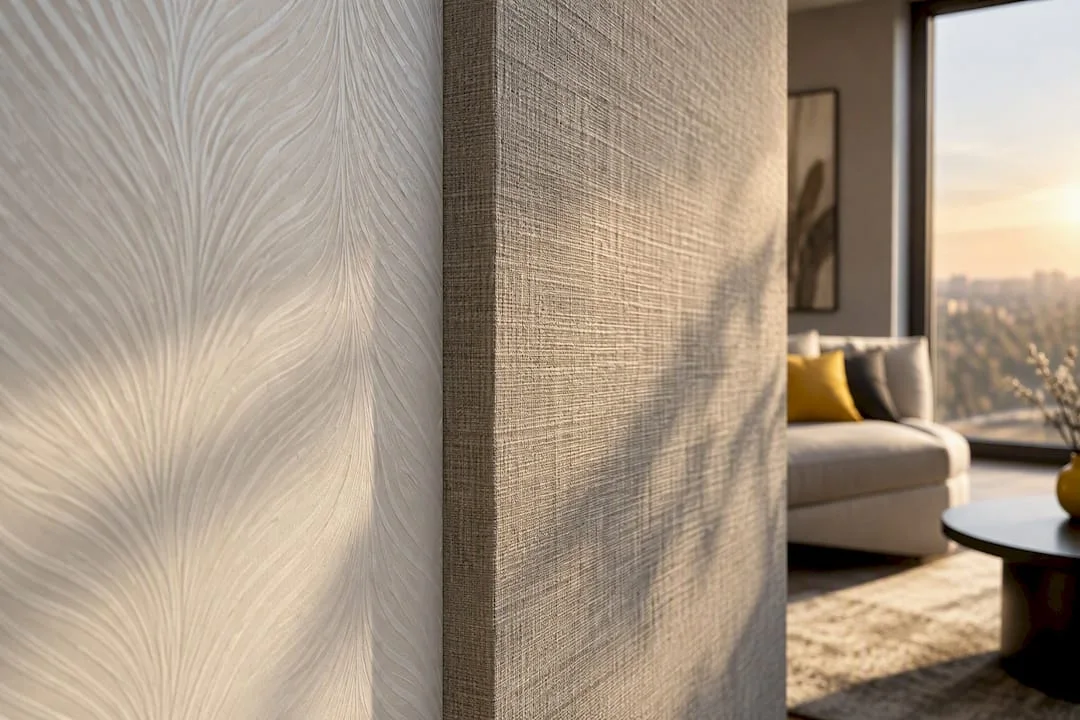
Choose vinyl wallpaper if durability and easy maintenance are your priority, especially in kitchens, bathrooms, or high-traffic spaces. Choose textile wallpaper if you want the tactile atmosphere and soundproofing that only a fabric can give, in a bedroom or living room with low traffic. Between the two, vlies wallpaper remains a practical compromise: fast installation, good breathability and average cost.
In summary:Vinyl wallpaper is recommended for areas with heavy traffic or humidity, due to its durability and ease of maintenance.Textile wallpaper offers a superior tactile experience and better sound insulation, but requires more delicate maintenance and higher cost.The installation of the vlies is done quickly by the "paste the wall" method, being preferred for efficient installations and without risks of damage.The costs for the material vary between 15 and 200 lei per roll, and the workmanship between 22 and 45 lei per square meter, depending on the type of wallpaper.The choice of material should be made according to the characteristics of the space, humidity level and acoustic needs, preferably with expert advice in interior design.
SelfDezign
Choose the right wallpaper for the space
SelfDezign designs custom interiors, from concept and technical design to implementation coordination.
Vinyl vs textile wallpaper compared: durability, maintenance, breathability, acoustics
The real difference between the two materials is not seen at first glance on the wall, but in the years following the installation. Vinyl wallpaper has a PVC top layer, compact or expanded, applied on a paper or vlies support, and the density of this layer gives it resistance to friction and moisture. The textile wallpaper consists of natural or synthetic fibers, such as cotton, linen or silk, woven or glued on a paper support, without surface protection.
Indicative lifetime for vinyl and vlies is 10 to 15 years, provided correct application and a well-prepared wall. Textile wallpaper usually has a shorter duration in environments with variable humidity, because the fibers absorb moisture and lose the initial tension.
The criteria that matter most in the decision:
- Durability: vinyl resists friction and slight impact, the textile wears visibly in areas of frequent passage.
- Maintenance: the vinyl is wiped with a damp cloth, the textile usually requires suction and dry cleaning, without excess water.
- Breathability: vlies let the wall “breathe”, reducing the risk of mold; compact vinyl is less permeable, which is why room ventilation becomes relevant.
- Sound Insulation: textile wallpaper absorbs sound much more effectively than vinyl, due to the fibrous structure.
- Aesthetics and tactile sensation: vinyl offers varied visual texture by embossing, textile offers real depth to the touch, not simulated by relief.
For a reader looking for a quick vinyl textile wallpaper comparison, the short rule is simple: vinyl gains on durability and budget, textile gains on sensory and acoustic experience.
How to mount wallpaper on the wall and how long it takes to prepare
The mounting method differs radically between the two materials and directly influences the working time and the final result.
- Vlies is mounted using the "paste the wall" method: the adhesive is applied directly to the wall, not to the strip of wallpaper, which reduces the risk of damage by soaking and shortens the working time.
- Paper-based vinyl and classic textile is mounted by gluing to the strip, with adhesive applied to the back of the material, then left for a few minutes to soak before application.
- The wall must be primed and leveled before any type of wallpaper, and small irregularities are tolerated better by vlies than by textile, which highlights each unevenness through light variations on the fiber.
- When disassembling, vlies usually peel off into whole strips without residue, while paper-based vinyl and textile often leave a backing layer to be removed separately.
A properly plastered wall and left to dry completely remains the basic condition for any material choice.
How to clean and maintain the two types of wallpaper
The maintenance regime is probably the criterion that most often decides the balance, especially in households with children or animals.
For vinyl wallpaper, daily cleaning is limited to a slightly damp cloth without abrasive substances that can scratch the PVC layer. Grease or ink stains should be wiped off immediately, while they are still fresh.
For textile wallpaper, proper maintenance means:
- periodic vacuuming with soft brush, in order to remove the dust from the fiber without deforming it;
- dry cleaning or steam cleaning from a distance, never with plenty of water;
- avoiding persistent rubbing on a stain, which risks displacing the fibers and leaving a discolored area;
- call for a professional cleaning service when the stain is old or on a large surface.
Professional advice: Test any cleaning product on a discreet corner of the textile wallpaper before using it on the entire visible surface. A chemical reaction on natural fibre occurs quickly and is not remedied.
Professional cleaning is worth the investment especially on premium textile wallpaper, where a wrong intervention can ruin years of impeccable appearance for a few lei saved on a cleaning solution.
How much does vinyl or textile wallpaper cost: material price and workmanship
The actual budget for a wallpapering project has two distinct components: the cost of the roll and the cost of assembly, and the second increases significantly with the complexity of the material.
On the local market, the guide values per standard roll (10 meters x 0.53 meters, approximately 5.3 square meters) are:
- vinyl wallpaper: 15 to 60 lei per roll;
- vlies wallpaper: 40 to 120 lei per roll;
- textile wallpaper: 80 to 200 lei per roll.
The workmanship varies as much, with indicative ranges of 22 to 35 lei per square meter for vlies, 25 to 40 lei for vinyl and 30 to 45 lei for textile, because textile requires extra attention to joints and handling.
The costs for a medium-sized room vary depending on the type of wallpaper chosen, with vinyl offering a more affordable option and textile wallpaper involving a significantly higher investment. Cost reduction without compromising durability is usually done by choosing vlies as the base layer, with premium fabric or vinyl only on an accent wall.
Which wallpaper to choose for each room in the house
The right decision depends on the traffic in the room, the humidity level and the specific acoustic needs.
- Bathroom and kitchen: washable vinyl wallpaper is the only suitable option, due to constant exposure to moisture and splashes.
- Living: vinyl withstands traffic well, but a textile accent wall visually lifts the room without affecting the rest of the surface.
- Bedroom: textile wins here through tactile sensation and soundproofing, in an area with low traffic.
- Children's room: washable vinyl is more practical, because it endures repeated wiping without losing its appearance.
- Commercial spaces with moderate traffic: vlies or dense vinyl cover the need for durability without premium textile costs.
The mixed solution, with a textile accent wall and the remaining surfaces in vinyl, remains one of the most effective combinations between aesthetics and budget.
How wallpaper influences indoor air quality
The material of the wallpaper plays a direct role in the air quality in a room, especially for people with respiratory sensitivities. Compact vinyl wallpaper, having low permeability, can retain moisture between the wall and the coating if room ventilation is insufficient, favoring conditions for invisible mold. The vlies wallpaper, being more breathable, allows the wall to eliminate vapors more easily, reducing this risk.
Textile wallpaper has a different profile: natural fibers, such as cotton or flax, can accumulate dust and allergens in their structure, which is why periodic vacuuming is not optional, but an air hygiene measure. People with respiratory allergies should avoid dense textiles in bedrooms, where exposure time is the longest, and prefer vinyl or vlies, both easier to clean from dust and mites.
The adhesives used in mounting matter as much as the material itself. A poor-quality adhesive can release volatile organic compounds in the first weeks after application, regardless of the type of wallpaper chosen. Ventilation of the room for a few days after installation remains a simple but effective measure for any type of wallpaper.
Eco-friendly wallpaper: what sustainable options exist
The sustainability of wallpapering materials depends on the composition of the fiber, the manufacturing process and the adhesives used in assembly. Textile wallpaper made of natural fibers, such as flax, organic cotton or jute, has a lower environmental impact on production than vinyl, which is based on PVC, a petroleum derivative.
Modern vinyl, however, has evolved into more responsible variants with recyclable vlies backing and formulations with low volatile compound emissions. The Vlies itself, made of cellulose and polyester fibers, biodegrade partially better than pure vinyl, without achieving the ecological performance of untreated natural fibers.
Water-based adhesives without strong solvents are available for all three categories of wallpaper and remain the recommended choice for a project with real sustainability claims. Environmental certifications for wallpaper vary from one manufacturer to another, and the reader interested in this should check the product data sheet before purchasing, not just the trade description on the label.
What type of wall does vinyl or textile wallpaper support
Compatibility with the wall substrate often decides the end result more than the choice of wallpaper material. The plasterboard walls, very common in recent constructions, accept all types of wallpaper well, provided that the correct priming reduces the uneven absorption of the adhesive.
Classically plastered masonry walls, common in old homes, require more careful leveling before mounting, because small unevennesses become visible faster under a textile wallpaper than under a vinyl one, due to the way the light reflects on the fiber. Walls with traces of old paint or previous wallpaper must be thoroughly cleaned, because any residue affects the adhesion of the new layer.
Surfaces with residual moisture, common in new constructions not completely dried, are incompatible with any type of wallpaper until the moisture level is stabilized, whether the final choice is vinyl or textile. A simple adhesion test on a small portion remains the safest method of checking before covering an entire wall.
What patterns and textures you find on the market
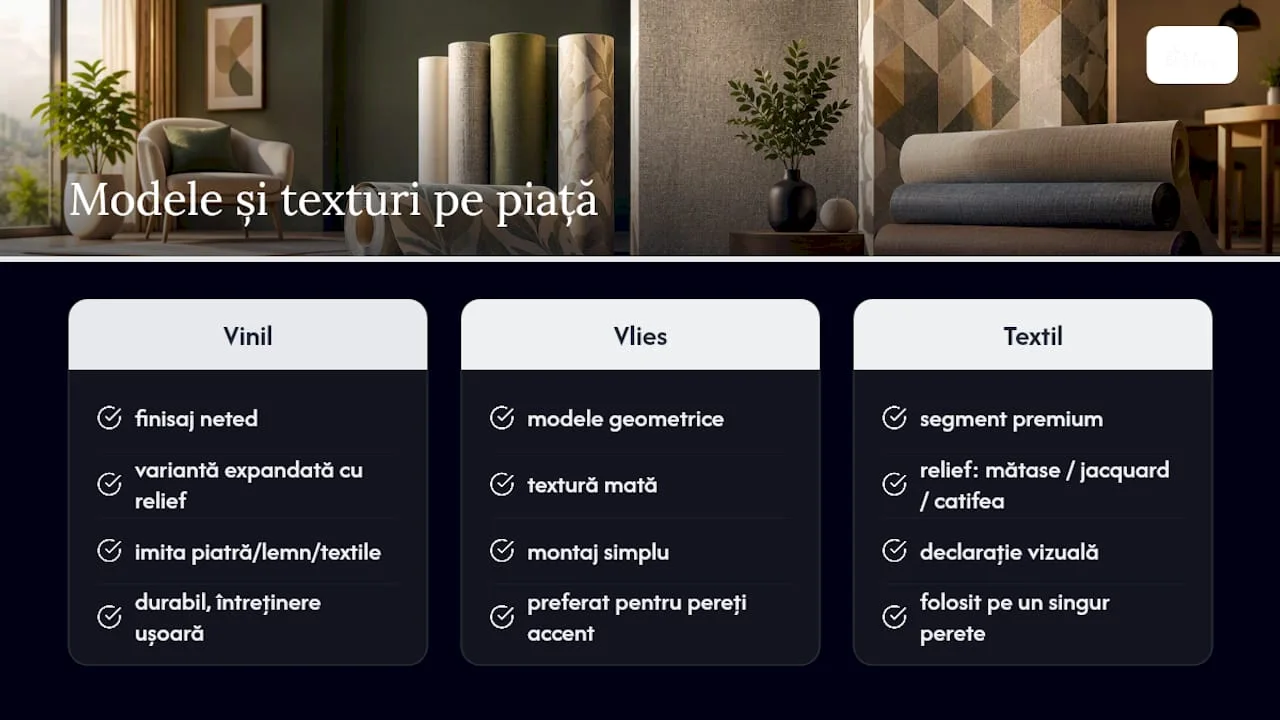
The wallpaper market has evolved far beyond the classic floral patterns, and the visual choice influences the final decision as much as the technical criteria. Vinyl wallpaper comes in compact variants with a smooth finish, and in expanded variants with an embossed texture that mimics stone, wood or textiles without their cost.
Vlies is distinguished by geometric patterns and modern matte textures, being the preferred material for accent walls in commercial and HORECA spaces, where the combination of strength and contemporary appearance matters a lot. Textile wallpaper remains the premium segment of the market, with embossed patterns on silk, jacquard or velvet, often used as a visual statement on a single wall.
The market synthesis shows that vinyl dominates sales through durability and easy maintenance, while vlies are gaining ground for simple assembly, and textiles remain a niche segment for projects with high aesthetic demands. For a project that relies on texture as an identity element, the choice of wallpaper material becomes part of the visual strategy, not just a finishing decision.
SelfDezign perspectives: when we recommend each material in a project
In our projects, the choice of material is not made by trend, but by function, visual identity and real maintenance regime of the space. In a commercial project with moderate traffic, we recommended dense vinyl on circulation and textile only on a reception wall, where the visual impact matters more than the resistance to friction. The right decision rarely appears from the catalog and almost always from the context.
— the SelfDezign team
How SelfDezign helps you choose and implement the right wallpaper
Choosing between vinyl, vlies and fabric becomes much simpler when the material is chosen in the context of the whole project, not in isolation, from a pattern catalogue. SelfDezign offers commercial, residential interior design and design consultancy precisely for situations where the material decision influences the budget, maintenance and visual identity of the space in the long term.
Consulting is worth the investment especially where textiles are taken into account, the installation has wall complexities or the budget must be optimized between several areas of the same space, from residential to HORECA projects or medical clinics. If your project involves a decision of this type, a consultancy session with written conclusions gives you a clear answer, applied to your real space, not a generic model. Contact the SelfDezign team to arrange a first discussion about your project.
Sources
For consumer issues, you can contact the Romanian National Authority for Consumer Protection (ANPC). The performance requirements for wallpaper are defined by the SR EN 233 and SR EN 266 standards.