
Types of Residential Projects and How to Choose the Right Option

Choosing a residential project is one of the most important decisions you will make as a homeowner or real estate investor. Today's market offers not ten, but hundreds of options, each with its promises, carefully selected presentation images, and vastly varying prices. The real problem is not the lack of options, but the absence of a clear comparison framework. Without well-defined criteria, you risk choosing based on what looks good in the brochure, not based on what fits your lifestyle and long-term goals.
Key Ideas
|
Topic |
Details |
|---|---|
|
Clear Classification |
Understand the fundamental distinctions between individual, collective, and mixed projects to quickly filter relevant options. |
|
Real Customization |
Ask the developer for customization options for finishes, layout, and design before purchase. |
|
Cost Differences |
Boutique or high-end projects can involve up to 30% additional costs compared to the average. |
|
Facilities vs. Privacy |
Complexes offer infrastructure and community, but limited private space could be a significant compromise. |
|
Specialized Consultation |
Involve an interior design consultant from the selection phase to make the most of every square meter tailored to your style. |
How We Classify Residential Projects: Basic Criteria
Before any comparison, you need to understand how project classification works at a fundamental level. Not all homes are the same, and terminology matters when talking to a developer, real estate agent, or architect.
The first criterion is the purpose of the space. Residential spaces are intended for living, i.e., apartments, houses, or residential complexes, while non-residential spaces cover commercial or administrative activities. There are also mixed situations, where the ground floor of a building may house commercial spaces, and the upper floors are residential. This distinction matters practically when analyzing the area's urban planning regulations, taxation, and resale value.
The second criterion is the project structure: individual or collective. An individual project targets a single housing unit, either a house or an isolated apartment. A collective project or residential complex groups multiple units in a planned common space.
Here are the main categories by which you can classify a residential project:
- Purpose: purely residential, mixed (residential and commercial), non-residential
- Structure: individual (single-family house, single apartment) or collective (building, complex)
- Location: urban, peri-urban, rural
- Density: high density (apartment blocks), medium density (villas in neighborhoods), low density (detached houses)
- Market segment: economic, medium, premium, high-end, or boutique
Note: Before comparing prices, clarify which category the project you are interested in falls into. Two apartments with the same price can be in completely different typologies, with very different implications for lifestyle.
Individual Residential Projects: Classic Houses and Apartments
The first major type of residential project is the individual home. This can be a single-family house, a villa, or an apartment purchased independently, without being part of a jointly managed complex.
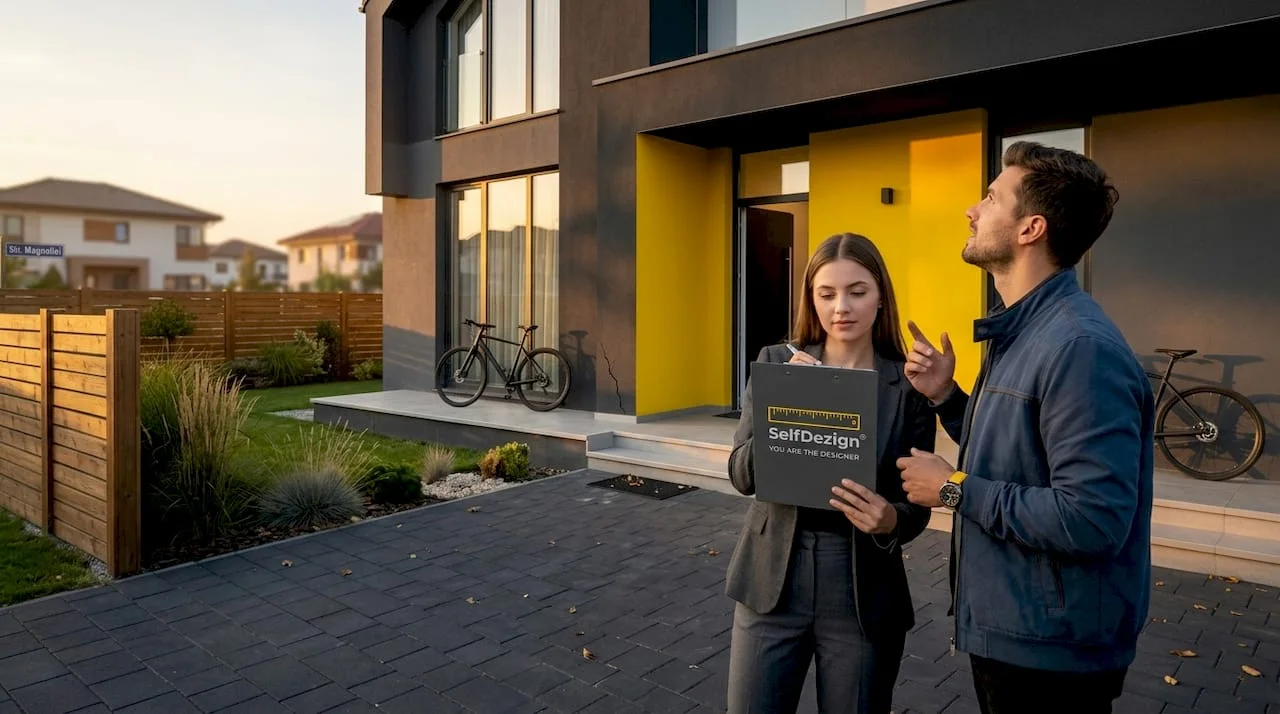
The main advantage of this type is autonomy. You fully control the space, decide on structural changes, finishes, and layout, without depending on a complex's regulations or the collective decisions of a homeowners' association. This is a suitable category especially if you want a personalized residential design down to the detail, strictly tailored to your lifestyle.
The main advantages of an individual home include:
- Maximum privacy, without shared landing neighbors or shared yard
- High degree of customization, from layout to the choice of every material
- Full control over maintenance and renovation costs
- Individualized resale value, not influenced by the condition of other units in a complex
On the other hand, costs per unit are generally higher compared to an apartment in a new building. You do not benefit from common facilities such as landscaped green spaces, pools, or playgrounds included in the base price.
An important element that many buyers do not consider is the actual degree of customization allowed by the developer. Some residential projects allow choosing colors, flooring, doors, and bathroom and kitchen configurations, but others have a fixed standard with small variations. Check in advance exactly what you can modify and what is structurally or contractually locked.
Professional tip: Before signing a contract with a developer or contractor, prepare a list of questions for the contractor regarding deadlines, warranties, materials, and the procedure for modifying the initial plan. This preliminary discussion can save you considerable time and money.
If you are interested in delving deeper into what the concept of interior design means in the context of an individual project, it is useful to have clarity on this before discussing with a designer or architect.
Residential Complexes: Collective Living and Shared Infrastructure
The second major category is the residential complex, i.e., a real estate development that groups multiple buildings or housing units, connected by a planned and unitarily managed common infrastructure.
The term 'residential project' frequently designates a coherently built complex, with multiple buildings and common infrastructure, internal roads, parking, green spaces, and relaxation areas. The difference from a simple building is that the complex is conceived as a community in itself, not just a building placed in a location.
The Romanian market clearly reflects this trend. Over 340 residential complexes are already under construction, with a total of 1,240 monitored, at aggregate values of 38.67 billion RON and 14.89 million square meters. These figures show that it is the dominant type of project in the current residential market.
The main components of a residential complex include:
- Landscaped green spaces and indoor relaxation areas
- Organized parking, often underground
- Children's playgrounds and sports areas
- Security and video surveillance
- Controlled access to complex entrances
- Centralized management of common areas
Point of attention: The high density of a complex can reduce the level of privacy compared to an individual home. Before deciding, visit the site physically at different times of the day to assess noise, crowding, and how the community feels.
|
Criterion |
Individual Home |
Residential Complex |
|---|---|---|
|
Privacy |
High |
Medium |
|
Common facilities |
Absent |
Present |
|
Cost per sqm |
Usually higher |
Variable, often more affordable |
|
Customization |
Maximum |
Limited to offered options |
|
Community |
Absent or reduced |
Present and active |
|
Management |
Individual |
Collective |
If you are interested in how an apartment in a complex can be transformed through interior design in complexes, there are clear solutions even within the restrictions imposed by internal regulations.
Special Projects: Low-Density, Boutique, and High-End
Beyond the classic individual versus collective classification, the market has evolved and generated more refined typologies that respond to specific needs. Three of these deserve separate attention: low-density projects, boutique projects, and the high-end segment.
Low-density projects are peri-urban or suburban developments with a low density of housing units per built area. The emphasis is on generous private space, tranquility, and contact with nature, while the common infrastructure is kept on a human scale. Architects and developers propose mixed portfolios, including nZEB or ZEB pre-certifications, meaning the home is built to consume almost zero energy from conventional sources.
Boutique projects are small-scale complexes with a limited number of units (sometimes under 30), focusing on specific design, premium materials, and a small, select community. Boutique projects can cost up to 30% more compared to volume developments in the same price segment. The cost difference is justified by exclusivity, superior customization, and carefully selected finishes.
The high-end segment goes further and integrates wellness services (fitness rooms, spa, concierge), premium materials and multi-sensory design with an emphasis on natural light and experiential common spaces. The high-end residential market in Romania maintains a clear orientation towards quality, not just large surfaces.
Characteristics of these project types include:
- Sustainability certifications (nZEB, ZEB, BREEAM, LEED)
- Superior quality natural materials: marble, solid wood, triple-glazed glass
- Wellness facilities: indoor pools, saunas, private fitness rooms
- Concierge services and dedicated management
- Small community, with implicit selection criteria for resident profile
Key figure: Boutique projects can cost up to 30% more per square meter compared to volume developments, but offer a degree of customization and exclusivity not found in standard projects.
Professional tip: If you are attracted to the boutique or high-end segment, do not compare only the price per square meter. Compare the actual facilities, the number of units in the complex, the quality of materials in the sales contract, and the orientation towards sustainability in residential principles. Sometimes, a project with a lower price per sqm can offer more real value.
Project Customization: Options and Steps for Your Home
Regardless of the type of project chosen, customization has become a major differentiating factor in the residential market. We are no longer just talking about choosing wall color, but about a structured process that allows you to shape the home around your lifestyle.
Customization covers layout and finishes, and modern developers offer physical samples, specialized advice, and 3D simulations to help you visualize the final result before execution. This is no longer a facility reserved for premium projects but is present in more and more medium-segment projects.
The essential steps to efficiently customize a residential project are:
- Clarify real needs before any discussion with the developer: how many people live there, what daily habits need to be supported, what cannot be missing from the new home.
- Request the complete list of options for customization available for the chosen project, including deadlines by which you can make changes.
- Involve an interior designer from the beginning, not after the screeds have been poured. Structural adjustments are much easier to integrate in the design phase than after execution.
- Test materials with physical samples, not just from digital images. Colors, textures, and finishes look different in the natural light of the real space compared to a screen.
- Request 3D simulations of the final space, especially for the kitchen, bathroom, and bedrooms, where layout details matter most.
- Document all changes in writing, with annexes to the contract, to avoid misunderstandings with the contractor.
Customization brings three clear advantages: increased comfort in daily use, uniqueness compared to standard units in the same complex, and increased property value at the time of resale. An apartment with chosen finishes and optimized layout sells faster and at a better price than a standard one.
Professional tip: Consult the customization steps recommended by specialists before the first meeting with the developer. You will know exactly what questions to ask and how to assess whether the customization offer is real or just a marketing argument. Also inform yourself about the cost of project customization to budget this stage correctly.
What They Don't Tell You About Choosing the Type of Residential Project
The real estate market communicates the image well and the reality poorly. Brochures are impeccable, 3D renderings always show sunshine and blooming trees, and sales representatives are trained to answer objections, not to validate them.
What is not directly told to you is that the type of project matters more than the surface area or price per square meter. An 80 sqm apartment in a complex with 500 units and poor management can produce a level of daily stress incompatible with the quality of life you seek. A 120 sqm individual house without access to public transport or basic infrastructure can quickly become a logistical burden.
The right decision is not about trends. It is not about what the neighbors buy or what is fashionable on social media. It is about long-term fit between the type of project and your real lifestyle. If you work from home, you need separate spaces and quiet, not party room facilities. If you have young children, a playground in the complex matters more than premium kitchen finishes.
Our experience in residential projects of all types shows that the most successful decisions come from direct and honest discussions with specialists, not from price list comparisons. Project customization means understanding what you really want before choosing where to build or buy it.
We always recommend a physical visit to the site on different days and times, a discussion with current residents of the complex (if there are already tenants), and an analysis of the surroundings and existing infrastructure. Compromises are inevitable in any choice, but the good ones are those you make consciously, not those you discover after signing.
Transform Your Home with a Customized Project from SelfDezign
If you have gone through all the typologies and started to clarify your preferences, the next step is to work with someone who can turn those preferences into a real, functional space that reflects who you are. SelfDezign offers the right solutions for your home, whether you are just starting out or have already chosen the project and are looking for a specialist to coordinate customization and design. From interior concept to technical design and 3D simulations, the SelfDezign team has experience with all types of residential projects, both in Bucharest and across Europe. Discover how the value of personalized design can make the difference and contact us for a no-obligation preliminary discussion.