Advantages in Horeca professional fitting: 9 real benefits
The layout of a hotel space is defined as the set of functional and aesthetic design decisions that determine how customers live the experience of the venue and how the staff operates on a daily basis. The advantages of the horeca arrangement are not limited to a beautiful interior. They include reducing waiting times, increasing customer satisfaction, controlling operational costs and differentiating in a market whereProfit marginsreach 3–5% in 2026. In a sector so sensitive to inefficiencies, every fit-out decision counts directly in the balance sheet at the end of the month.
1. Advantages of horeca arrangement in operational efficiency
The layout of the space directly influences how fast and how well your team performs in each shift. A wrong flow between the kitchen, bar and gym creates invisible friction: extra steps, collisions, downtime. These small losses add up daily and erode profit.
Discrete Event simulation studies show thatflow optimizationsin cafes and restaurants reduce waiting times and increase service performance without additional personnel costs. Specifically, a reconfiguration of routes and serving points can make the difference between a chaotic shift and a controlled one.
Main operational gains of a properly thought-out layout:
- Clear flowsbetween cooking, serving and home areas, eliminating unnecessary overlaps and steps
- Accessible storage areas, strategically placed to reduce staff travel
- Traffic separationcustomers versus staff, for safety and speed
- Functional lightingdifferentiated by areas, which supports both customer comfort and staff accuracy
INFORMATION: If you're renovating or remodeling from scratch, test the flow before fixing furniture permanently. Mark staff and customer routes on the floor and identify blockage points. This simple simulation saves high retrofitting costs.
2. Reduction of waiting times by operational design
The operational design of a restaurant or cafe is not an abstract concept. It is the distance between the house and the bar, the number of entrances to the kitchen, the position of the coffee station relative to the serving area. Each of these affects how long a customer waits.
ProModel simulations applied in restaurants show thatlayout reconfigurationcan reduce average waiting time by up to 40% and increase resource use from 53% to 69%. This means that the same number of employees serves more customers, faster, without additional exhaustion.
Reducing waiting times isn't just a matter of well-trained staff. It is equally a matter ofInterior designfacilitating or blocking the natural flow of service. A well-thought-out space makes staff effective even during peak hours.
3. Furniture adapted to the hospital: durability and functionality
Furniture in a restaurant or café suffers daily wear and tear that residential furniture cannot handle. Chairs are pulled and pushed hundreds of times a day. The tables are wiped with chemicals. Upholstery comes into contact with food and liquids constantly.
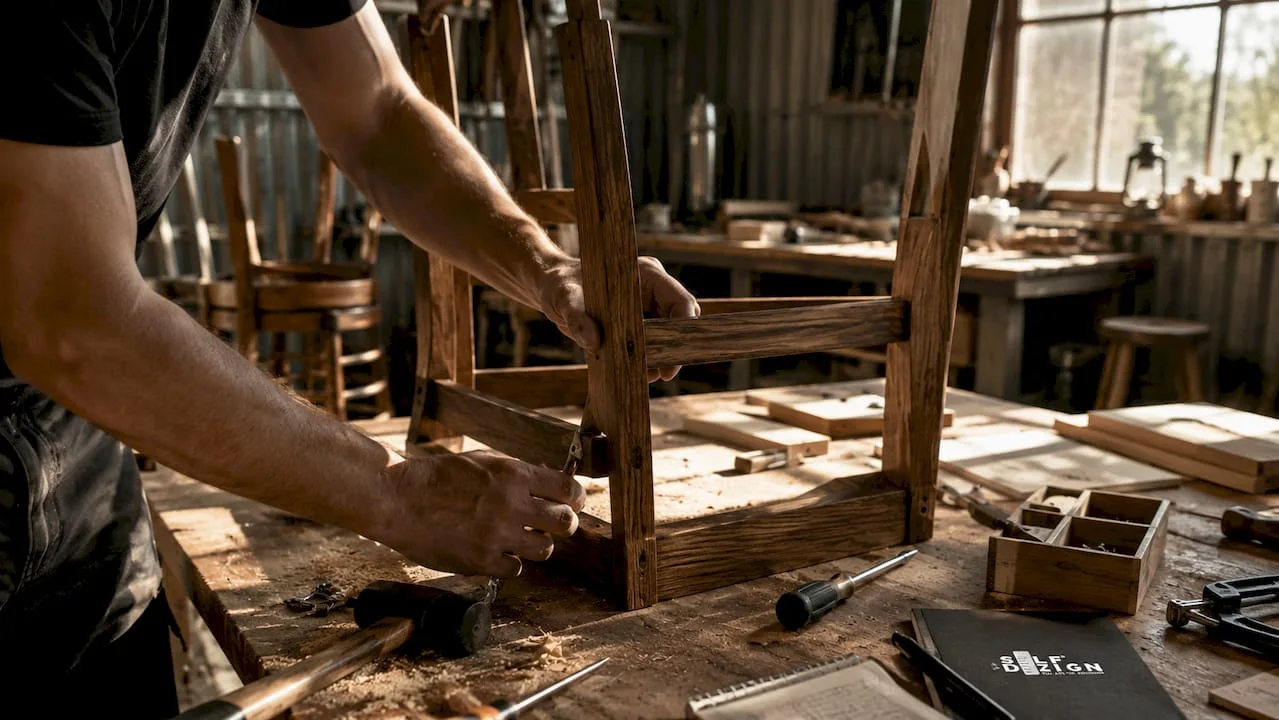
Horeca furnituremust be functional, durable, wear-resistant and adapted to the concept of the premises to support intensive daily operation. The difference between standard and custom furniture appears clearly in the medium term: the standard one gives way faster and generates replacement costs, the custom one exactly aligns with the operational and aesthetic needs of the space.
Modular furniture adds an additional advantage: quick adaptation to market demands and short cycles of trends in the horeca. You can reconfigure the hall for a private event, add seats in season, or refresh the look without a major investment. This flexibility is a real asset, not an aesthetic detail.
4. How does fitting out impact customer experience and satisfaction?
A customer's experience in a restaurant or café isn't just determined by food and service. The space itself communicates before any employee opens their mouth. The light, the acoustics, the distance between the tables, the materials used, all these create a state that the customer feels, even if he does not articulate it.
A study from 2026 identifiesgratification as the main factorin positive customer recommendations, followed by aesthetics. Gratification is not luxury. It means that the space responds to the emotional and physical needs of the customer: it feels comfortable, oriented, relaxed or energized, depending on the concept of the place.
Design elements that support this status include:
- Controlled acoustics, which allows effortless conversation and reduces auditory stress
- Warm or cold lighting, calibrated by time of day and type of experience offered
- Correct distance between tables, which provides privacy without creating a sense of isolation
- Materials and texturesthat convey quality and care for detail
- Clear visual signage, which guides the customer without creating confusion or frustration
Customers appreciate spaces that offer emotional and aesthetic comfort more than just visually attractive ones. This distinction is important: a spectacular space in photos, but uncomfortable in reality, generates disappointment and negative reviews.
5. Horeca design as an indirect marketing tool
Operators frequently underestimate the role of fitting in influencing customer behavior and generating referrals. A well-designed space becomes an indirect marketing tool without recurring costs. Customers take photos of it, share it on social media, and recommend it to friends.
Spatial design creates an indirect mechanism of promotion by facilitating gratification and perceived aesthetics. This means that the investment in design generates organic visibility, a type of exposure that no paid campaign can replicate authentically.
Think of the places in Bucharest or Cluj that went viral on Instagram not for the menu, but for the atmosphere. The apparent brick wall, the warm light filtered through the wooden blinds, the plants that delimit the areas. These are not aesthetic accidents. They are design decisions that have a direct impact on new customer traffic.
6. Strategic advantages of the horeca arrangement for profitability
Profit margins in Horeca in Romania are 3–5% in 2026. This means that a few percent inefficiency can turn a full restaurant into an unprofitable one. Functional fitting reduces these risks by preventing daily operational losses.
Radu Tanase points out that the low margin amplifies losses from flow errors, poor maintenance or excessive noise that drive customers away. A fitting designed for durability and functionality reduces the frequency of repairs, decreases energy consumption through the correct placement of equipment and extends the life of furniture.
Smart investments in planning follow a clear logic:
- Prioritize functionalitytowards pure aesthetics, especially in back-of-house areas
- Choose durable materialsfor hard-wearing surfaces: floors, countertops, upholstery
- Plan modularityfrom the start, to avoid costly redevelopments at every seasonal change
- Invest in acoustics, a frequently ignored element that directly affects the comfort and length of guests' stay
- See a specialistbefore execution, not after flow problems become apparent
Differentiation in the market by fitting is more accessible than it seems. You don't need a five-star hotel budget. You need consistency: a clear, consistently applied concept in every design decision, from the color of the walls to the shape of the door handles.
7. Comparison of hospitality styles: which one suits your business?
Choosing the design style is not an isolated aesthetic decision. It is a business decision that influences the attracted audience, the perceived price and the maintenance costs. Each style comes with concrete advantages and limitations.
|
Stil |
Avantaje |
Limitations |
Suitable For |
|---|---|---|---|
|
Modern |
Easy-to-maintain visual cleaning appeals to urban audiences |
It may seem cold or impersonal |
Specialty cafes, urban bistros |
|
Rustic |
Warm, authentic, memorable atmosphere |
Higher material costs, difficult maintenance |
Traditional restaurants, wineries, guesthouses |
|
Minimalist |
Low execution costs, product focus |
Risk of appearing austere or unfinished |
Fast-casual, niche cafes |
|
Industrial |
Strong, resilient character, easy to adapt |
Acoustics difficult to control |
Brewpubs, urban restaurants |
|
Eclectic |
Distinct personality, creative flexibility |
Requires careful coordination for coherence |
Places with strong brand identity |
Custom-made furniture offers clear advantages over the standard one: it adapts exactly to the dimensions of the space, supports the visual concept and better withstands specific wear and tear. The initial cost is higher, but the total lifetime cost is often lower. You can learn more abouthow to manage your budgetfor a horeca fitting before making purchasing decisions.
Choosing the right style starts from a simple question: who is your customer and what state do you want to induce? A family restaurant needs warmth and space. A specialty coffee shop needs focus and refinement. A brewpub needs character and resilience. Style follows the concept, not the other way around.
8. Customizing space and customer loyalty
A custom space communicates your business identity more clearly than any slogan. Customers don't just come back for good food. They come back because they feel good there, because the space belongs to them somehow, because they associate it with a positive state.
Personalization doesn't necessarily mean expensive or extravagant. It means coherence between concept, materials, colors, lights and how staff interact with the space. A coffee shop with a clear visual identity, consistently applied from the outer window to the packaging of the coffee cup, creates a memorable experience with moderate resources.
Horeca designshould be calibrated to the customer's condition and comfort, not just the visual impact. That's the difference between a space that looks good in photos and one that works well in real life. Customer loyalty is built on the second category.
9. Trends in horeca fitting that support profitability in 2026
The current trends in horeca design are not only aesthetic. The most relevant for owners concerned about profitability are those that reduce long-term costs or increase perceived value without disproportionate investment.
Modularity of furniture is one of the most practical trends of 2026. Allows quick reconfiguration of the room for different formats: working lunch, romantic dinner, private event. The same space generates revenue from multiple sources without redevelopment costs. Oapproach to interior functionalitywell-planned makes this flexibility possible from the outset.
Sustainable materials are gaining ground not only for ethical but also for economic reasons. Recovered wood, polished concrete, recycled metal are materials with high durability and low maintenance costs. Customers perceive them as signs of authenticity and quality, which supports higher prices and higher loyalty.
Acoustics becomes a real priority. Noisy restaurants are losing customers who would otherwise have stayed longer and ordered more. Modern acoustic solutions, from aesthetically integrated sound-absorbing panels to treated ceilings, are direct return investments in customers' consumption behaviour.
What I noticed in the Horeca projects
The most common blind spot I encounter at restaurant and café owners is the confusion between landscaping and decorating. Decorating adds objects. Design builds a system. And it's the system that makes the difference in profitability.
We worked with owners who invested considerable amounts in quality furniture and beautiful lights, but completely ignored the flow between the kitchen and the hall. The result: staff exhausted, customers dissatisfied with waiting times, and a room that looked good in photos but worked poorly in reality.
What really works is the integrated approach: clear concept, operational flow thought out before choosing furniture, materials chosen for real durability, not just for appearance. And perhaps most importantly, a space that leaves room for adaptation. Horeca is a moving sector. A rigid space quickly becomes an expensive space to upgrade.
The trend I am following with interest in 2026 is precisely this convergence between design and operations. Owners who understand that fitting out is a business decision, not an aesthetic one, are the ones who build resilient businesses. Those who treat the design as an image cost end up redoing it much too quickly.
— expertise provided by Toni Bunaiașu
SelfDesign and landscaping of horeca spaces with real impact
SelfDezign works with restaurant and café owners who want more than just a nice space. They want a space that works, that retains customers and supports long-term profitability. The services cover the entire process: from the interior concept and technical design, to the coordination of the implementation. Each project starts from understanding the real business context, not from applying standard formulas. If you want to find out what ahoreca interior designthought for concrete results, the dedicated page gives you a clear starting point. Professional consulting is not a luxury in horeca. It's a decision that pays off quickly.