Custom Restaurant Design Steps: Complete Guide
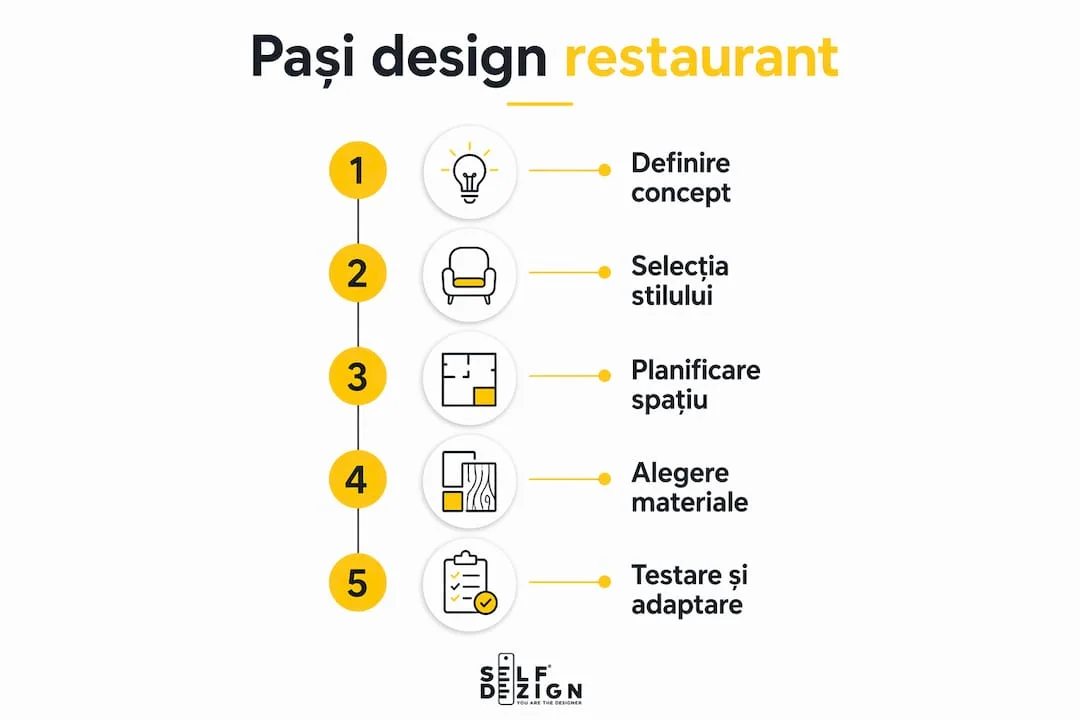
Personalized design for restaurants is the process by which the interior space becomes a coherent expression of the brand identity, not a collection of aesthetic elements chosen at random. Unlike standard amenities, a unique restaurant design starts from the personality of the business, the audience you serve, and the experience you want to create. Taking clear steps, from defining the concept to choosing the finishes, makes the difference between a space that attracts and one that retains. Collaborating with specialists inhospitality design servicesturns vision into functional reality.
How to define the unique concept and style for your restaurant
The design concept is the backbone of the whole project. Without it, the choices of furniture, colors and materials remain fragments without logic, no matter how beautiful they are individually. Before any visual decision, you need to answer some fundamental questions: what experience do you want to offer the customer, what values does your brand convey and who is the man who walks through the door of your restaurant.
Where do you actually start from
The process of defining style doesn't mean picking a trend from magazines. It means identifying what sets you apart and translating that difference into visual language. Some methods that work in practice:
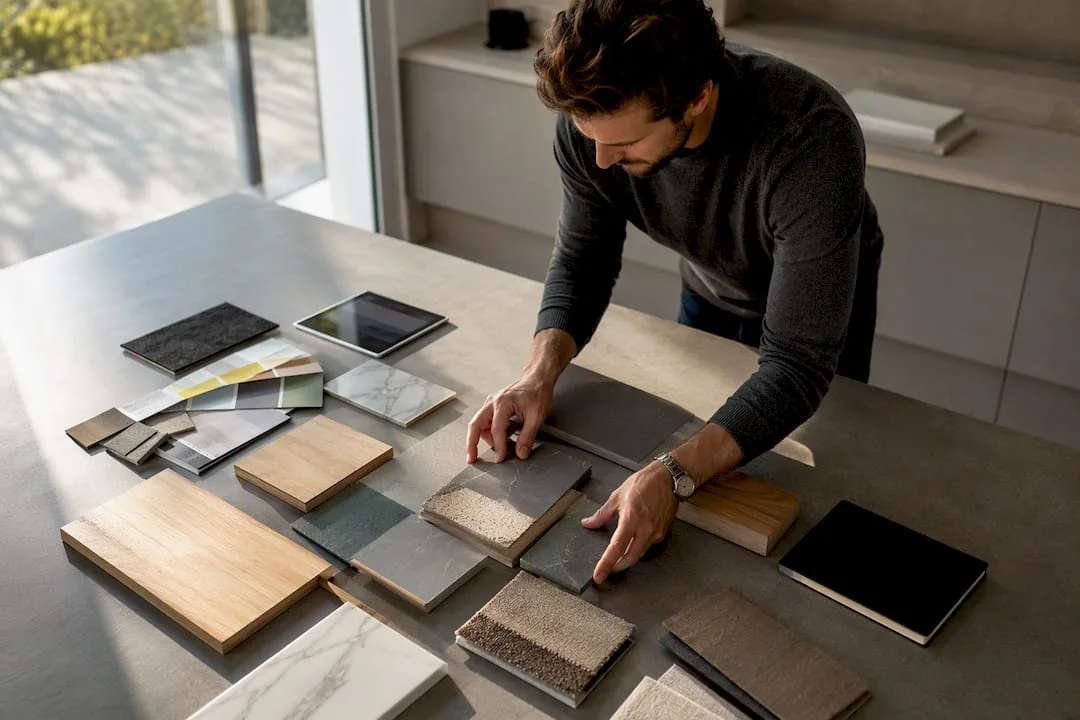
- Brand Moodboard:Gather images, textures, colors, and references that elicit a positive reaction. It doesn't have to be in the restaurant business. A landscape, vintage photo, or fabric can define a direction more clearly than ten examples of similar venues.Moodboards organize ideasvisuals and allow adjustments before any costly decision.
- Color and texture palette:Colors communicate emotions before the customer reads the menu. A restaurant with warm tones of terracotta and natural wood conveys comfort and authenticity. One with cold grey and steel communicates precision and modernity. Choose the palette that reflects what you want the customer to feel, not what's trending right now.
- The elements of visual identity:The brand's logo, typography and communication materials must also be found in the space. A restaurant with a playful brand and a sober interior creates a dissonance that the customer feels, even if they can't name it.
- Cultural or local references:If your restaurant serves regional cuisine or has a story related to a specific place, that story deserves to be visible in the space. Local elements authenticate the experience and create a memory.
INFORMATION: Before you first meet a designer, prepare a folder with 15–20 images you like and 5–10 images you dislike. The contrast between the two categories says more about your style than any verbal description.
The style chosen must be sustainable over time. A concept based on a momentary trend risks appearing dated in two years. A concept based on authentic brand values remains relevant no matter what appears on social media.
How to collaborate effectively with horeca designers and specialists
Working with a designer doesn't mean handing over the project keys and waiting for the result. It means you're entering an ongoing dialogue where each of your feedbacks becomes valuable information for shaping your space. Open communication with the designer, even without technical terminology, is essential for a successful custom design.
Steps to productive collaboration
- Formulate business goals, not just aesthetic preferences.Let the designer know how many customers you want to accommodate, how the tables are rotating, if you plan to host private events, or if you have a separate bar space. This information shapes design decisions as much as visual preferences.
- Set a realistic budget from the start.A good designer doesn't work on vague budgets. Knowing the financial limits allows him to prioritize the items with the greatest visual impact and avoid solutions that will later be abandoned due to lack of funds.
- Actively participate in each review stage.Active participation and constant feedback increase the final quality of the project and the functionality of the space. Do not postpone approvals or delegate key decisions to people who do not know the brand vision.
- Ask questions about functionality, not just aesthetics.Ask how the movement of staff will work, where cleaning supplies will be stored, what the space will look like under artificial evening light. Operational details matter as much as the images in the presentation.
- Accept that some of the designer's suggestions make sense that you don't see right away. Un horeca interior designmust harmonize aesthetics with practical requirements and specific regulations. The designer knows these constraints and integrates them into solutions that are not always obvious at first glance.
INFORMATION: If you don't like a proposal, don't just say “I don't like it.” Describe what's causing you discomfort: the color, proportions, material, or association with something else. The more specific the feedback, the more precisely the designer can adjust.
A good designer doesn't sell you a prefab style. It builds a visual vocabulary starting from your brand personality and real business goals.
How to plan your space for an optimal customer experience
Space planning is the stage where vision becomes geometry.Distribution of space and choice of furnituredirectly influences comfort and operational efficiency in restaurants. A poorly organized space creates frustration for both customers and staff, no matter how beautiful it looks.
Key areas and their logic
Any restaurant operates on the basis of distinct areas that need to communicate with each other without friction. The table below summarizes the main areas and evaluation criteria for each:
|
Area |
Essential Characteristic |
Design Criteria |
|---|---|---|
|
Entry and Reception |
First impression, orientation |
Visibility, accessibility, clear visual identity |
|
Serving area |
Customer comfort, table rotation |
Optimum distance between meals, acoustics, natural light |
|
Bar or waiting area |
Pleasant waiting time |
Seat height, ambient lighting, quick access to staff |
|
Kitchen & Storage |
Operational efficiency |
Workflow, ventilation, sanitary compliance |
|
Toalete |
Hygiene and comfort |
Durable finishes, good lighting, easy access |
The minimum distance between tables is not an aesthetic preference, but a requirement that affects acoustic comfort and perceived privacy. A visually crowded restaurant may seem full even at half capacity, which influences the perception of quality.
Flows & Ergonomics
The route of the staff from the kitchen to the table must be short and unobstructed. Every collision avoided means faster service and a better customer experience.Ergonomics of commercial premisesit is not an abstract concept, but a practical decision about where to put a door, how to orientate a passage or at what height to mount a shelf.
Lighting is a planning tool, not an accessory. Warm light at the tables creates privacy. The brighter light at the bar stimulates interaction. Passage areas need functional lighting that does not distract from the main spaces.
What materials and design elements reflect the uniqueness of the brand
Materials are where the concept becomes tangible. The customer does not read a design brief, but touches the surfaces, sees the reflections, and feels the visual temperature of the space.Conscious selection of materialscombines durability with aesthetics appropriate to the specificity of horeca.
Selection criteria for finishes and decors
- Durability in heavy use.Surfaces in a restaurant support frequent cleaning, humidity, and high traffic. Untreated solid wood, for example, looks good in photos, but deteriorates quickly without a proper finish. Choose materials that retain their appearance after two years of daily use, not just after the inauguration.
- Consistency with the brand palette.Each material has a visual temperature: concrete is cold and industrial, wood is warm and organic, metal is precise and modern. The mix of materials works when there is a clear logic, not when each element comes from another direction.
- Local and cultural elements. Integration of local elementsin the materials and décor of a restaurant creates an authentic identity that differentiates the business in the horeca market. Regional ceramics, local stones or traditional textiles are not decorative details, but brand arguments.
- Decorative accents with intent.Intentionally chosen decorative objects can quickly transform the atmosphere of a space without structural changes. A living plant wall, vintage collection, or local art installation adds character and becomes conversation topics for customers.
- Balance between visual impact and maintenance.An apparent brick wall looks spectacular, but it accumulates dust and requires regular cleaning. A marble floor impresses but glides when wet. Every aesthetic choice comes with an operational cost that you need to know before making the decision.
Architectural signage is part of the design materials, not a separate element.Brand Tailored Signagein the commercial spaces, the horeca communicates the identity before the customer enters and guides the experience inside.
How to test and adapt your design for the long term
A good design is not static.A hospitality interior design must include flexible adjustment processesto respond to market dynamism and changing preferences. The inauguration is not the end of the process, but the beginning of the observation phase.
What to expect after opening
- Direct customer feedback.Online reviews and conversations with staff reveal what works and what doesn't. If multiple customers mention that it is too noisy or that the light is too bright, this is design information, not just a subjective preference.
- Behavior in space.Observe where customers gather spontaneously, what meals are avoided, and how staff move around during peak hours. The space alone shows you where the problems are, if you look closely.
- Seasonality and menu changes.A restaurant that changes the seasonal menu can also adapt the decor elements without high costs. Textiles, plants and color accents are the easiest to update and have the greatest visual impact per cost.
INFORMATION: Take a photo of the space six months after it opens and compare it to the photos from the inauguration. Wear, spontaneous changes, and unplanned additions show you exactly where the original design didn't anticipate actual needs.
- Furniture flexibility.Tables and chairs that are easy to rearrange allow the space to be adapted for private events, large groups or periods of low traffic. Configuration rigidity is a hidden cost you pay at every missed opportunity.
- Periodic updates.A space that looks exactly the same after five years conveys stagnation. Small updates, every two years, maintain freshness without abandoning the built identity.
Setting up an authentic space involves continuously adapting to changes that provide continuity over time, not completely reinventing it every season.
What I've Learned from Restaurant Design Projects
The most common point of failure that we have observed in horeca projects is not the insufficient budget and it is not the lack of ideas. It's the rush to get to the visual result before you really understand what the space needs to do.
Owners who come with a full moodboard and a list of favorite materials, but without a clear description of the experience they want to create, usually end up with a beautiful space that doesn't work. Beautiful in photos, problematic in daily operation. The tables are too close, the movement of the staff is blocked, the acoustics turn a busy evening into an unbearable noise.
The lesson I repeat in every project is this:custom interior designfor a successful restaurant, it starts from the business objectives and the customer experience, not from the aesthetic preferences of the owner. Aesthetics comes after, and it comes easier when you know what to support.
The second thing I learned is that owners who actively participate in the process get better results. Not because they know more about design, but because they know more about their business. That context, properly conveyed to a designer, makes the difference between a generic solution and one that really works for that restaurant, in that neighborhood, for that type of customer.
If you are at the beginning of this process, my practical recommendation is to start with a goal clarification session before any discussion about colors or materials. Write down what you want the customer to feel when they come in, what you want them to do, and what you want them to talk about after they leave. That document is more valuable than any moodboard.
— expertise provided by Toni Bunaiașu
SelfDezign and custom restaurant design
SelfDezign works with restaurant and restaurant owners who want a space thought out from the objectives of the business, not from the trends of the moment. The process includes defining the interior concept, technical design and coordination of implementation, paying attention to every detail that influences the customer experience. If you want to understand what it looks likeinterior design consultancyapplied to a real hospitality project, or if you're ready to talk about your restaurant, the SelfDezign team is available for a first conversation. The HORECA interior design page presents the approach and types of projects we manage.