What patient-centered design means in clinics

Patient-centered design is defined as providing care that is respectful and responsive to individual patient preferences, needs, and values, with a direct impact on medical space design decisions. This approach goes beyond classic aesthetics and functionality: it places the human experience at the center of every design decision, from configuring circulation flows to choosing materials and lighting. If you work in healthcare or medical design, understanding this concept is not optional. It is the foundation on which spaces that heal are built, not just spaces that function.
What patient-centered design means: definition and foundation
Patient-centered design represents a paradigm shift: clinical and design decisions are guided by patient values, not exclusively by medical protocol or operational efficiency. This definition comes from international care quality standards, where patient-centered care is listed alongside safety, effectiveness, and equity as a major goal of modern healthcare systems.
Concretely, a patient-centered medical space is not simply a 'beautiful' or 'modern' one. It is a space designed to respond to the emotional, cognitive, and physical needs of the person traversing it at a moment of vulnerability. The difference from conventional design is that the design process begins with the question 'What does the patient experience in this space?' and not 'How many exam rooms fit on the floor?'.
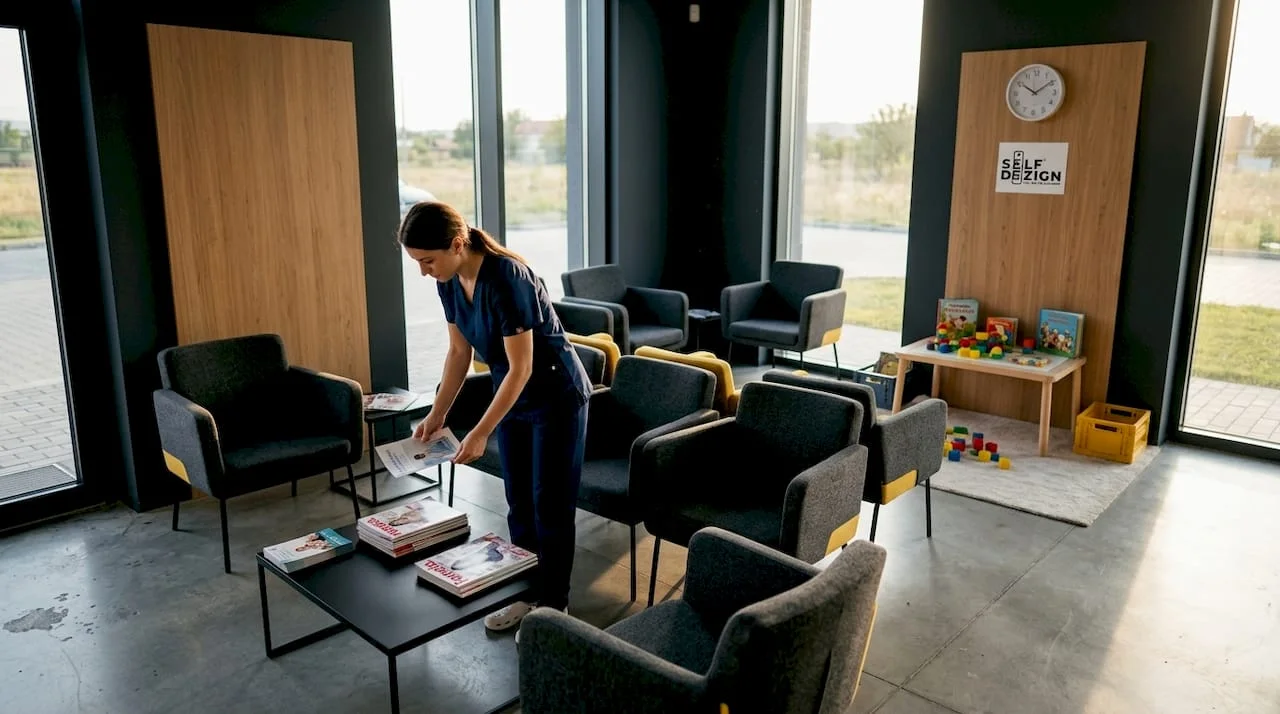
Recent studies confirm that integrating patient preferences into the design of medical spaces creates what the literature calls a healing environment, i.e., a built environment that actively supports physical and psychological recovery. This means that design is not a decorative layer applied over infrastructure, but a therapeutic component in itself.
What are the fundamental principles of patient-centered design?
The clinical principles of this approach are well documented and translate directly into design decisions. They are not abstract: each principle has a physical counterpart in space.
- Respect for individual preferences and values. Patients are not a homogeneous group. A patient-centered medical space takes into account cultural, linguistic, and personal diversity. Multilingual signage, prayer or meditation areas, and the ability to personalize the consultation room are concrete expressions of this principle.
- Communication adapted to the level of understanding. Information about the route, procedures, and waiting must be presented clearly, visually, and accessibly. A well-thought-out wayfinding system reduces anxiety more effectively than any decorative element.
- Emotional and psychological support. Waiting areas that offer privacy, natural light, and quiet zones reduce perceived stress. These are not comfort details, but interventions with a documented effect on the patient's state.
- Accessibility and continuity of care. The patient's journey from entry to consultation must be fluid, without friction or moments of confusion. Each transition between zones represents an opportunity to reduce or amplify anxiety.
- Involvement of family and companions. Waiting areas, consultation rooms, and recovery spaces must allow the presence of a companion without compromising clinical functionality.
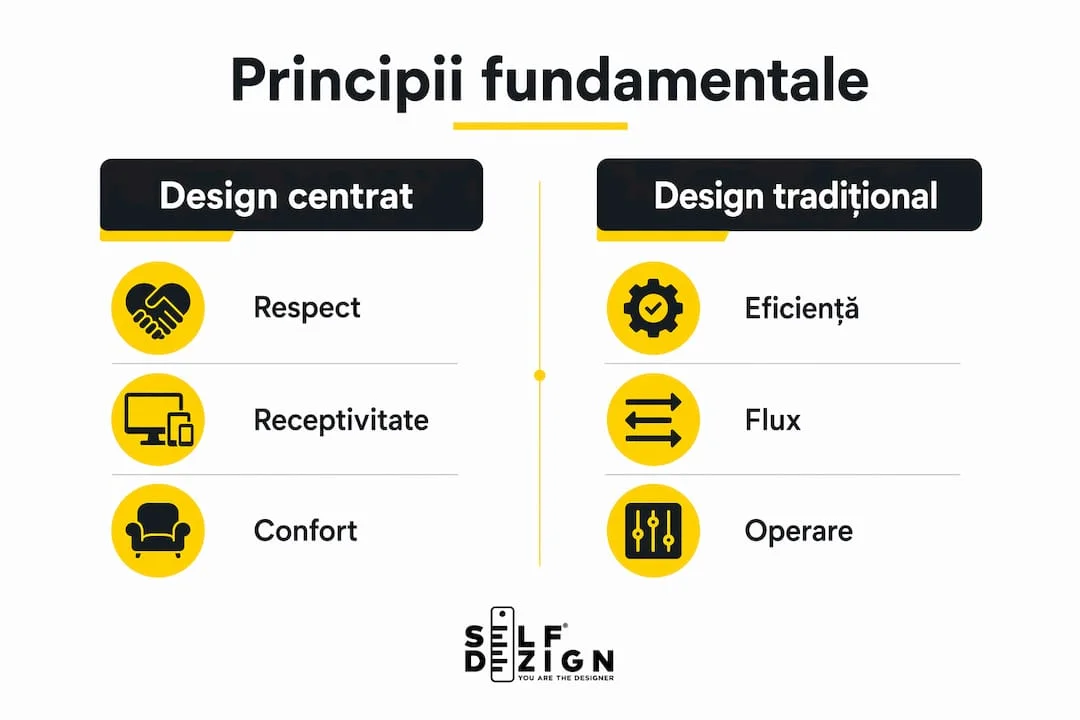
These principles are not a list of separate requirements. They form the backbone of a coherent project, just as a good design concept integrates all elements into a unified logic.
How does space design influence the patient experience in clinics?
The impact of the built environment on the patient's state is deeper than it seems at first glance. A medical space is not neutral: it communicates, generates emotions, and influences behaviors even before the first word is spoken.
There are four levels at which design directly acts on the patient experience:
- Orientation and clarity of the route. Confusion at check-in or navigating between departments generates immediate stress. Corewell Health identified that patient experiences are negatively affected by different check-in processes in different spaces of the same organization. The solution combined self-registration kiosks with human support, reducing confusion and improving flow from the first contact.
- Biophilic design and natural elements. Recent research shows that biophilic design in medical spaces contributes to well-being, stress reduction, and a positive perception of the environment. The effects are significant especially when interventions are integrated into the architectural whole, not added in isolation. Natural light, plants, organic materials, and views to the outside are not aesthetic options, but therapeutic tools. You can delve deeper into their applicability in the context of medical spaces in the SelfDezign article about biophilic design and real benefits.
- Balance between efficiency and human contact. A medical space that is operationally efficient but cold and impersonal erodes patient trust. Patient-centered design seeks the balance point: clear flows for staff, but human interaction zones that are not sacrificed for speed.
- Privacy and confidentiality. Consultation rooms, waiting areas, and transition spaces must offer an adequate level of privacy. Patients who feel exposed or overheard by others are less willing to communicate openly with the doctor.
Our advice: Analyze the patient journey step by step, from entering the building to exiting, and identify moments of friction or confusion. Each such moment is an opportunity for design intervention.
Traditional design versus patient-centered design: what are the differences?
The fundamental difference is not aesthetic, but one of perspective. Traditional design of medical spaces starts from the institution's needs: how many exam rooms are needed, how to organize staff flow, what equipment must be integrated. Patient-centered design adds a second axis of analysis: how does the patient experience each moment of the visit.
|
Criterion |
Traditional design |
Patient-centered design |
|---|---|---|
|
Starting point |
Operational efficiency |
Patient experience |
|
Priority in layout |
Medical staff flow |
Patient journey and comfort |
|
Waiting area |
Functional, neutral |
Therapeutic, with natural light and privacy |
|
Visual communication |
Standard signage |
Wayfinding adapted to various levels of understanding |
|
User involvement |
Absent in design |
Co-design with patients, staff, and specialists |
|
Post-implementation feedback |
Rare or absent |
Continuous and integrated into the adjustment process |
This comparison does not mean that traditional design is wrong. It means it is incomplete. A hospital designed exclusively for staff efficiency may function well clinically, but can generate anxiety, confusion, and distrust among patients. Patient satisfaction and clinical outcomes are correlated: an environment that reduces stress contributes to faster recovery and better treatment adherence.
How is patient-centered design applied in practice?
Implementing this concept is not limited to choosing warmer materials or adding plants in the waiting room. It is a structured process involving research, interdisciplinary collaboration, and iterations.
- Patient journey analysis. Patient-centered design involves a detailed analysis of each stage of the patient's journey to identify needs and vulnerabilities at each moment. This experience map becomes the reference document for all design decisions.
- Co-design workshops. Involving patients, medical staff, psychologists, and anthropologists in the design process is a proven method to avoid solutions based on assumptions. These workshops bring to the surface real needs that no standard brief captures.
- Physical prototypes and mockups. Testing with prototypes helps adjust the functionality of spaces before construction, reducing risks and ensuring coherence between user experience and the final infrastructure. A full-scale mockup of a consultation room can reveal flow or privacy issues that 2D plans do not show.
- Balancing patient needs with staff safety. Spatial configurations that reduce patient anxiety must also allow quick access and safe working conditions for staff. Patient-centered design does not mean ignoring the needs of the medical team, but finding solutions that serve both perspectives.
- Continuous feedback and post-implementation adjustments. Patient-centered design works as a continuous process, based on data and feedback, not as a one-off intervention. Medical spaces evolve with user needs, and a good project includes mechanisms for long-term evaluation and adjustment.
Attention: Do not treat co-design as a formality. Sessions with real patients and medical staff frequently generate solutions that no design team would have identified alone, especially regarding transitions between zones and waiting moments.
If you want to understand how this process looks applied concretely, the SelfDezign article about transforming the clinic experience offers practical examples from real projects.
Our perspective after years of medical projects
The most common mistake in medical projects is not lack of budget or talent, but lack of questions asked at the right time. We have seen modern, well-equipped clinics where patients get lost at the first corner of the corridor. We have seen waiting rooms with expensive furniture but no privacy zone for a discreet conversation. These problems do not arise from negligence, but from a design process that never included the perspective of the one who will use the space.
What definitively convinced us of the value of patient-centered design was not a study, but a co-design session where an elderly patient explained that he could not read the signage because the letters were too small and the contrast too weak. A problem solvable in a few hours of design, but invisible to the entire technical team. This is the difference between a space designed for the user and one designed about the user.
The mistake we see most often in medical projects is treating patient-centered design as a separate phase, added at the end. Natural light, wayfinding, privacy, and circulation flows must be integrated from the first sketch, not corrected after the structure is already built. A well-structured consultancy process makes exactly this difference: it asks the right questions before decisions become irreversible.
How SelfDezign can support you in designing medical spaces
SelfDezign works with clinics and medical spaces starting from a simple premise: a good medical space is not the most beautiful, but the one that best supports the patient experience and the efficiency of the medical team. Our process includes patient journey analysis, alignment workshops with the medical team, and design solutions that integrate functionality with emotional comfort. If you are designing or renovating a clinic and want the space to truly reflect your patients' values, explore our design services or consult strategies for interior functionality for a first point of orientation.