Apartment fit-out cost for rent: what budget to prepare
A full renovation of a 2-room apartment costs EUR 8,000–45,000 per Ghid Amenajări and from EUR 13,000 to over 25,000 per Infohome, excluding furniture. The priority: invest first in essential installations and facilities, only then in aesthetics, and always ask for a detailed estimate before signing with a contractor.
In summary:
- A full renovation of a 2-room apartment costs EUR 8,000–45,000 per Ghid Amenajări and from EUR 13,000 to over 25,000 per Infohome, excluding furniture. The priority is essential installations and amenities.
- The total budget varies depending on the initial condition, level of finishing and complexity of the project, as well as the costs of labor and materials.
- Investments in durable fixtures, appliances and finishes reduce vacancy.
- To reduce costs, off-season purchases, verified second-hand furniture and avoiding expensive decorations are recommended, focusing on functional elements.
- Professional project management, with a clear estimate and technical checks, minimizes the risk of delays and budget overruns, ensuring rapid market uptake.
SelfDezign
Arrange by project objectives
SelfDezign designs residential spaces and, if you choose, coordinates execution.
How much does it cost to set up an apartment for rent, by scenarios
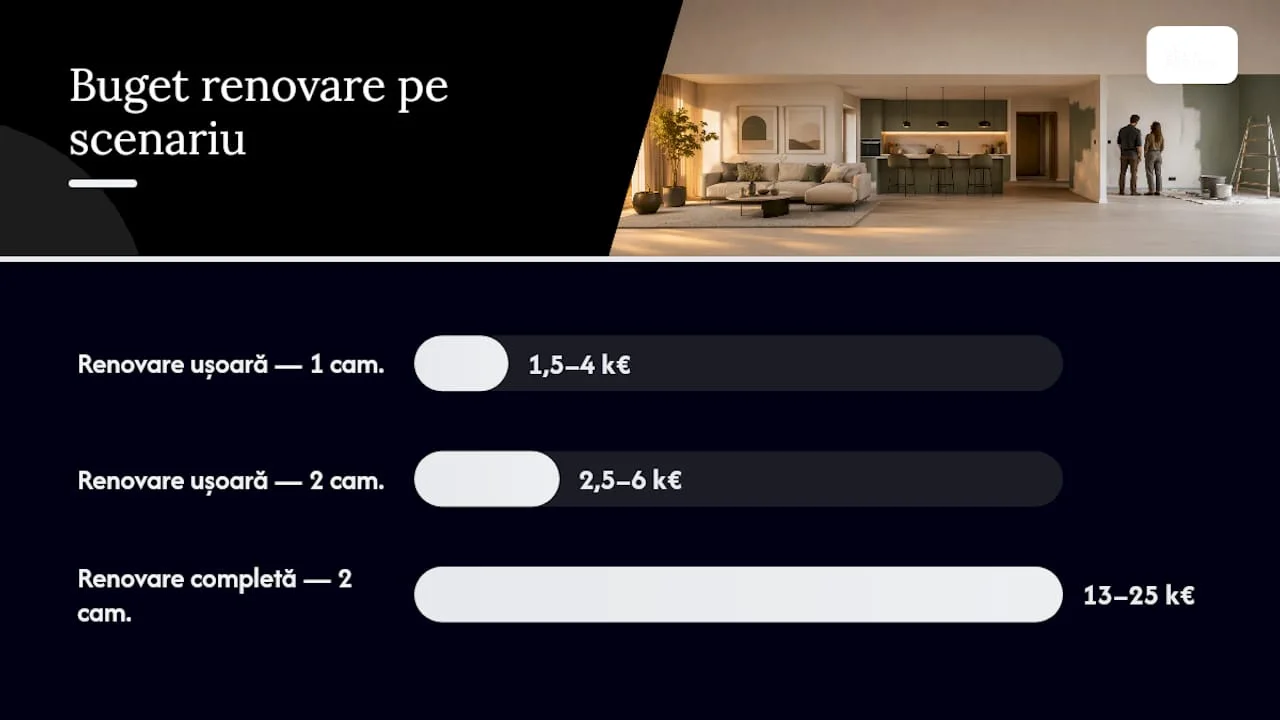
The budget for the cost of arranging the apartment for rent is not calculated according to a unique formula. It varies depending on the initial condition of the home, the age of the block and the standard you expect for the tenant. There are, however, three scenarios that constantly appear in market estimates.
Easy renovation (functional apartment, visual renewal only). Paint, small repairs, possibly changing bathroom tiles or sanitary ware.
Complete renovation for standard rental. This covers new installations, new tiles and partly replaced joinery. Infohome gives, for 50–55 sqm, from about EUR 13,000 with standard finishes to over EUR 25,000 for a higher specification. The amounts cover labour, basic materials and main finishes, not furniture.
Complete fit-out with a design. It includes technical design, bespoke furniture, medium upper range appliances and high quality finishes. The amounts can far exceed the standard range, depending on how many square meters you have and what level of detail you ask for.
The typical budget breakdown looks like this:
- Labour: about 35-45% of the total, higher when it involves demolition and new installations.
- Materials: about 40-50%, with large variations between basic tiles and more expensive variants.
- Furniture and equipment: the rest of the budget, adaptable depending on how completely you want to equip the apartment from the beginning.
- Reserve for the unexpected: Infohome recommends a 15% margin.
Bathroom and kitchen remain, regardless of the scenario, the areas with the highest cost per square meter. Plumbing, bathroom fixtures, kitchen furniture, and built-in appliances focus a disproportionate portion of the budget on the space they actually occupy.
What you prioritize when arranging for rent
A rental apartment doesn't need the same priorities as a home you're moving into permanently. Each leu invested must translate into higher rent or shorter periods of vacancy.
- Infrastructure before aesthetics. Old electrical installations, corroded sanitary pipes and compromised waterproofing in the bathroom are risks that cost much more to repair later, with the tenant in the house, than solved from the start.
- Amenities justifying the rent jump. A washing machine, refrigerator, air conditioner and a good quality mattress are no longer a luxury but a market standard. Neofort IMO calculates, in its own example, that the full package pays back in under a year.
- Neutral finishes, easy to maintain. Tiles and parquet resistant to heavy traffic, neutral colors on the walls, washable materials. A rental apartment gets dirty and degrades faster than a home of its own, and cheap but fragile finishes actually cost more in the long run.
- Custom furniture only where it really matters. The kitchen usually benefits from made-to-order furniture because it optimizes the space. Otherwise, modular or medium-quality retail furniture does the job at a much lower cost, without affecting the attractiveness of the ad.
Professional advice: Don't buy bespoke furniture for every room just because it “looks better.” Allocate the budget for made-to-order pieces where it directly influences the tenant's decision, the kitchen and possibly the cabinets, and leave the rest on standard, cheaper and equally functional solutions.
How long does a rental renovation take
A complete project for a 2-room apartment takes 6–10 weeks on average, per Ghid Amenajări. The stages follow each other in a relatively fixed order, and the skipping of any of them is the main cause of delays and additional costs.
- Technical Assessment and Estimate: checking the installations, humidity and structural condition before establishing the final budget.
- Demolition and preparation: removing old finishes, checking what is hidden under them.
- Electrical and sanitary installations: the phase with the greatest impact on the calendar if surprises occur.
- Pre-finishes: screeds, plasters, preparation of walls.
- Finishes: floor tiles, wall tiles, parquet, painting, carpentry.
- Furniture and equipment: delivery and installation of furniture, appliances and accessories.
A detailed estimate drawn up before the start prevents the most common delays, those generated by hidden works discovered only after demolition. Buying materials and furniture a few weeks before the work is completed avoids delivery deadlines that can stretch the calendar by a month.
How to cut costs without sacrificing attractiveness for tenants
The real economy does not come from cheap materials, but from the moment and the way you buy.
- Off-season purchases, in January–February per Ghid Amenajări, can bring discounts on building materials and appliances.
- Modular or second-hand furniture checked is a quick and cheaper solution than ordering new parts, provided you check the actual status before purchase, not just the picture in the ad.
- Expensive decorations are postponed. Designer paintings, expensive carpets or expensive decorative items do not influence the rental decision as much as a functional bathroom or a well-equipped kitchen. You can add them after the rent has covered your initial investment.
- The budget reserve is not optional. Allow about 15% of the estimated total for contingencies, especially if the apartment is in an old block, where hidden installations are the main source of costly surprises.
What fees and approvals involve setting up an apartment for rent
Most interior design works for an apartment, painting, changing tiles, installing furniture, do not require a building permit, because it does not affect the structure of the building. The situation changes when the intervention modifies load-bearing walls, extends installations vertically between apartments or changes the destination of the space, in which case there is a need for a permit issued by the district or commune city hall, plus, if the block is a historical monument or in a protected area, additional approvals.
For interventions involving the modification of gas installations, the approval by the local gas supplier and, often, a technical project signed by an authorized specialist is mandatory. For the electrical installation, ask an ANRE-authorised electrician for a check with a written report, for home safety and to avoid problems with resale or insurance.
If the apartment is in a block with active homeowners association, check the internal regulation before starting works with noise or involving common areas, such as installation columns. Some associations impose symbolic fees or timetable restrictions on the works. The actual administrative costs are usually modest compared to the total fit-out budget, but ignoring them can generate delays or fines that affect the marketing schedule. Confirm with the town hall, before you start, whether your work needs a permit.
How much does it cost to maintain the apartment after fitting out
A freshly furnished apartment does not mean zero subsequent costs. Even with quality materials, tenant traffic wear generates recurring expenses that are worth budgeting from day one, not treating them as surprises.
Paintwork usually needs to be redone when changing tenants, especially in hallways and passageways. Bathroom and kitchen seals (silicone, joints) require annual inspection, because an untreated small infiltration quickly becomes an expensive moisture problem. Household appliances, especially the washing machine and the boiler, require regular maintenance, descaling, checking the gaskets, to avoid sudden malfunctions that leave the apartment inoperable between tenants.
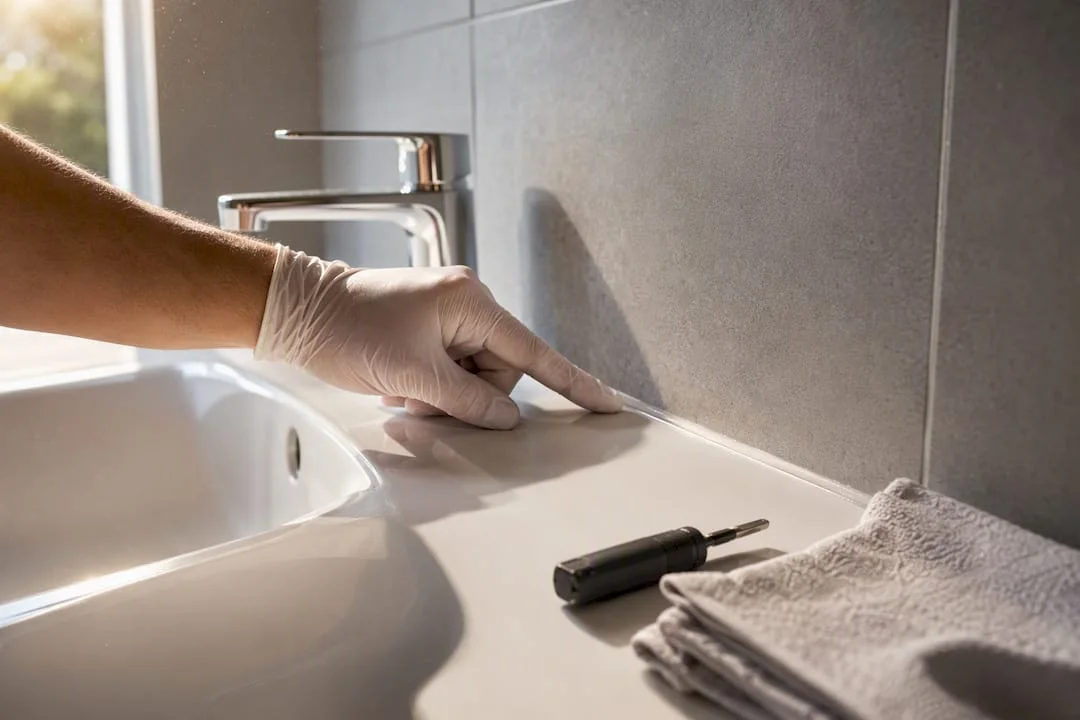
Thus, small repairs do not mess up your financial plans and you do not get to refuse a good tenant because the apartment is not ready on time. Inspections between contracts, when handing over and receiving the apartment, are the ideal time to identify small problems in advance, before they turn into major repairs.
Materials and furniture: durable versus economical in the long run
The choice between expensive materials and economical variants is not limited to the purchase price. It boils down to how much the apartment costs in the next five years of successive rents.
Medium to high quality tile and parquet resists visibly better the repeated traffic of more tenants than the basic variants, where scratches and discoloration appear quickly. The difference in purchase price is recovered by the fact that you do not restore the floor every two years. Low-quality CHIPBOARD furniture deforms under moisture and constant weight, while furniture made of moisture-resistant materials, even if it costs more initially, avoids complete replacement after the first lease.
On the other hand, not everything that is expensive is worth investing in a rental apartment. Decorations, fine textiles or intricate decorative finishes wear out quickly regardless of quality, because they are not structural, they are aesthetic. Here, the economic option is often the right choice, because you will change it periodically anyway.
Practical rule: invest in structure and functionality (flooring, kitchen furniture, sanitary ware) and save on ephemeral appearance (decor, accessories, textiles). Durable materials cost more now, but reduce the frequency of future interventions and, implicitly, the periods when the apartment is empty for repairs.
SelfDezign insights: what you check and how you plan an efficient project for rent
Before any estimate, ask for an on-site check of the installations, moisture infiltration, screeds and joinery. These checks frequently change the initial budget estimated by the owner, because the most expensive surprises always appear behind the finishes, not in sight.
A clear technical design with well-planned execution coordination reduces the risk of budget overruns caused by decisions made on site under time pressure. For a rental apartment, budget control basically means the difference between recouping the investment in months and recouping it in years.
How SelfDezign can help you arrange your rental apartment
When the project involves demolition, new installations and several trades, the risk of overruns grows without coordination. SelfDezign delivers the design and, if you choose, coordination with the execution team. Labour, purchases and works stay in your contracts with contractors.
If you want a residential design with coordination for your rental apartment, the first step is a discussion about the current state of the home and the rent goal you want to achieve. Before any work starts, ask for the technical assessment and a clear estimate.
Sources
The figures in this article come from Ghid Amenajări, Infohome and Neofort IMO. Economica.net is a read on first impressions, with no figures. For the stages, see the rental apartment, by design phase.