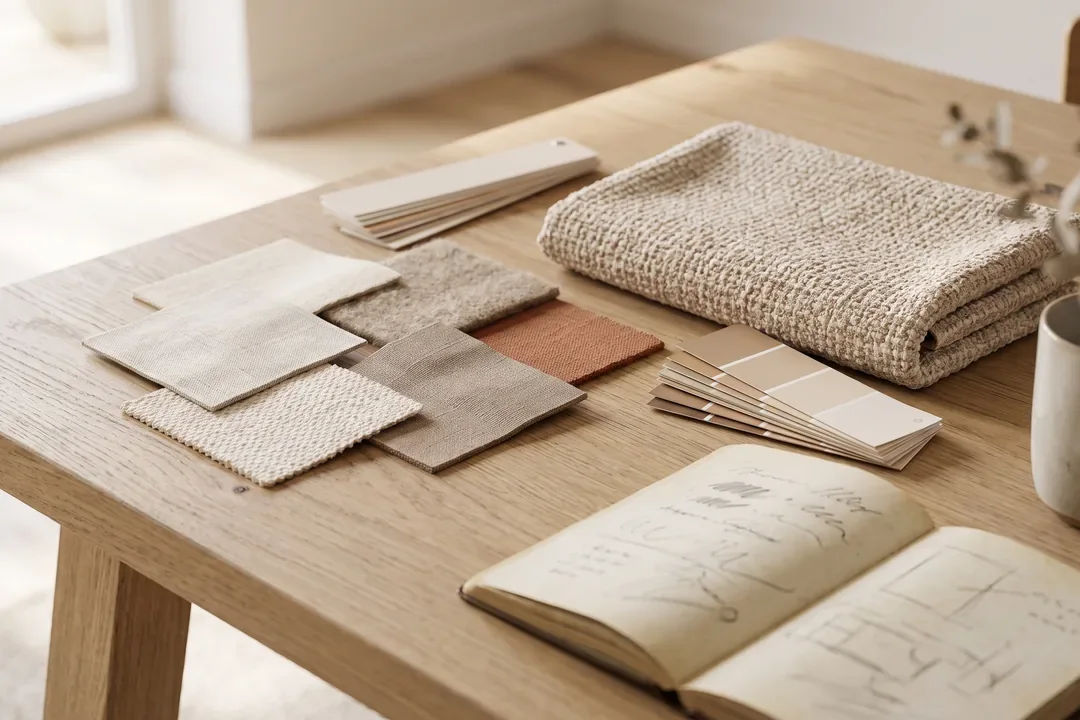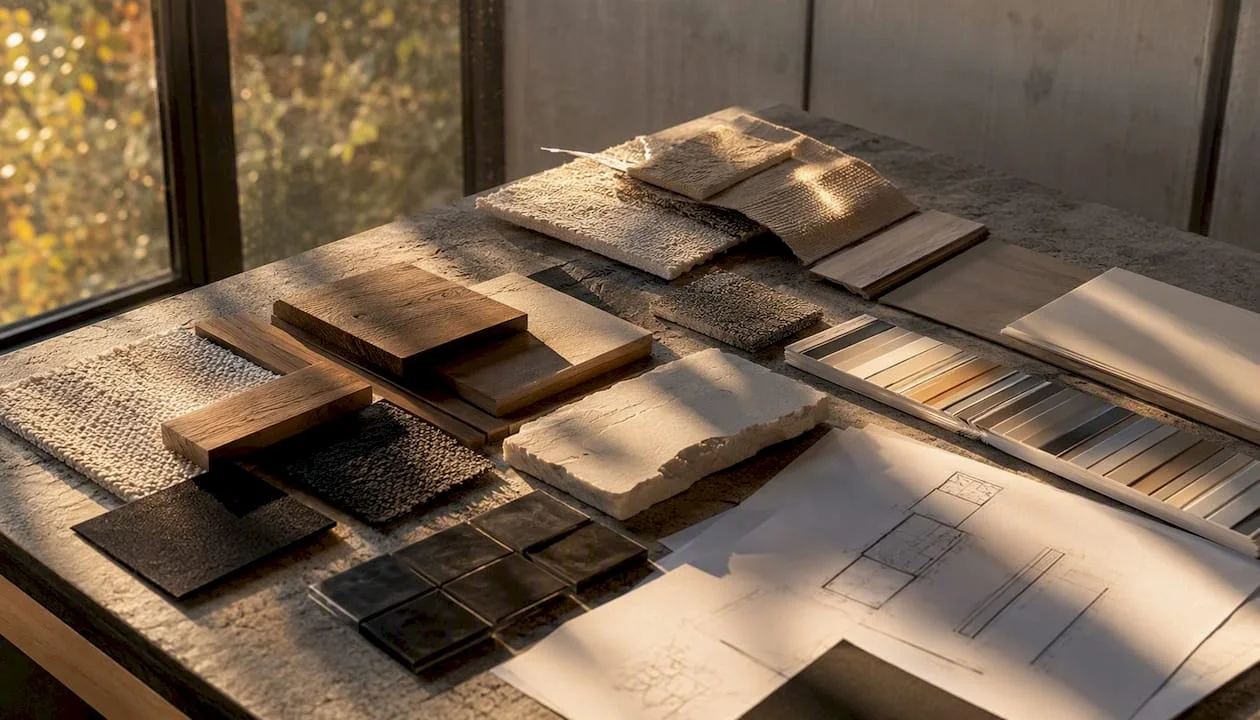
Examples of Residential Styles: 2026 Owner's Guide
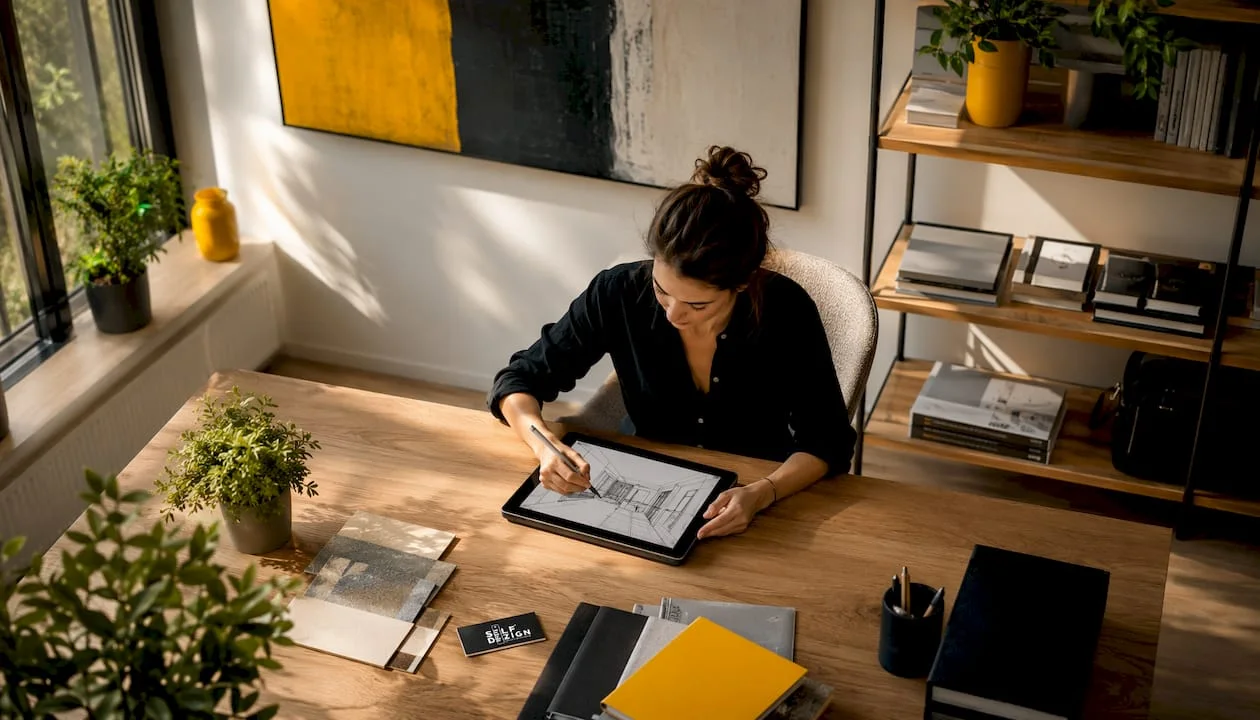
The most common examples of residential styles are:scandinavian, modern/minimalist, japandi, modern mid-century, industrial, rustic/farmhouse, classic/neoclassical, transitional and eclectic/boho.Each responds to a different type of property and a distinct objective, whether we are talking about a small apartment arranged for premium rent or a suburban house designed for the long term.
Here's a quick starting point:
- Scandinav— suitable for small apartments and rental properties; low maintenance, bright, timeless
- Modern/minimalist— ideal for premium rental properties and projects with a controlled maintenance budget
- Japandi— compact apartments or lofts; combines Nordic functionality with Japanese sophistication
- Modern mid-century— Suburban houses or apartments with personality; resistant over time as a visual identity
- Industrial— lofts, spaces with high ceilings, properties with exposed structures
- Rustic/farmhouse— courtyard houses, holiday properties, architectural buildings
- Classic/Neoclassical— heritage properties, large apartments, representation properties
- Transitional— versatile; works in almost any type of home, especially when the target audience is large
- Eclectic/boho— spaces with assumed personality; requires careful curatorial selection for coherence
Cristina Corban, interior design consultant mentioned inForbes, points out that developers who integrate design into business strategy turn a generic real estate product into a memorable experience, accelerating the sale and increasing the achievable price. SelfDezign applies exactly this logic to custom residential projects in Central Europe.
What defines each residential style?
Each style has its own visual vocabulary: a color palette, favorite materials, and a specific way to organize the space. Below, a quick sheet for each.
|
Stil |
Palette (3 shades) |
Key Materials; |
Suitable For |
Indicative cost |
|---|---|---|---|---|
|
Scandinav |
White, light grey, warm beige |
Light wood (oak, pine), natural textiles |
Small apartment, rental |
Low–mid |
|
Modern/minimalist |
White, anthracite, neutral gray |
Concrete, glass, matte steel |
Premium rental, loft |
Mid |
|
Japandi |
Warm white, beige, light brown |
Natural wood, bamboo, linen |
Compact apartment, loft |
Mid |
|
Mid-century |
Mustard, sage green, brown |
Walnut wood, geometric fabrics |
Suburban house, character apartment |
Mid |
|
Industrial |
Gray, black, rust |
Metal, concrete, exposed brick |
Loft, spaces with high ceilings |
Mid–premium |
|
Rustic/farmhouse |
White, beige, terracotta brown |
Solid wood, stone, ceramics |
Courtyard house, holiday property |
Low–mid |
|
Classic/Neoclassical |
White, gold, cream |
Marble, carved wood, velvet |
Heritage building, large apartment |
Premium |
|
Transitional |
Warm grey, beige, white |
Mix wood and metal, neutral textiles |
Any type of home |
Mid |
|
Eclectic/boho |
Terracotta, green, ochre |
Rattan, ethnic textiles, ceramics |
Spaces with assumed personality |
Low–mid |
Stilurile modern and minimalistare the most suitable family for premium rental properties, precisely because they require low maintenance and remain current in the long run. At the opposite end, eclectic/boho and classic/neoclassical require careful selection: the first risks visual agglomeration if there is no unifying wire, the second involves significantly higher execution and maintenance costs.
Professional advice: If you want to combine two styles without losing consistency, choose one as the basic language (structure, finishes, main furniture) and let the other intervene only in accents: textiles, lighting, decorative objects. Japandi with mid-century accents, or Scandinavian with industrial notes, are combinations that work well in Central European apartments.
The Nordic inspiration for timeless styles, including Scandinavian and Japanese design, confirms that simplicity and natural materials remain the most resilient choices in the long run.
How do you choose the right style for your property?
Choosing a style doesn't start with what looks good on Pinterest. Start with three concrete questions: what architecture you have, who will live or rent the space and how much you are willing to invest in long-term maintenance.
- Examine existing architecture.An apartment with 2.60 m ceilings and small windows will not support an authentic industrial style. An interwar building with ornamental details requires either a coherent classic/neoclassical or a transitional that respects the structure.
- Defines the end user profile.A rental property for young professionals needs a different style than a family home or holiday apartment. Contemporary, Scandinavian, and Japanese styles are recommended for premium rentals precisely because they maintain attractiveness without frequent refurbishments.
- Calculate the total cost at 5 years, not just the initial cost.A rustic style with solid wood can cost less in execution but more in maintenance. A minimalist with medium quality neutral finishes maintains without major interventions.
- Check for daylight compatibility.Light styles (Scandinavian, japandi) amplify the light; dark ones (industrial, classic) absorb it. The orientation of the apartment matters more than aesthetic preference.
- Sets the investment goal.Quick Sale, Long Term Rental or Personal Home? Each scenario has a more appropriate style family.
- Estimates the implementation timeline.A complete residential project takes, indicatively, 3–6 months from concept to reception, depending on the complexity and availability of materials.
A question worth asking any designer:“How long does this development remain current without major interventions?”The answer tells you more about the quality of the proposal than any moodboard.
What sustainable materials support long-term residential design?
Materials make the difference between a space that looks good at reception and one that remains valuable after five years of use. The right choice reduces reconditioning costs and supports the resale or rental value.
- Solid and laminated wood— durable, repairable, timeless; works in Scandinavian, rustic, mid-century and transitional styles
- Natural stone (marble, travertine, limestone)— premium as an initial investment, but with a practically unlimited lifespan in low-traffic areas
- Quality porcelain tiles— low-maintenance mid-range solution; ideal for kitchens, bathrooms and passage areas
- Natural textiles (linen, cotton, wool)— gives texture and warmth; easier to replace than fixed finishes, so flexible as a stylistic accent
- Washable paints with stable pigments— the higher initial cost pays off quickly compared to frequent repaints
|
Material category |
Cost Level |
Lumen |
Estimated duration |
|---|---|---|---|
|
Solid wood (parquet, furniture) |
Premium |
Reduced after treatment |
28 years |
|
Medium quality porcelain tiles |
Mid |
Minimum |
<g id="1">☐</g><g id="2"> 10-20 years</g> |
|
Natural textiles (upholstery, drapes) |
Low–mid |
Moderate |
5 - 10 years |
|
Natural stone (countertop, floor) |
Premium |
Low |
30 years |
|
Premium washable paint |
Mid |
Minimum |
7 years and more |
Custom furnituresolves a problem that serial furniture cannot address: the efficient use of every centimeter, especially in small apartments or with unconventional geometry. In the long run, a custom built wardrobe costs less than three rounds of serial furniture that don't fit perfectly.
Alegerea floor and wall finishesis worth treating as an investment decision, not a decoration: long-lasting materials reduce the total costs of the project over a 10-year horizon.
What are the concrete steps from concept to execution?
A well-run residential project follows a clear sequence. Deviations from it are usually the main source of budget and deadline overruns.
- Brief and analysis (1–2 weeks)— defining the objectives, budget, preferred style and technical constraints of the space
- Visual concept (2–3 weeks)— moodboard, color palette, furniture proposal, material selection; the integration of the design in this phase avoids costly functional compromises
- Technical project (3–4 weeks)— execution plans, material specifications, custom furniture details, specifications
- Purchases and orders (2–4 weeks)— supplier confirmation, orders with clear deadlines, approved samples
- Execution and coordination (6–12 weeks)— construction, assembly, site supervision works
- Acceptance and adjustments (1–2 weeks)— verification of compliance with the project, remedies, final delivery
Alarm signals that you should not ignore:design changes requested after the start of execution, lack of detailed technical specifications, procurement without approved samples and subcontractors who cannot provide verifiable references. Each of these can turn a correctly estimated project into one that exceeds the budget by 20–30%.
Architect's rolein coordinating these stages is not decorative: it ensures consistency between the stylistic intention and the technical reality of the execution.
What does each style look like in practice?
Abstract descriptions help, but the real decision is made when you see what a space looks like. Some concrete visual landmarks for each style family:
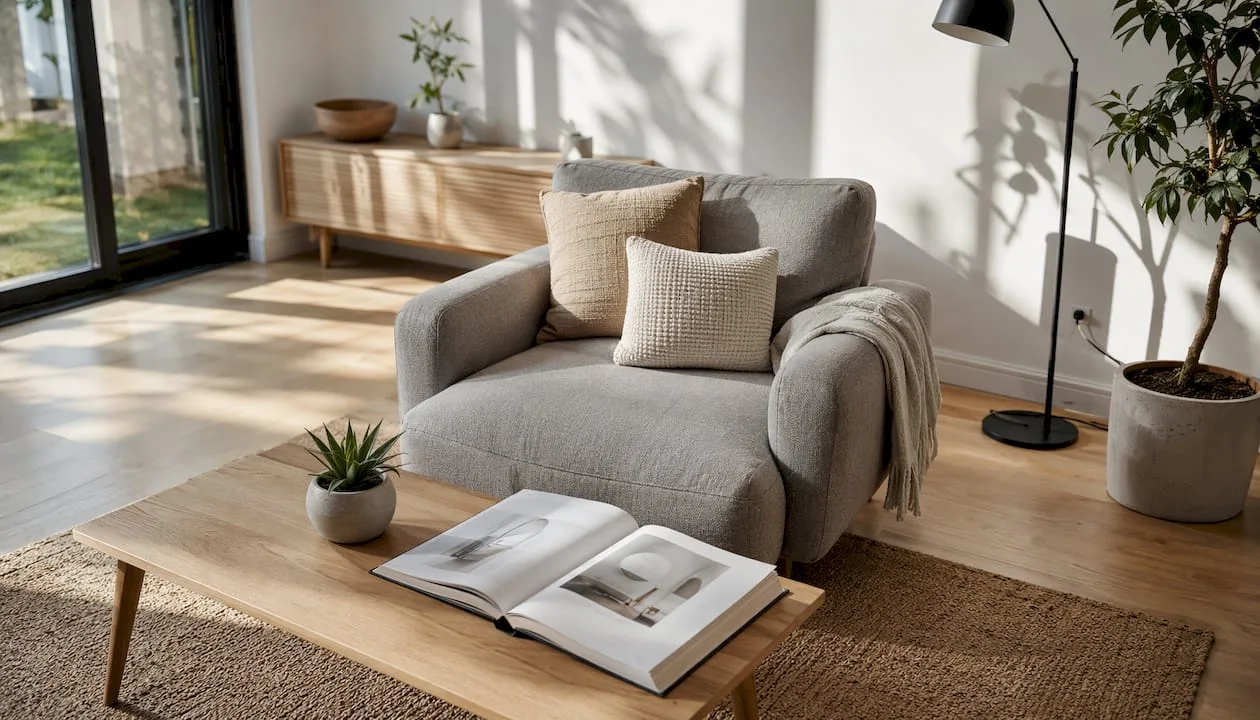
Scandinaviana living room with white walls, light oak parquet, sofa in warm grey, beige textured pillow and a single potted plant. Natural light is the protagonist, not furniture.
Modern/minimalist:kitchen with handle-less fronts, white quartz countertop, recessed lighting fixtures, no objects on surfaces. Each element has a precise place.
Japandi:bedroom with a low bed, bedside tables made of bamboo wood, curtains in natural linen, no paintings on the walls. Visual silence is intentional.
Industrial:loft with exposed ceiling, apparent pipes painted in mat black, solid wood dining table with metal legs, Edison type lighting fixture. Imperfection is part of aesthetics.
Classic/Neoclassical:paneling salon, crystal chandelier, velvet upholstered armchairs, curtains to the ceiling. Symmetry and proportions are everything.
These mental images are the starting point for a moodboard. Online tools like Pinterest or Houzz allow to organize visual references before the first briefing with a designer, which significantly shortens the alignment phase.
How do you adapt a traditional style to a small or unconventional space?
Small spaces don't exclude ambitious styles. I'm just asking for a more careful translation.
The classic/neoclassical style, for example, seems incompatible with a 45 sqm apartment. But if you extract its essence, that is, symmetry, noble materials and some precise ornamental details, and give up large volumes of furniture, you get a space with character without clutter. A single reference element, a carved frame mirror or a luminaire with classic detail, can anchor the style without consuming physical space.
Rustic works in small apartments if you stick to natural materials and give up large volumes of solid wood. A kitchen countertop made of treated wood, a few shelves made of plank and textiles in earthy tones are enough to create the atmosphere without loading the space.
Professional advice: In unconventional spaces, irregular geometry is not a problem, but a starting point. Custom furniture solves difficult corners and turns an architectural constraint into an element of identity. A wardrobe built around an oblique wall can become the visual signature of an apartment.
The transitional style is most flexible in small spaces precisely because it does not have strict rules: it combines clean lines with warm materials and allows adjustments without breaking the consistency. It is, by the way, the frequent choice incustom residential amenitieswhen the end user profile is heterogeneous.
Design as a strategy: SelfDezign's perspective on market value
There is a frequent confusion in the residential market in Central Europe: the style is treated as a personal preference, not as a business decision. This confusion costs money.
“Developers who integrate interior design into their business strategy turn a generic real estate product into a memorable living experience, which speeds up the sale and increases the achievable price.”— Cristina Corban, Interior Design Consultant, Forbes Romania
SelfDezign starts from this logic in every residential project. The chosen style is not an isolated aesthetic option, but a tool that influences the perception of the buyer or tenant, the trading speed and the final price. A coherently furnished apartment with quality materials and a clear visual concept communicates value before the potential buyer reads the technical specifications.
Interior design treated as a business strategymeans that every stylistic decision, from the color palette to the type of flooring, is made in relation to the owner's or investor's goal, not the trend of the moment. This approach reduces the risk of premature redevelopment and supports the long-term asset value.
SelfDesign for residential projects: where to start
If you have read this guide and you already know that you need more than inspiration, SelfDezign offers complete residential projects: visual concept, technical project, material selection, custom furniture and coordination of execution. Each project starts from a briefing in which we understand the real context, not just aesthetic preferences.
The services cover apartments, suburban houses and investment properties in Bucharest and Central Europe. The details of the deliverables, deadlines and the structure of the fee shall be established at the first consultation.
If you're just starting out and want to understand what type of residential project is right for you, thetypes of residential projectsis a useful starting point. And if you're ready to discuss a concrete project, theresidential interior designshows you what a SelfDezign collaboration includes and how to request an estimate.
Recommended Sources and Resources
- Forbes Romania: Interior design as a business strategy — interview with Cristina Corban about integrating design into premium real estate projects
- Scauneonline: Interior Design Styles Guide 2026 — Detailed Styles Catalogue with Visual Features and Recommendations for Use
- VentureAthletes: How to turn an apartment into a luxury rental property — practical principles for investors: timeless base plus upgradeable accents
- Viacluj: Interior design as a smart investment — arguments about the balance of functionality/psychology of space and the impact on commercial value
- Charisma Deco: Complete interior design guide — reference for basic styles and general orientation
SelfDesign resources for next steps:
- Residential design checklist— complete guide for landlords
- How to create an interior concept— from idea to coherent project
- Custom design and space value— arguments for investors
Tools for self-assessment and moodboard:Pinterest and Houzz are useful for collecting visual references before the designer briefing. They do not replace professional advice, but significantly shorten the alignment phase.