

Working with an interior design studio in 2026: best practices

For a project without surprises, you need four things before you sign: a contract with explicit deliverables, a timeline with milestones and penalties, clear feedback rules, and an actual budget with reserve included. These are the elements that separate projects that are delivered on time from those that turn into long negotiations and unforeseen costs.
The best collaboration solutions with designers in 2026 are not about platforms or apps. It's about structure: who decides what, when, and based on which documents.
The three-point essential:
- Contract before anything else. Contractual documentationmust include deliverables, review rounds, payment terms and conditions. Without these, any discussion of quality becomes subjective.
- Check your portfolio and ask for references.Studios like SelfDezign or those listed onBrig.roallow offers, portfolios and reviews to be compared in one place.
- Acts within 24–72 hours:prepare a short brief with the type of space, the indicative budget and the desired deadline, then request at least two comparative offers.
When are there clear signals that something is wrong?
Some problems are solved through a direct discussion. Others are signals that the collaborative relationship cannot continue under normal conditions.
Red flags justifying renegotiation or stopping:
- Portfolio nonexistent or outdated for more than 2 years.
- Refusal to provide references from previous customers.
- Chaotic communication: delayed responses, decisions made verbally without written confirmation.
- Repeated budget deviations without documented explanations.
- Payment request 100% in advance before delivery of any deliverable.
- Absence of a written contract or refusal to include penalty clauses.
If you identify one or more of these signals, the practical steps are:
- Send a formal written request for clarification and a deadline to respond.
- Organize a mediation meeting with all parties involved and document the conclusions.
- If the situation does not resolve, send a formal contractual notice before terminating.
- Involves an external consultant or requests mediation if the value of the contract justifies this step.
How to choose a design studio: criteria and interview questions
Choosing a studio is not based on aesthetics. It is done by delivery capacity, transparency and compatibility with your type of project.
Key evaluation criteria:
- Updated portfolio with projects similar to your type (HORECA, clinic, office, residential).
- Evidence of compliance with deadlines: reviews, direct references, acceptance protocols.
- Financial transparency: detailed estimate, clear change and refund policy.
- Technical coordination capacity: does the studio supervise the execution or just deliver plans?
- Post handover support: what is included in the warranty period and how to manage minor interventions.
Concrete interview questions:
- How many review rounds are included and what is the cost for an additional round?
- Who coordinates execution on site and how does it report progress?
- Do you have subcontractors or work with your own teams? Who is responsible for the quality of execution?
- Can you provide two customer contacts with similar completed projects?
- How did you manage the last time a project exceeded its deadline or budget?
Portfolio check and reference requestare steps that directly influence the success of the collaboration.
|
Criteriu |
HORECA |
Clinical |
Birou |
Residental |
|---|---|---|---|---|
|
Technical coordination |
Critical |
Critical |
Important |
insurance |
|
Sector-specific experience |
Performance |
Performance |
Recommended |
Helpful |
|
Post handover support |
Important |
Essentials |
Important |
Util |
|
Financial transparency |
Performance |
Performance |
Performance |
Performance |
UseBrig.roto receive 3–5 simultaneous offers and compare portfolios and prices before the interview. You can also usethe SelfDesign guidefor criteria tailored to commercial and investment projects.
What did a SelfDezign-led HORECA project look like in 2026?
A 120 sqm restaurant in Bucharest, with fixed opening term linked to a franchise agreement. The initial briefing included the visual identity of the brand, the operational requirements of the kitchen and the total budget available.
Project Stages
- Brief and concept(weeks 1–2): moodboard approved in the second variant, color palette aligned with the franchisor's brand. Decision to integratecolor implementation solutionsfrom the concept phase removed a subsequent review round.
Main lesson:written approvals at each milestone eliminated the ambiguity and allowed the execution team to work without interruptions for clarification.
The main findings
A clear contract, a milestone timeline, and documented feedback rules are the three elements that determine whether an interior design project delivers as expected or generates unexpected costs and tensions.
|
Punct |
Detalii |
|---|---|
|
Agreement before any |
Ask for explicit deliverables, review rounds and penalty clauses before signing. |
|
Budget reserve required |
Allocates 10–15% of the execution value as a buffer for unforeseen changes. |
|
Centralized feedback |
Designates a single point of contact and submits written, prioritized feedback. |
|
Documented receipt |
Do not sign the report with unresolved non-conformities; ask for complete technical documentation. |
|
SelfDesign for complex projects |
SelfDezign covers concept, technical project and implementation coordination for HORECA, clinics and offices. |
What a well-driven collaboration really means
The most common weakness I see in failing projects is not a lack of design talent. It's the absence of structure. The client doesn't know what to approve, the studio doesn't know what to deliver, and both parties end up negotiating instead of building.
A studio that understands the stakes of your project doesn't sell you “a nice setup.” It builds a space that supports a concrete goal: a restaurant that increases the rate of customer return, a clinic that reduces anxiety in the waiting room, an office that makes the team more productive. The difference between the two approaches can be seen in the brief, in the contract and in the way each decision is managed along the way.
The checklists in this article are not bureaucracy. They are the tools through which you, as a customer, remain in control without having to supervise every technical detail.
SelfDezign: from brief to handover, for projects that matter
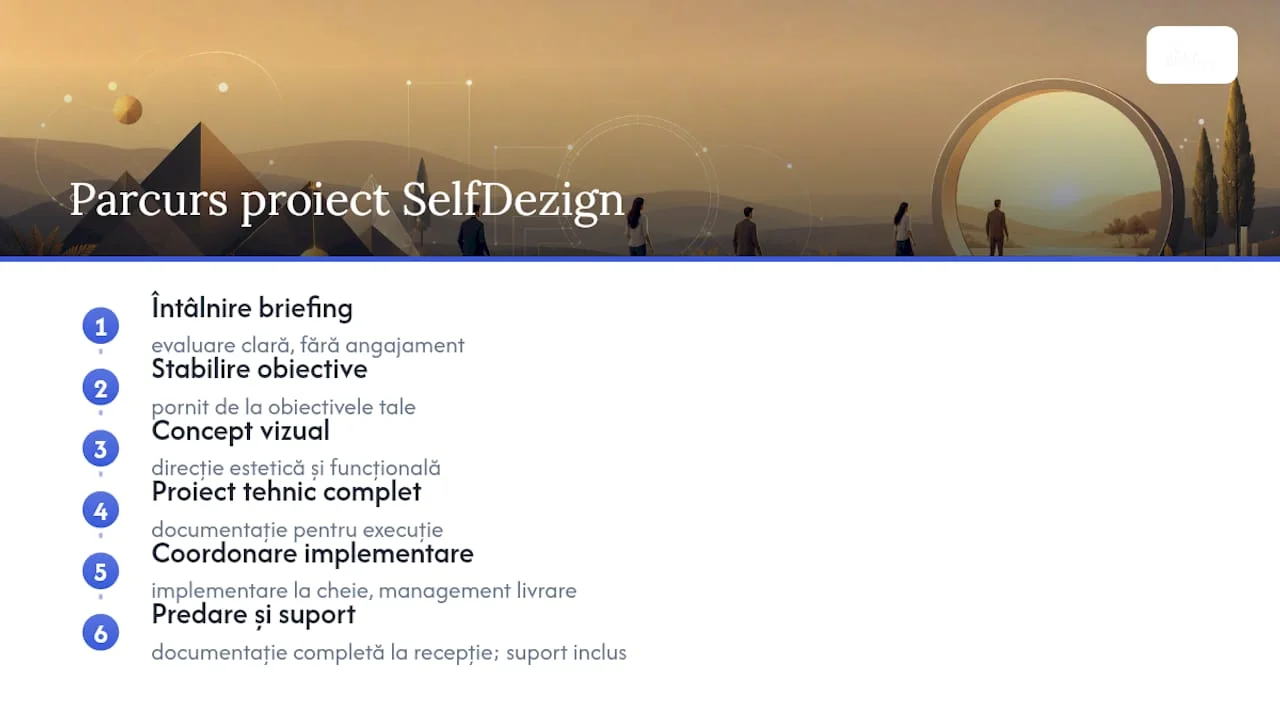
If your project involves a commercial space, a restaurant, a clinic or an office and you need more than beautiful plans, SelfDezign offers integrated services: visual concept,complete technical designand turnkey implementation coordination. Every project starts from your business goals, not the trends of the moment.
The portfolio covers HORECA projects, medical clinics, offices and residential spaces, with documentation fully handed over at reception and post-implementation support included. For HORECA managers, there is aguide to amenitiesdetailing each step of the process.
Request a briefing and get a clear evaluation of your project without commitment.
Useful sources for additional documentation
- Interior Designer Collaboration Guide: Business and Investment— SelfDezign checklists and procedures adapted to commercial and investment projects.
- How to hire the right designer: complete guide 2026 — contractual documentation, guide prices and collaboration stages; useful for comparing initial offers onBrig.roe
- Complete guide: how to choose your interior designer in 2026— the frequency of meetings, collaborative platforms and the advantages of multiple offers.
- What an interior design project entails— the importance of the initial brief, the role of 2D/3D plans and the realistic budget from the first contact.
- How to work with a designer for a perfect result — portfolio check, meetups, and collaboration stages.
- Interior design prices Romania 2026— Cost structure and updated budgeting guidelines, published by SelfDezign.