The Role of Concept in Commercial Spaces: 2026 Guide

The concept of a commercial space is the backbone of the entire experience you offer your clients. Without it, design decisions remain a collection of aesthetic choices without direction, and the space becomes functional at best, but neutral and easily forgettable. The role of concept in commercial spaces goes far beyond aesthetics: it dictates how people move through the space, how they perceive the brand, and how long they stay.Well-thought-out interior design becomes a decision that directly influences client behavior and team productivity. This guide shows you how to build and evaluate a concept that works for your business.
What Is a Commercial Space Concept and What Its Implementation Entails
The commercial space concept is the unifying framework that links brand identity, operational functionality, and client experience into a single coherent system. It is not a style chosen from a catalog, nor is it a decorative theme. Rather, it is the recipe by which all design decisions are made, from furniture placement to the type of lighting and wall materials. If style is the visual vocabulary, the concept is the grammar that makes it intelligible.
Elements That Form a Complete Concept
A functional concept is built on three interdependent pillars:
- Brand identity. The colors, materials, typography, and visual tone of the space must reflect the values and personality of the business. A concept ofcoherent visual identity creates authentic and memorable experiences, not just a "beautifully decorated" space.
- Functionality and circulation flow. The way clients and employees move through the space is not a consequence of design, but an objective of it.Ergonomics and functional design decisively contribute to client satisfaction and team efficiency.
- Operational flexibility. A good concept anticipates the need for reconfiguration. Modular zones, adaptable furniture, and technical infrastructure planned from the design phase reduce long-term adaptation costs.
Usable Area vs. Built Area: A Detail with Major Impact
Many commercial space owners discover too late that the area for which they pay rent is not the same as the area they can actually use.The difference between built area and usable area can frequently reach 10–20%. This difference directly affects how many square meters you can include in the concept and how you distribute them across functional zones.
|
Type of Area |
What It Includes |
Impact on Design |
|---|---|---|
|
Built Area |
Walls, columns, technical spaces |
Total paid area |
|
Usable Area |
Effectively usable zone |
Basis of concept plan |
|
Rentable Area |
Usable + share of common spaces |
Actual rental cost |
Understanding this difference before commissioning the design concept saves both your budget and your zoning plan. A concept designed on the built area, without considering the actual usable area, produces overcrowded spaces or dead zones that serve no one.
How Does the Concept Influence Client Experience in the Space?
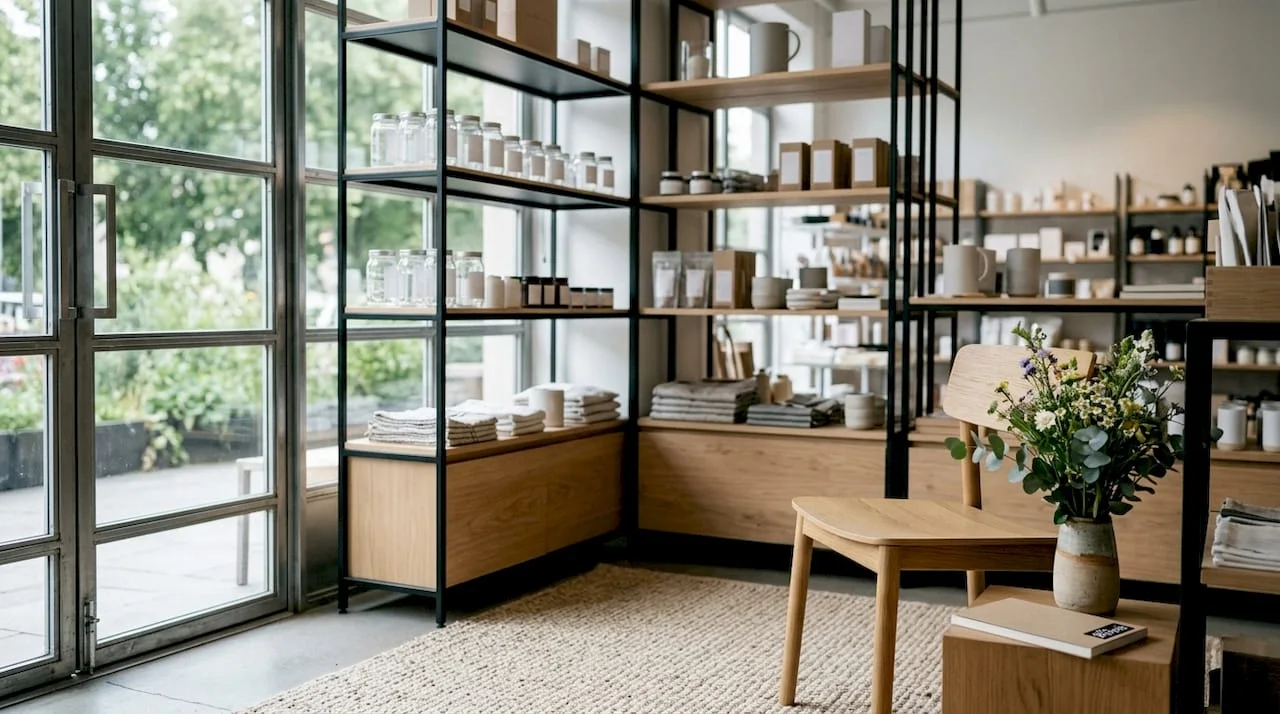
Interior design in commercial spaces is not decorative, but an active marketing tool that influences consumer behavior. Clients do not consciously analyze the lighting or color temperature, but they feel their effect. A space with warm light and natural materials communicates authenticity. A space with clean lines, glossy surfaces, and cool light communicates precision and efficiency. Every choice in the concept conveys a message, even when you do not intend it.
Sensory Elements That Shape Perception
The impact of atmosphere on sales is built through details that act simultaneously:
- Lighting determines the rhythm of the visit. Direct and intense light speeds up the purchase decision. Diffuse and warm light prolongs the time spent in the space.
- Colors activate immediate emotional associations. Earth tones and green create a sense of safety and naturalness. Red and orange stimulate urgency.
- Interior signage guides without disturbing.Well-thought-out interior signage plays an essential role in orienting clients and reinforcing brand identity at the same time.
- Materials and textures add a tactile dimension that anchors the experience in memory. A client who touches a quality material associates that sensation with your brand.
Examples from Retail and HoReCa
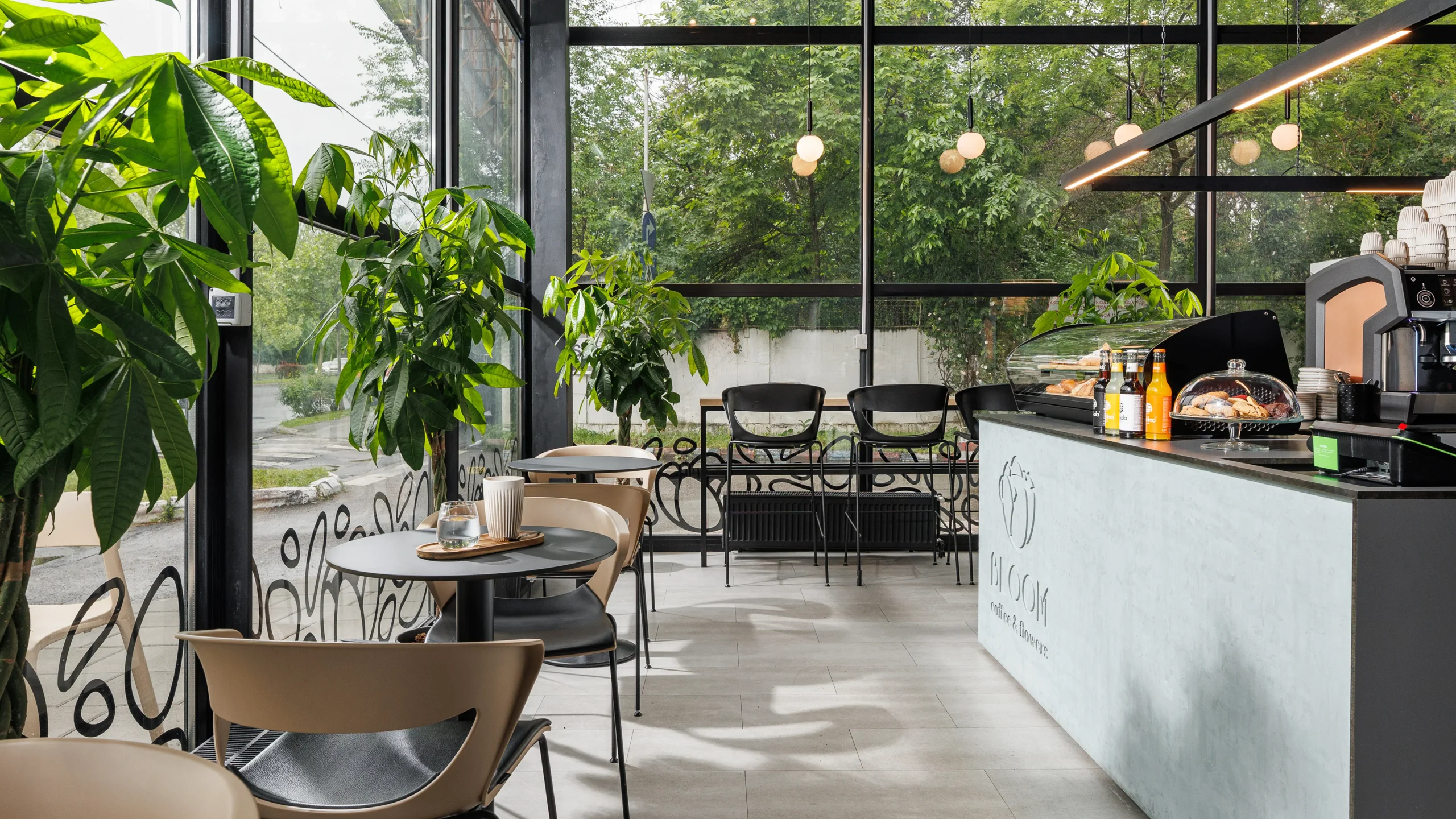
In a restaurant, the concept decides whether tables are close or spaced apart, whether music is ambient or absent, whether light comes from above or from the side. These choices are not aesthetic, but behavioral: they determine how long the client stays at the table and whether they return. In a retail store, the concept establishes whether premium products are at the entrance or deep in the space, whether there are visual break zones, or whether everything is displayed simultaneously. Both approaches are valid, but each serves a different business objective.
Our advice: If you want to test the impact of your current concept, observe where clients stop and where they quicken their pace. The areas where people slow down are where the concept works. The areas where they pass without looking are those that require revision.
The coherence of the space concept determines client loyalty through memorable experiences and differentiation from competitors. A space that looks like all the others leaves no trace in the client's memory.
Merchandising Strategies Integrated into the Space Concept
Merchandising, i.e., how you display, organize, and signpost products or services, is not separate from the concept. It is a direct consequence of it. A well-built concept includes from the design phase the display logic, the visual hierarchy of products, and the path you want the client to follow.
Four Principles of Efficient Zoning
- Decompression zone. The first 1–2 meters from the entrance are the zone where the client calibrates visually. Do not place products or important messages here. Let the space breathe and invite.
- Main path. Clients tend to move to the right upon entry and follow the perimeter of the space. The concept must anticipate this behavior and place high-margin products or key messages along this path.
- Visual break zones. Visually crowded spaces tire and hasten exit. Alternate dense zones with free zones or decorative elements that offer respite.
- Focal points. Each zone needs an element that attracts the eye and anchors attention. It can be a product, a visual installation, or an architectural element. Without a focal point, the zone becomes diffuse and hard to remember.
Balance Between Aesthetics and Commercial Functionality
|
Criterion |
Aesthetic Approach |
Functional Approach |
Integrated Approach |
|---|---|---|---|
|
Product Display |
Selective, clean |
Maximum, dense |
Hierarchized by priority |
|
Signage |
Minimal, discreet |
Directive, frequent |
Contextual and coherent with the brand |
|
Circulation Flow |
Free, unguided |
Structured, directed |
Subtly guided through design |
|
Lighting |
Ambient, uniform |
Functional, on product |
Layered: general + accent |
The window display and direct access can be more important than a few extra square meters. This logic also applies inside the space: the visibility of a product or zone matters more than the area allocated to it. A concept that understands this hierarchy produces spaces that sell, not just spaces that look good in photographs.
Efficient interior functionality strategies align commercial logic with client experience without sacrificing either.
How Do You Measure the Success of the Implemented Concept?
A commercial space concept is not evaluated only visually, at the end of the works. It is measured over time, through actual client behavior and business performance indicators. Owners and managers who treat the concept as a living tool, not as a completed project, achieve better long-term results.
Relevant Indicators for Performance Evaluation
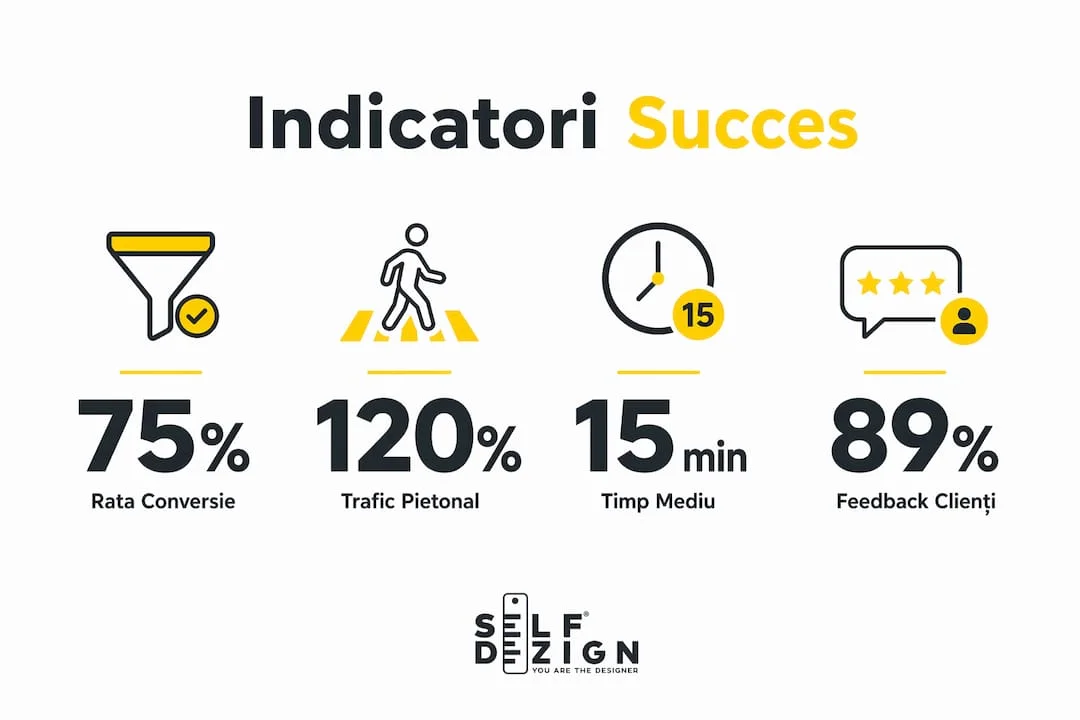
- Pedestrian traffic. Pedestrian traffic analysis and space visibility are essential for understanding how the concept attracts and retains clients. A good concept increases the average time spent in the space.
- Conversion rate. How many visitors become buyers or active clients? A low conversion rate, given good traffic, often indicates a concept problem, not a product problem.
- Direct feedback. Client comments about atmosphere, orientation, and comfort are data from the concept, not the product. Collect them systematically.
- Usable area versus rentable area ratio. The ratio between usable area and rentable area is the decisive indicator of real profitability. A difference of 10–20% can generate unexpected costs that affect the operational budget if not managed from the design phase.
Dynamic Adjustments as Part of Strategy
A concept is not a photograph. It is a living framework that must be adjusted as the business evolves. Seasonality, portfolio changes, and client behavior require periodic reconfigurations of zoning, signage, and display. Commercial spaces are becoming experience places where the connection between online and offline is increasingly relevant. A concept that does not allow for adaptation quickly becomes outdated, no matter how well it was initially built.
Coherence does not mean rigidity. It means that any adjustment respects the logic and values of the original concept, without diluting it.
What We Have Learned After Years of Commercial Projects
The most frequent point of failure I see in commercial spaces is not an insufficient budget and not a wrong aesthetic choice. It is the absence of a real concept before starting the works. Owners come with visual references, Instagram photos, and lists of preferred materials. All these are ingredients. But without a recipe, ingredients do not produce a meal; they produce a mixture.
I have worked with commercial spaces where the fit-out budget was considerable, but the final result did not support the client's business objectives. Not because the design was weak, but because there was no clear question for the design to answer. What should the client feel when entering? What action do you want them to take? How long do you want them to stay? Without these answers, design becomes decorative in the best sense of the word.
My recommendation for any owner or manager starting a fit-out project is to invest time in the concept phase before anything else. Not in mood boards and not in choosing colors. In understanding the real objectives of the space and translating them into design decisions. This phase costs less than a later redo and produces results measured in sales, not just visual appreciation.
Trends come and go. A concept built on the real values of your brand lasts over time and adapts without losing its identity.
expertise provided by Toni Bunaiasu
SelfDezign and the Concept of Commercial Spaces
SelfDezign works with owners and managers of commercial spaces who want more than just a fit-out. They want a space that supports business objectives, reflects brand identity, and functions efficiently every day. The SelfDezign team covers the entire process, fromcommercial interior design concept to implementation coordination, without standard solutions or trend formulas. If you manage a commercial space and want to understand how a well-built concept can change its performance, thepractical commercial design guide from SelfDezign is a concrete starting point. Projects cover retail, HoReCa, offices, and clinics, both in Romania and Europe.