
Comparison of materials for interior design: TCO guide

Materials are chosen according to the destination of the space and the total lifetime cost, not the purchase price. This is the golden rule in any commercial project in Central Europe, whether we are talking about a restaurant, a clinic or a 500 sqm office.
First Choices by Type of Space:
- HORECAporcelain stoneware or epoxy flooring in the serving and kitchen areas, LVT in the consumption rooms
- Rooms:modular or LVT commercial carpet in work areas, porcelain tiles in hallways and common areas
- Medical clinics:homogeneous epoxy or vinyl flooring in treatment rooms, porcelain tiles in waiting areas
Epoxy flooring, for example, has a long estimated service life in residential and commercial applications, with indicative costs relative to the type of self-leveling system. A material with a higher initial price can pay for the investment in less than five years by reducing maintenance interventions.
Professional advice: Before any decision, ask for the material data sheet. The absence of reaction to fire class or declaration of performance according to EN standards is an immediate alarm signal.

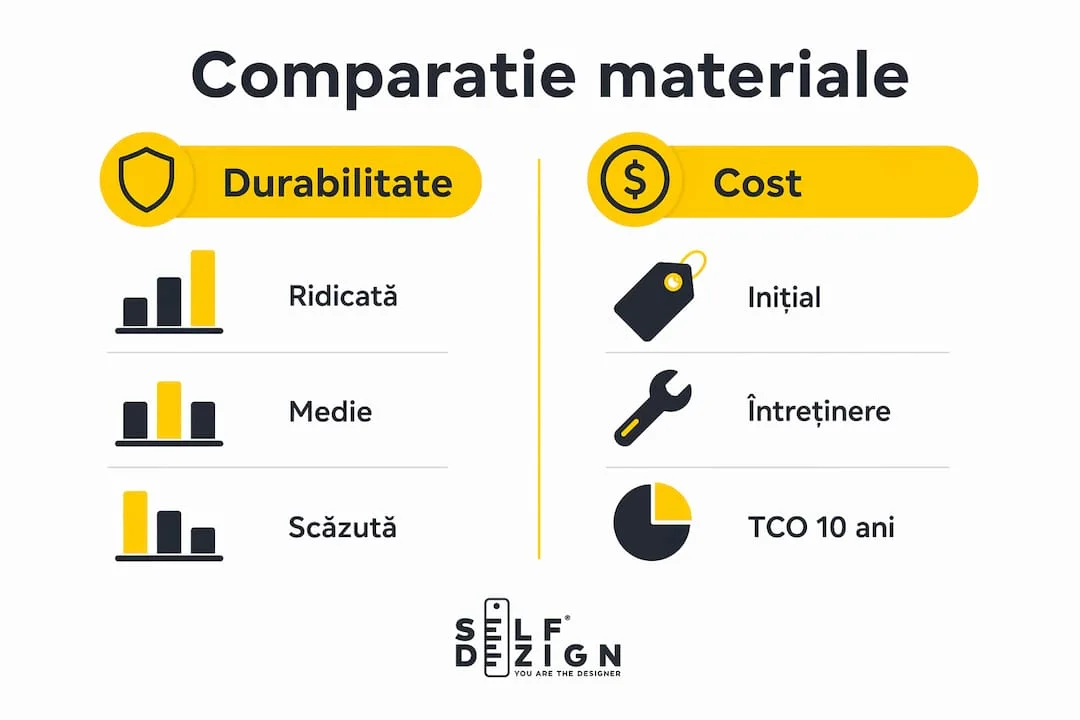
How do materials compare on the dimensions that really matter?
|
Material |
Durabilitate |
original cost |
TCO (10 years) |
Lumen |
Acoustics |
Hygiene |
Conformitate |
Aesthetics |
Instalare |
Sustenabilitate |
|---|---|---|---|---|---|---|---|---|---|---|
|
Grinded concrete |
High |
Mediu |
L |
L |
Poor |
Medie |
Hello |
High |
Complex |
Medie |
|
LVT/SPC vinyl |
Medium-high |
L |
L |
L |
Medie |
Good |
Good (VOC) |
High |
Simple |
Medie |
|
Sandstone/porcelain |
High |
Mediu |
L |
L |
Poor |
Excellent |
Good |
Medie |
Medie |
Good |
|
Natural Stone |
High |
High |
Mediu |
Mediu |
Poor |
Medie |
variable |
High |
Complex |
Good |
|
Laminate flooring |
Mediu |
L |
Mediu |
Mediu |
Good |
Medie |
AC4/AC5 |
High |
Simple |
Medie |
|
Massive parquet flooring |
High |
High |
Mediu |
High |
Good |
Medie |
variable |
High |
Medie |
Good |
|
Commercial carpeting |
Mediu |
L |
Mediu |
High |
Excellent |
Low |
Fire class |
Medie |
Simple |
variable |
|
Veneer/laminate |
Low/Medium |
L |
Mediu |
Mediu |
Medie |
Medie |
VOC |
High |
Simple |
Medie |
|
Treated metals |
High |
High |
L |
L |
Poor |
Good |
EN ISO |
High |
Complex |
Good |
|
Acoustic panels |
Mediu |
Mediu |
Mediu |
L |
Excellent |
Medie |
VOC/Fire |
Medie |
Medie |
variable |
|
Paints/finishes |
L |
L |
High |
High |
Poor |
variable |
VOC |
High |
Simple |
variable |
Treated metal and concrete offer longevity and resistance to intensive wear, while wood adds aesthetics but involves more consistent periodic maintenance. LVT has gained ground in commercial projects precisely because it combines a low initial cost with minimal maintenance and an acceptable VOC class.
What you need to know about each material before the decision
Grinded concrete and epoxy floor
Continuous, seamless, waterproof and chemically resistant surface. Suitable for HORECA kitchens, laboratories and light industrial areas. Sensitive to cracking if the substrate is not properly prepared; requires periodic treatment with specific products. The cost of self-leveling epoxy systems starts from 100 Ron/sqm.
Attention to compatibility:sanded concrete combines difficultly with parquet without a well-chosen transition profile; the difference in level can become a functional and aesthetic problem.
LVT and SPC (rigid vinyl)
Resists moisture and medium to high traffic well. Quick installation, no adhesive in click version. The wear class AC4 is the minimum acceptable for commercial premises. Sensitive to very high temperatures and sharp objects. It blends naturally with layered parquet through a standard transition profile.
Sandstone & Porcelain
Maximum durability in wet areas. Check the slip resistance class (R9 minimum for indoor, R11 for kitchens and wet areas). Open joints can become bacterial accumulation points if not sealed properly.
Natural Stone
Marble and travertine are porous and require periodic impregnation. Granite is more durable, but the mounting cost and structural weight raise the complexity of the project. Always check the origin and homogeneity of the batch.
Layered and massive parquet
Wear class AC4 or AC5 is mandatory for business premises. The massive parquet can be repressed several times, extending its service life, but it is sensitive to humidity variations specific to the Central European climate.
Commercial carpeting
Excellent acoustic performance, thermal comfort, but requires daily vacuuming and periodic cleaning with professional equipment. Recommended for offices and waiting areas with controlled traffic, not for areas with humidity risk.
Treated metals
Structures made of galvanized steel or anodized aluminum provide long-term durability with minimal maintenance. The high initial cost is amortized by the absence of replacements. Compatible with almost any surface finish.
Professional advice: When combining different materials (e.g. stone with metal), check for different thermal expansion and ensure that the joint detail is technically designed, not improvised on site.
What materials work in each type of space?
HORECA
The kitchen area requires R11 porcelain tiles or epoxy flooring for chemical resistance and ease of cleaning. The dining room can combine wood-looking LVT in the dining areas and grinded concrete in the bar area. The walls behind the bar support treated metal or tempered glass cladding well.
- Preferred floor material: porcelain stoneware (kitchen), LVT or polished concrete (hall)
- Walls: high-strength washable paint or panels made of easy-to-clean materials
- Ceiling: acoustic panels in high noise rooms
See andthe HORECA workflow guidefor a complete picture of the implementation steps.
Birouri
Modular or LVT carpet in work areas provides acoustic and thermal comfort. Hallways and traffic areas require porcelain tiles or ground concrete for resistance to heavy traffic. Glass partitions or sound-absorbing panels help control noise in open spaces.
For the complete ergonomics of the workspace, the compatibility of the floor with adjustable furniture is a detail often ignored. Resources aboutmodern office fit-outcan complement the material selection decision with the functional perspective of the furniture.
Retail
Commercial space finishes should be more durable than residential ones, with a focus on traffic resistance and ease of maintenance. Large-formed porcelain tiles or sanded concrete in the sales area, LVT in warehouses and service areas.
Residental
Premium or massive layered parquet in the living room and bedrooms, porcelain tiles in the bathrooms and kitchen. Washable paints with low VOC emissions in all rooms. Aesthetic flexibility matters more than in commercial spaces, but TCO remains relevant for long-term-thinking owners.
Medical clinics
Homogeneous (seamless) epoxy or vinyl flooring in treatment rooms for chemical resistance and ease of disinfection. Walls made of non-porous materials, easy to clean. Acoustic panels in waiting rooms reduce patient stress. All materials must comply with hygiene requirements and have clear declarations of performance.
How do you select materials step by step?
- Rate your destination and traffic— number of people/day, type of activity, presence of moisture or chemicals
- Request datasheets— class of wear, reaction to fire, VOC emissions, slip resistance
- Calculate TCO— initial cost + erection + estimated annual maintenance × planned lifetime
- Ask for samples and samples— test the layout in the actual light of the space and check the compatibility with the existing substrate
- Establish the maintenance plan— cleaning frequency, allowed products, refreshment intervals
- Make the final decisionwith all the data on the table, not just the catalog price
Essential questions for suppliers:
- What is the class of wear and reaction to fire certified?
- Is there a declaration of performance according to EN standards?
- What are the VOC emissions and is there an independent certificate?
- What warranty covers manufacturing defects vs. normal wear and tear?
- What is the lead time and what substrate conditions are required?
Red Flagslack of data sheet, assembly prices significantly below the market average, absence of maintenance instructions or verifiable design references Refer to andretail fit-out checklistfor a full list of checks.
How much does a wrong choice of material really cost?
The difference between an epoxy floor and premium tiles in a medium traffic restaurant becomes visible after 3–5 years. Epoxy has no joints, so it does not accumulate bacteria and does not require regrouting. Premium tiles have higher initial mounting costs, but are better resistant to punctual impact and can be replaced in areas.
- Epoxy floor:initial cost 100–200 Ron/sqm, minimum annual maintenance, estimated service life 15–25 years in residential and 10–15 years in commercial or industrial applications
- Premium porcelain tiles:initial cost 150–300 Ron/sqm (materials + mounting), average maintenance, lifespan 20+ years
- Commercial LVT:initial cost 80–150 Ron/sqm, low maintenance, service life 10–15 years in heavy traffic
Low-quality paints require refreshment every 2–3 years in commercial premises, compared to 5–7 years for high-performance finishes. On a 10-year cycle, the total cost difference may exceed twice the initial price of the premium variant.
Professional advice: Always calculate the downtime cost: a closed restaurant 3 days to replace the flooring every 4 years means actual losses that do not appear in any product sheet.
What certifications matter in Central Europe?
The selection of commercial space materials in Central Europe involves checking several non-optional compliance categories.
- Reaction to Fire:classification according to EN 13501-1 (from A1 to F); public spaces require at least class C or B for floors and walls
- VOC emissions:declaration according to EN 16516 or equivalent; especially relevant for paints, adhesives and laminate
- Slip resistance*class R9–R11 for floors, according to EN 13893; R11 mandatory in kitchens and wet areas
- DECLARATION OF PERFORMANCEmandatory for construction products marketed in the EU according to Regulation no. 305/2011
- Recyclability and recycled content:relevant for projects with sustainability or European funding requirements; materials with Cradle to Cradle or EPD certification (product environmental statement) provide full traceability
Bio-based materials (natural fibre boards, lime-based finishes) are gaining ground in low-carbon projects, but availability in Central Europe remains limited from the west. Explore current options inguide to innovative materialsfor an up-to-date perspective.
How does SelfDesign select materials in a custom project?
The process does not start with a catalog. It starts with understanding the real context of the space.
- Client Brief and Space Audit— destination, estimated traffic, structural constraints, total budget and assumed TCO
- Material selection with TCO criteria— we compare variants on durability, maintenance and compliance, not just on price
- Samples and samples in space— test the appearance in real light and check the compatibility with the substrate
- Technical documentation— product sheets, declarations of performance, mounting and maintenance instructions
- Mounting coordination— supervision of execution to ensure that the chosen material behaves according to the specifications
- Acceptance and transfer of documentation— the beneficiary receives all the data sheets and the maintenance plan
Clear roles in the process:
- Architect verifies aesthetic and functional compatibility with design concept
- The technical team validates the conformity of the materials and the mounting conditions
- The Beneficiary confirms the evidence and signs the acceptance based on the complete documentation
Details of each stage are available incommercial spaces consultancy guideand in the article onthe role of materials in the arrangementThe
What we frequently see in projects and what could have been avoided
The most common mistake is not choosing an expensive material. It is the choice of an inexpensive material for the wrong place, without calculating what follows after installation.
An AC3 class laminate floor mounted in a restaurant with 200 customers per day will look worn in 18 months. Not because the material is bad, but because it wasn't designed for that traffic. The same parquet works perfectly in an office with 15 employees. The context decides everything.
The combinations that work best in our projects follow a simple logic: durable structure where wear is maximum, easy to maintain finish where hygiene or aesthetics are a priority. A metal structure treated with an epoxy finish in the kitchen of a hotel withstands better than any other combination at the same total cost over 10 years. Natural stone in the reception hall of a clinic communicates authority and durability, but requires a well-defined impregnation and cleaning plan from the start.
Our constant recommendation: involve the technical team before ordering the materials, not after. The cost of an early consultation is negligible compared to the cost of replacing a floor two years after the inauguration.
SelfDezign helps you choose and implement the right materials
The choice of materials is not a catalog decision. It is a technical decision with direct impact on operational costs, hygiene and space experience over the next 10–15 years. SelfDezign provides material selection consultancy, technical design and execution coordination for commercial premises, HORECA, offices and medical clinics in Central Europe, with a focus on real TCO and documented compliance.
Each recommendation is accompanied by verified data sheets, tests in space and a transferable maintenance plan. We deliver not just a beautiful project, but a space that works as expected in the long run. If you are in the material selection phase or want a second technical opinion,check out our workspace guideor contact the SelfDezign team for an audit of material tailored to your project.