
Clinical Space Branding Guide: Strategies for 2026

The branding of the clinic space is the strategic process of creating a coherent identity that reflects the values of the institution and influences the perception of patients from the first contact. This clinical space branding guide is built for owners and managers who want to differentiate the clinic in a market whereprivate health marketincreases annually by 10–15% and where competition can no longer be won through price reductions. Clinical branding does not mean a new logo or repainted reception. It means a coherent visual and experiential system that communicates professionalism before the doctor utters the first word.
What are the essential components of effective branding for clinic spaces
Clinically effective branding works like a backbone: if it is missing or fractured, everything else wobbles. There are three layers that need to work simultaneously: visual identity, space arrangement, and patient experience.
Visual identity
The visual identity of a clinic encompasses the logo, color palette, typography and how these elements appear consistently on all surfaces, from indoor signage to appointment forms. A color palette chosen without brand logic, for example an intense blue combined with aggressive orange, conveys the wrong energy for a medical space. Neutral colors, matte materials, and clear typography communicate peace and control, just what a patient is looking for before a consultation.
Space layout
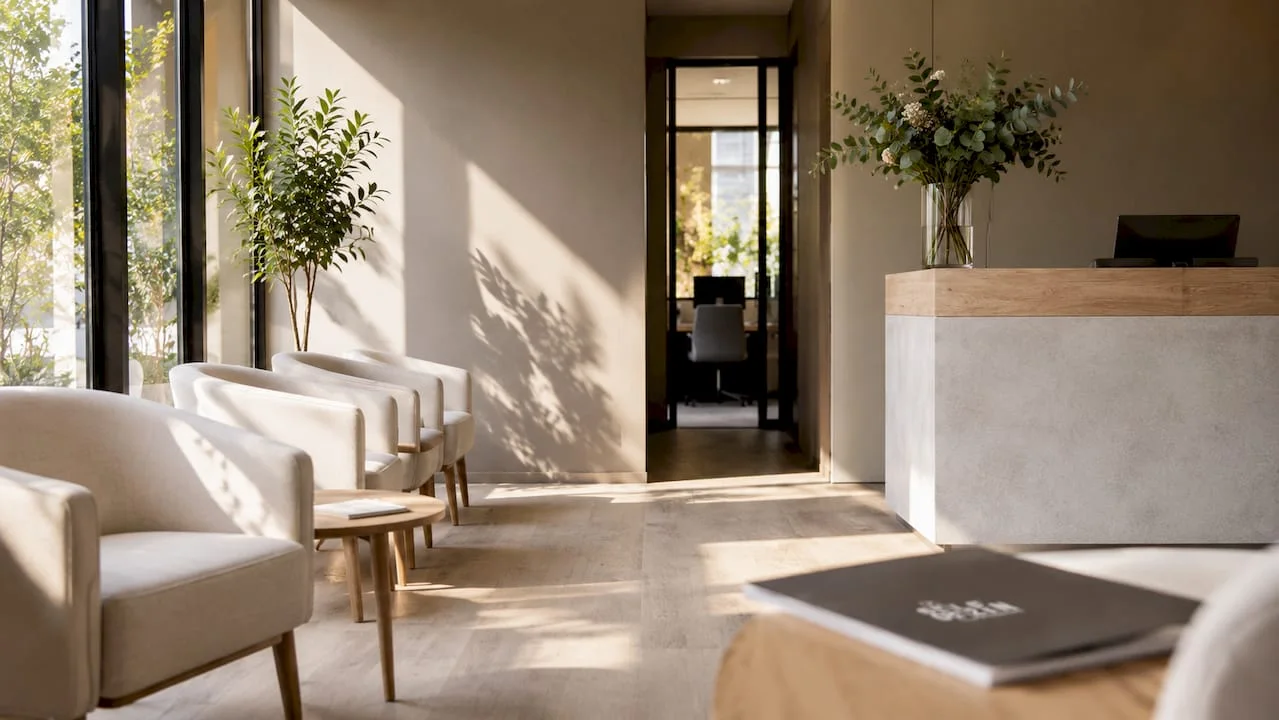
Medical space designis not decorative. It's functional and narrative at the same time. The physical flow of the patient, from the entrance to the waiting room, to the practice and back to the reception, must be clear, frictionless and consistent with the brand message. An aesthetic dermatology clinic with premium finishes and studied lighting communicates differently from one with generic office furniture and standard tile ceiling, even if the services are identical.
Patient Experience
The patient experience is where branding becomes real or falls apart. The waiting area, the way staff communicate, printed materials, information screens, and even the smell of space all contribute to the overall perception. Patients choose clinics that inspire professionalism, have good reviews, and are easy to find online. All these aspects are supported by consistently applied coherent branding.
- Visual Identity:logo, colors, typography applied uniformly on all surfaces
- Spaceinterior design that supports patient flow and communicates clinic values
- Visual communication:signage, information materials, screens, personnel uniforms
- Experience:waiting area, staff interactions, space order and cleanliness
- Digital coherence:website, Google Business Profile and social networks aligned with physical space
INFORMATION: The personal brand of the principal physician and the institutional brand of the clinic must support each other, not contradict each other. Branding in Medicine combines the institutional and personal image, each influencing the patients' decision. If the star physician communicates refinement and precision, and the clinic space looks makeshift, the dissonance destroys the credibility of both.
How branding differentiates a clinic from the competition
Price differentiation is an unsustainable strategy.A clinic that lowers prices to attract new patients enters a race they cannot win in the long run. The real differentiation comes from the substance of the brand, not from the marketing messages.
The substance of the brand means that the promised experience is actually delivered to the space. A functional medicine clinic that communicates a personalized approach should have practices that convey intimacy and attention to detail, not a patient flow treated as a conveyor belt. The alignment between the brand promise and the reality of the space is the difference between a recommended clinic and a forgotten one.
Differentiation through specialization and experience
Clinics that position themselves on a clear specialization attract patients with higher purchase intent and higher fidelity. A sports orthopedics clinic with a space designed for athletes, with visible recovery areas, strategically exposed equipment and performance-oriented visual communication, conveys specific competence. This specific jurisdiction justifies a higher fare without any additional explanation.
Doctors' Reputation and Digital Communication
The reputation of doctors is a brand asset, not just a professional resume. When a physician has a digital presence consistent with clinic values, positive reviews, and clear communication of expertise, it brings credibility to the institution.digital branding for clinicsshows that a well-constructed PR presence reinforces the perception of authority and reduces the convincing effort of the new patient.
- Clear specialization:positioning on a specific segment reduces direct competition
- End-to-end experience:from online appointment to leaving the office, every point of contact counts
- Organic Reputation:reviews and referrals are generated by the experience in the space, not by advertising
- Value communication:explain what you do differently, not how cheap you are
- LOYALTYa consolidated brand reduces the acquisition cost of recurring patients
A clinic has organically grown toover €600,000 revenuein two years, investing only 4% of revenue in marketing. The result came from clear internal processes and organically built reputation. This is proof that the substance of the brand, not the advertising budget, generates sustainable growth.
What are the practical steps to implement branding in the clinic space
Implementing clinical branding is not a one-week project. It's a progressive process that starts with a clear understanding of who you are and who you're building for.
Step 1: Analysis of the target patient profile
Before any design or communication decision, you need to know exactly who the patient you want to attract is. The age, income, expectations and reasons for choosing a private clinic instead of a state one are data that determine the tone of the brand, the color palette and the type of materials in the space.Needs analysis before designis the starting point for any meaningful design decision.
Step 2: Defining the visual identity
Logo, colors and typography must be defined and documented in a brand guide. Without this guide, every new element added to space or digital communication becomes an isolated decision, and coherence is quickly lost.
Step 3: Customize your space design
Physical space must translate visual identity into concrete experience. Materials, lighting, furniture, and signage are not independent aesthetic choices. They are the visual vocabulary of your brand applied to real surfaces.Customizing your spaceis the process by which the brand identity becomes tangible to the patient.
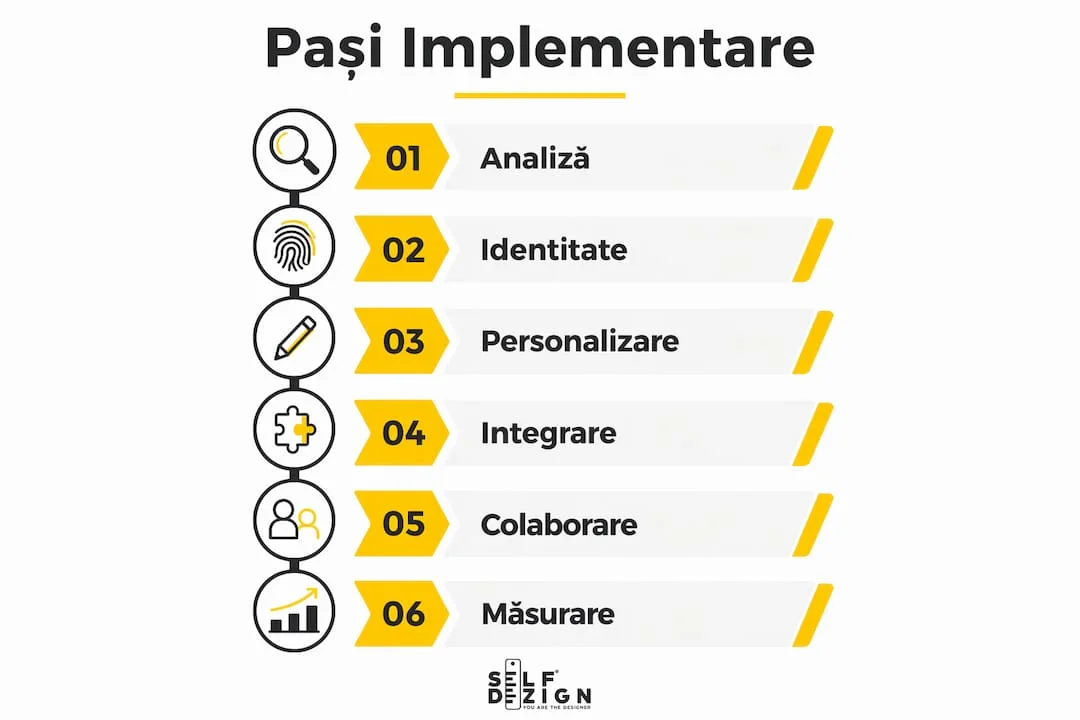
Step 4: Integrating visuals into the patient experience
Brand elements must appear at each point of contact: reception, waiting areas, cabinets, toilets, printed and uniform materials. Consistency is not an aesthetic detail. It is the signal that the organization is operating with care and control.
Step 5: Collaborating with Designers Specializing in Medical Spaces
An interior designer with experience in medical clinics understands sanitary norms, operational flows, and the specific needs of medical personnel. This expertise avoids costly refurbishment mistakes and ensures that the space complies with both legal requirements and brand objectives.
Step 6: Impact measurement and continuous adaptation
Branding is not static. Patient reviews, turnaround rate, and staff feedback are indicators of what is working and what needs to be adjusted. A clinic mustattracts autonomously at least 50%of new patients after three years through a consolidated institutional brand. If this threshold is not reached, branding does not work independently of the star doctor.
INFORMATION: The "Controlled Eclipse" strategy directs the star doctor's traffic to the clinic ecosystem in the first 1–2 years. All conversion points, appointments, reviews, content, are placed on the clinic domain, not on the doctor's personal profile. This ensures that the institutional brand grows independently and becomes scalable.
|
Step |
Main action |
Expected result |
|---|---|---|
|
Analytics |
Target patient profile |
Clear brand direction |
|
Identitate |
Documented visual guide |
Consistency across all touchpoints |
|
Space |
Custom interior design |
Brand Aligned Experience |
|
Integrare |
Visuals in each area |
Unitary perception of the clinic |
|
Scalabilitate |
Autonomous institutional brand |
Star Physician-Independent Growth |
How interior design influences the reputation and attractiveness of the clinic
The interior design of a clinic is not the background of the patient experience. It's the experience itself. A clean, well-lit and logically organized space communicates competence before any human interaction takes place.
Ergonomic and well-designed interior designincreases patient satisfaction, reducing friction and contributing to a positive perception of the clinic. Friction means any time when the patient feels confused, uncomfortable, or ignored. A poorly thought-out physical flow, for example a reception located away from the entrance or a waiting area without visibility to the offices, generates anxiety and reduces satisfaction just before the consultation.
Waiting area as a brand tool
The waiting area is the first space where the patient spends time and forms an impression. Comfortable chairs, warm lighting, well-designed information materials and the absence of background noise are details that communicate care. An oncology clinic and an aesthetic medicine clinic have completely different needs in this area, and the design must reflect this difference.
Ergonomics and friction reduction
The ergonomics of the clinical space means that each item is placed where it makes sense for the patient and staff. Reception counters at the right height, sufficiently wide corridors for people with reduced mobility and clear signals reduce the patient's cognitive effort. When the space works without apparent effort, the patient associates this fluency with the professionalism of the clinic.
|
Design element |
Brand impact |
Patient impact |
|---|---|---|
|
Lighting studied |
Transmits refinement and control |
Reduce anxiety |
|
Quality materials |
Communicate investment and seriousness |
Increase confidence |
|
Clear signage |
Visual coherence |
Reduces confusion and friction |
|
Logical physical flow |
Organization & Efficiency |
Fluent experience |
|
Comfortable waiting areas |
Care for the patient |
Satisfaction before consultation |
The impact of interior design extends beyond physical space. Patients who have a positive clinical experience leave better reviews online and recommend the clinic more often. Online reputation is built largely from the physical experience in the space, not from advertising campaigns.
- The illuminationnatural light or warm lighting reduces stress and increases the perception of comfort
- Materials:matt surfaces, wood and natural stones communicate quality without ostentation
- The colorsneutral palette with brand accents creates coherence and tranquility
- Signals:clear, consistent and aligned with the visual identity of the clinic
- Order:a clean and organized space is the strongest signal of professionalism
A Designer's Perspective: What Branding a Clinical Space Really Means
I have been working with medical clinics long enough to recognize a recurring pattern: the owner comes up with a new logo and color palette chosen by a graphic designer and thinks the branding is ready. She's not. The branding of the clinical space is ready when a patient enters the clinic and feels, without reading any text, that he is in the right place.
The most common imbalance I see is between the founding physician's personal brand and the clinic's institutional brand. The doctor has 10. 000 Instagram followers, a solid reputation and loyal patients. The clinic, on the other hand, does not exist as a stand-alone entity in the minds of patients. If the doctor leaves or withdraws, the clinic disappears with him. This is a real business risk, not an aesthetic issue.
The solution is not to remove the doctor's personal brand. It is to build the institutional brand in parallel, using the doctor's visibility as the entry point, not as the sole foundation.Branding of interior spacesfor business shows that physical space is the most sustainable vehicle of the institutional brand, because it does not depend on any particular person.
Investing in clinical space design is not an image cost. It is a business decision with a direct impact on patient retention and the perceived value of services. A well-thought-out space justifies higher rates, reduces persuasion effort, and generates organic recommendations. These are measurable results, not aesthetic promises.
SelfDezign and clinical space branding: from concept to implementation
Medical clinics that want to build a coherent and sustainable visual brand need more than an interior designer. They need a partner who understands the medical context, business objectives and patient experience as an integrated system. SelfDezign works with clinics in Romania and Europe, combininginterior design conceptwith technical design and implementation coordination. Each clinical project starts from the analysis of the real needs of the clinic and its patients, not from standard formulas or current trends. If you want a space that supports your clinic's brand in the long run,clinical design processdeveloped by SelfDezign is the right starting point.